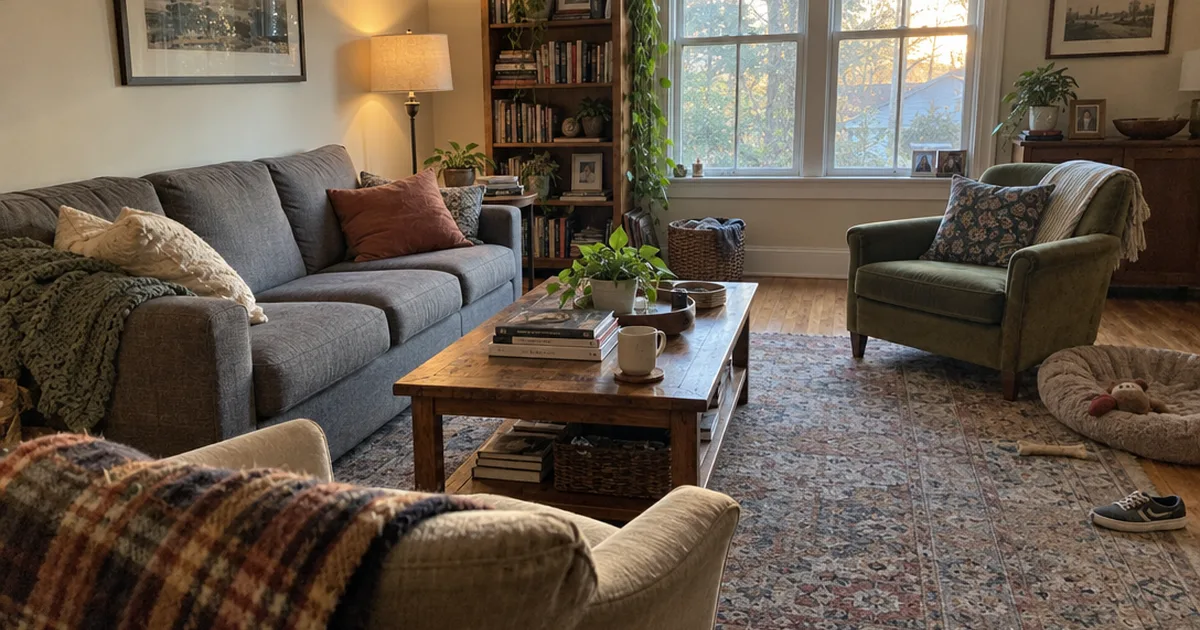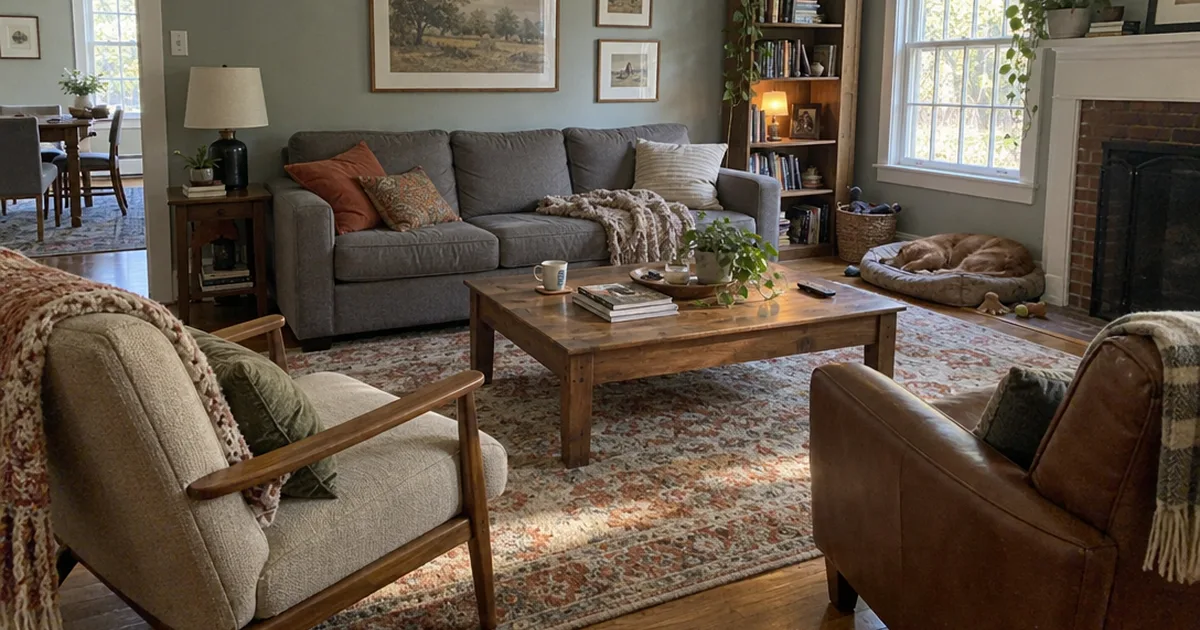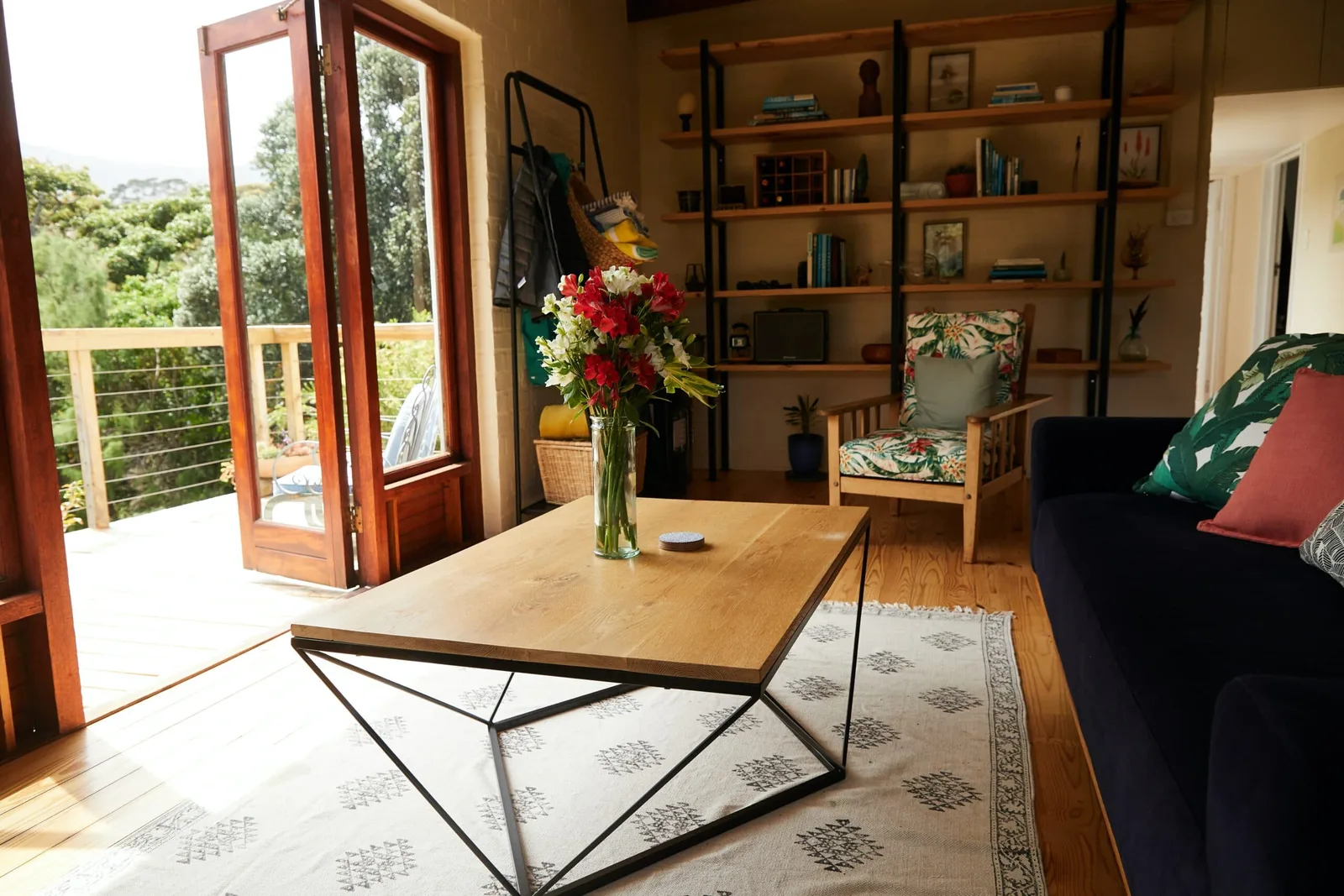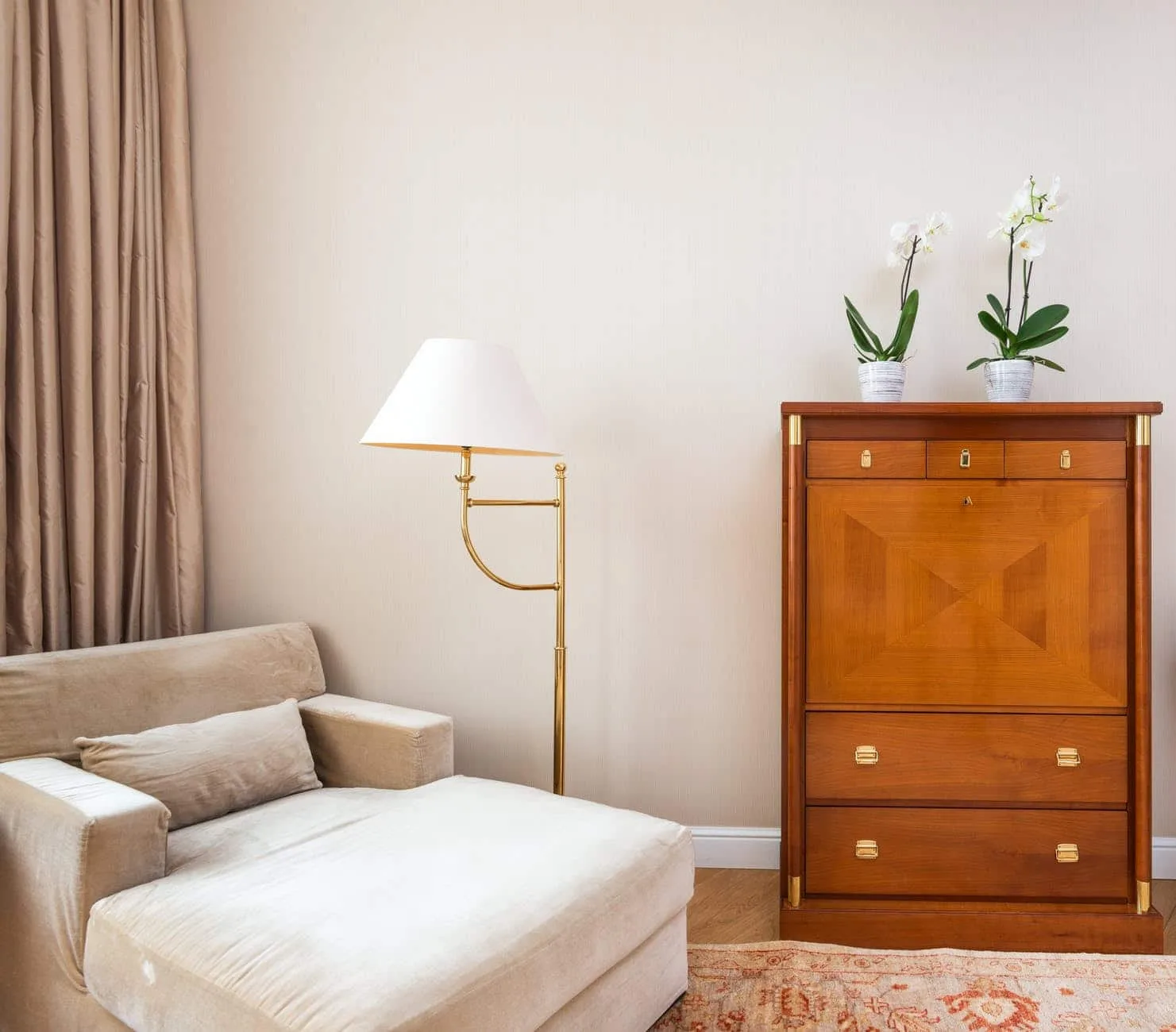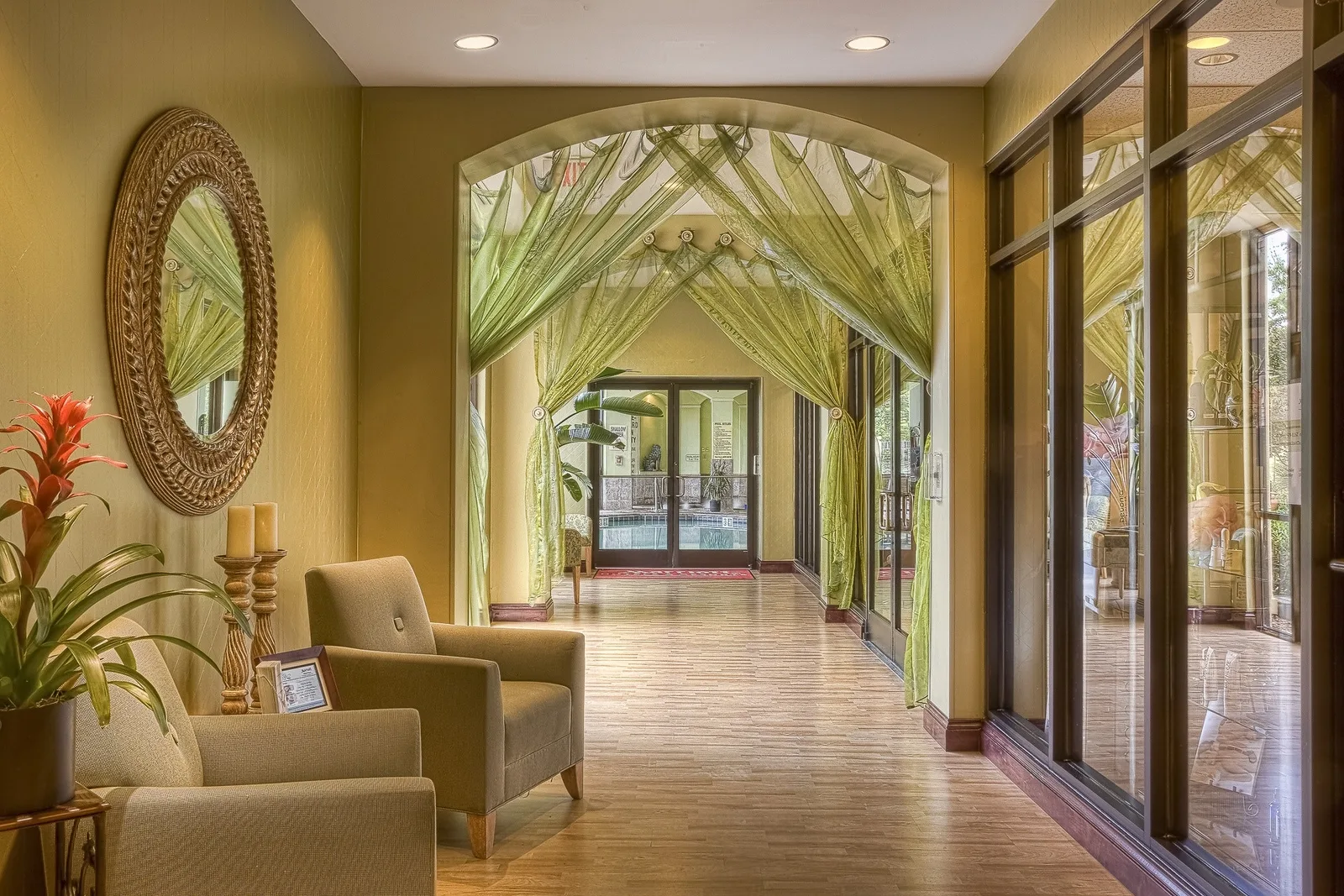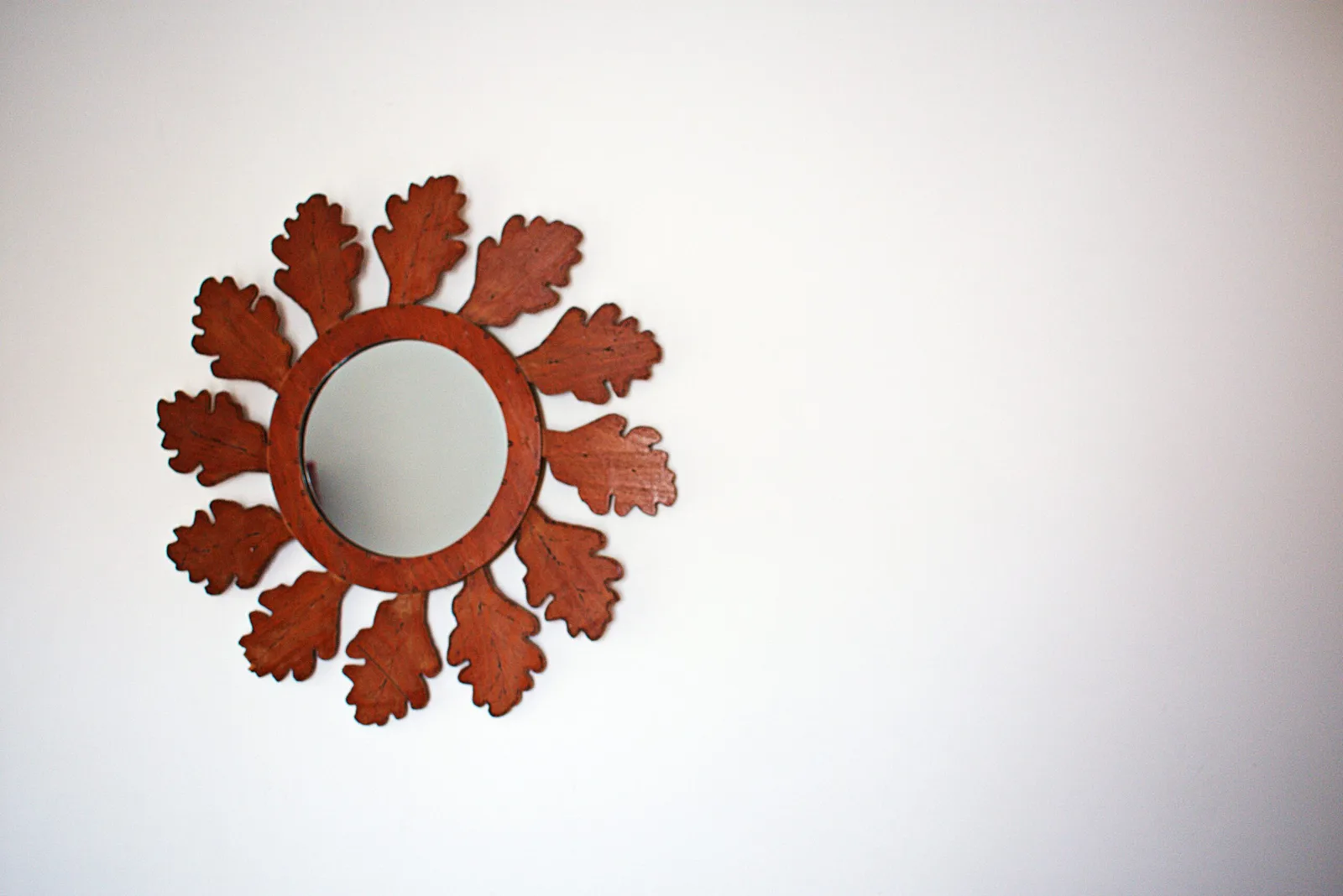

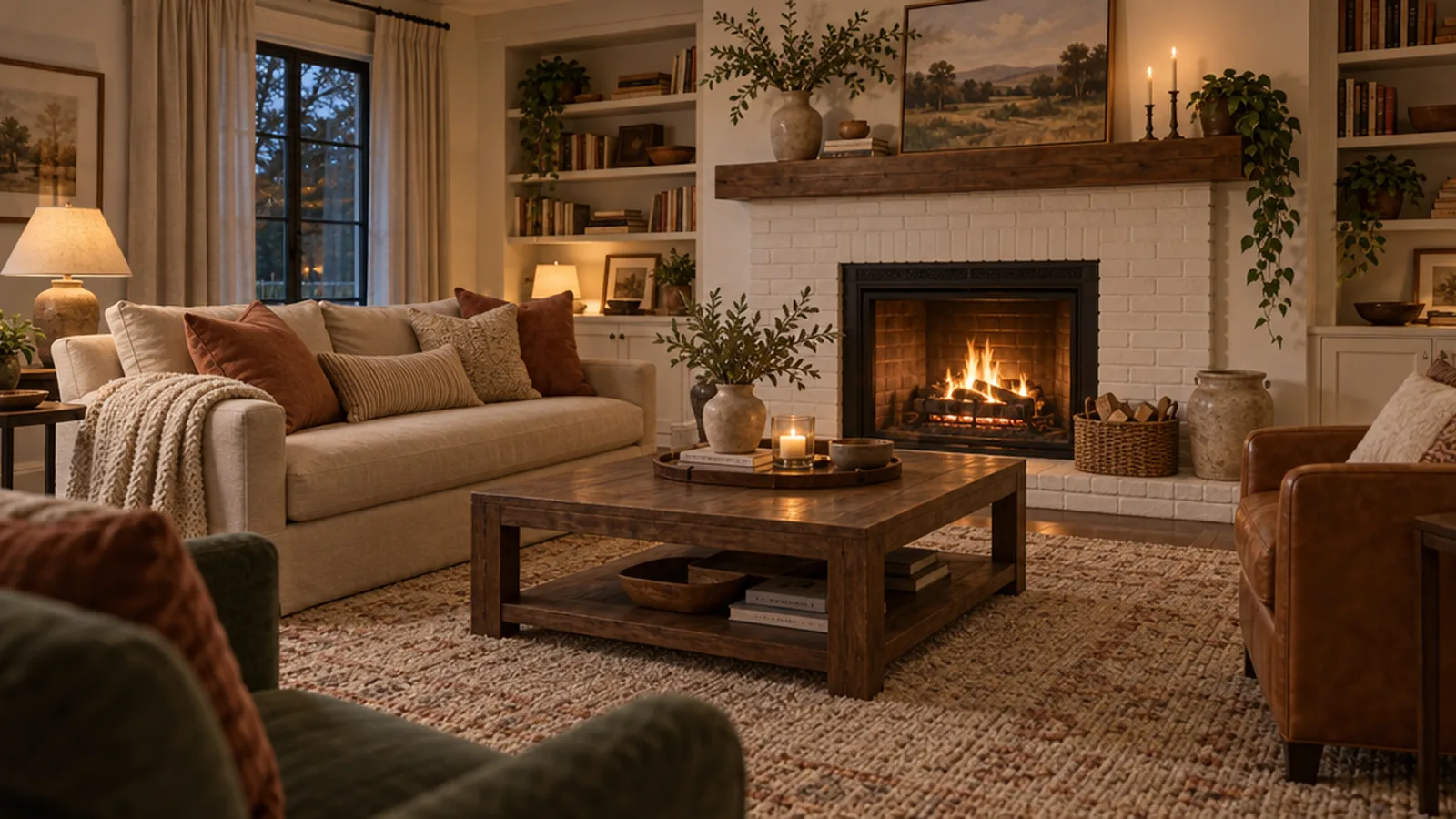
Only 5% of Houzz living rooms tagged by budget sit in its cheapest tier.
The Houzz living room photo directory shows 9,875 rooms at its $ level out of 185,686 tagged, as of November 2026.
So most of the rooms you’ve been saving were built on bigger budgets than the one you may have.
These 24 living room decor ideas start with moves that cost nothing and end with the biggest jobs, and each one tells you who it suits, what it takes and where to start.
Your situation points to a good first move:
- Renters with strict wall rules have plenty to work with in #1 through #10.
- A $0 budget still covers #1, #2, #3 and #8.
- Rooms that feel dim after sunset get the most from #5 and #6.
- Bare walls are the job of #11 and #12.
24 Living Room Decor Ideas, Ranked From Quickest to Biggest Job
The best living room decor ideas fix how the room works first, then change what you see, so layout and lighting come before paint and furniture. Ideas 1 to 9 fit in a day, 10 to 19 take most of a week, and 20 to 24 take a few weeks of evenings or more.
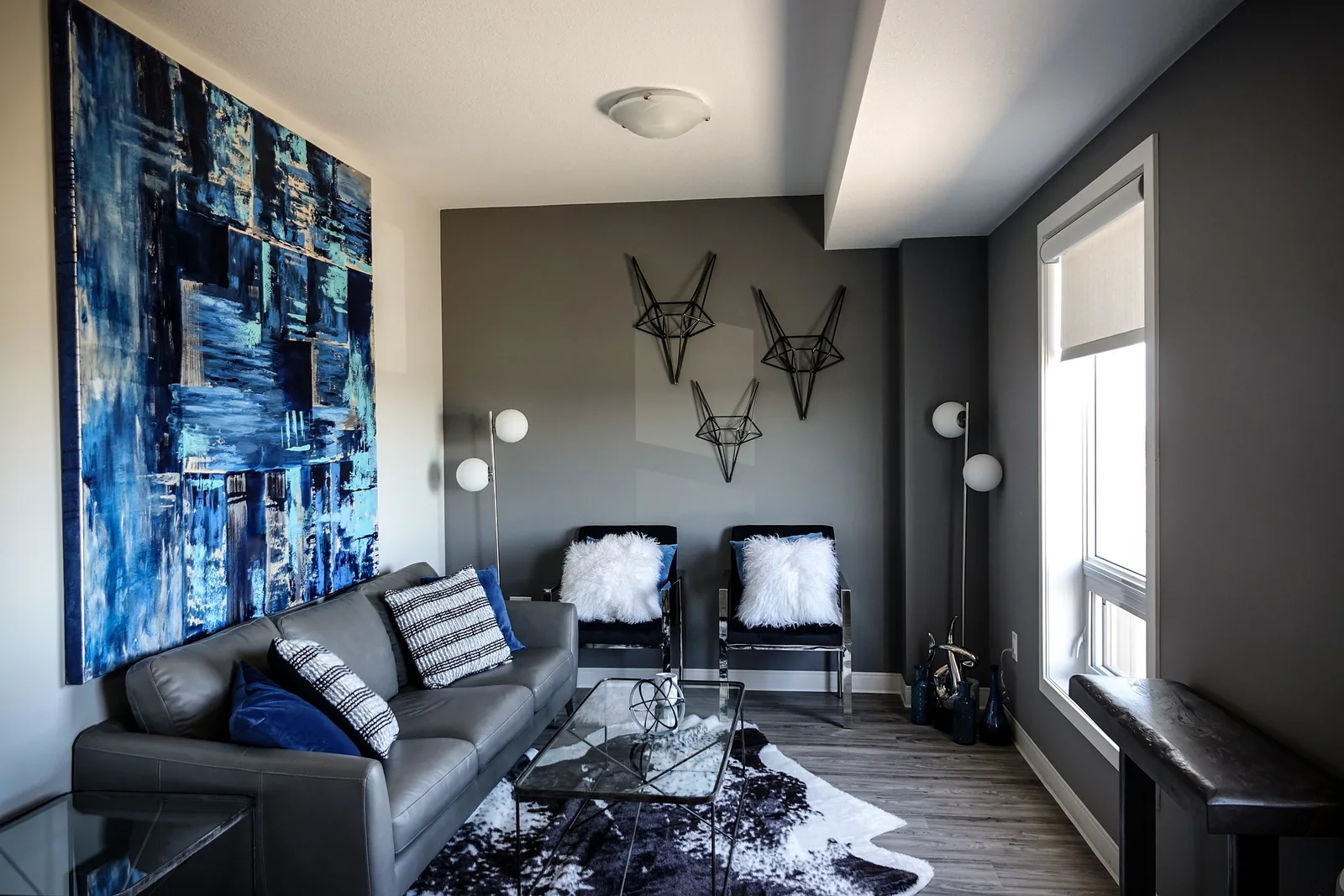
1. Pick One Focal Point
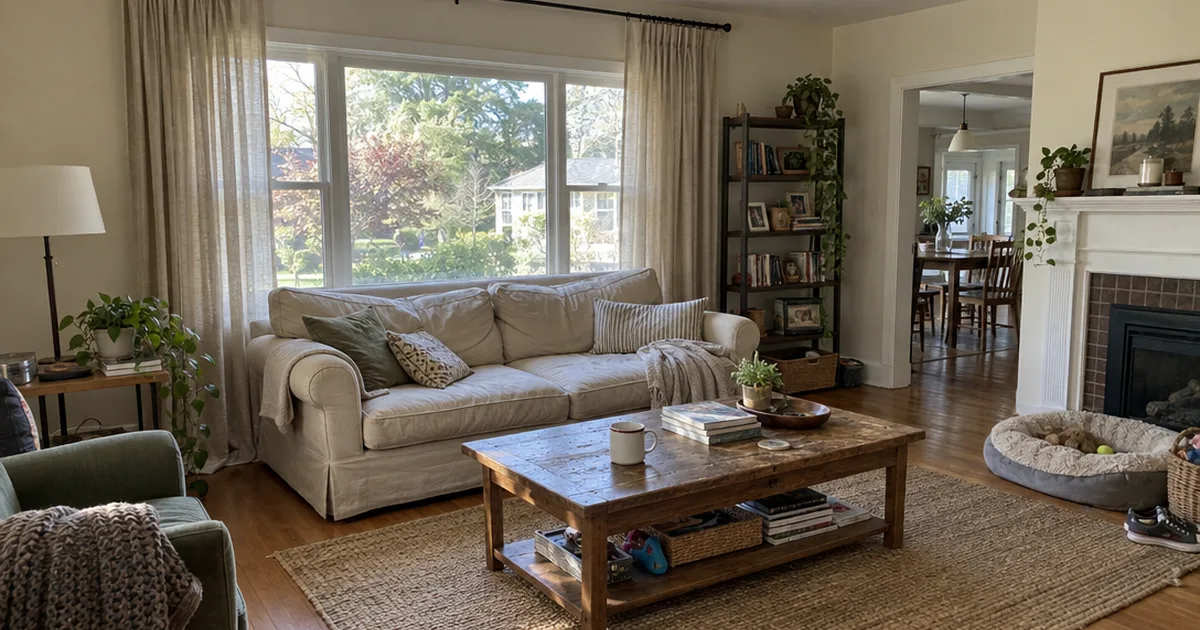
Choose the one thing your room is about, such as a fireplace, a window, a big piece of art or the TV, and turn the main seating toward it. A room with no clear anchor makes your eye wander, and that’s why it can feel unfinished even when you like every piece in it.
- Best for: Any room where the furniture feels scattered. Skip it if your seating already faces one clear feature.
- Cost: Free.
- Time: Same day.
- First step: Stand in the doorway and name the first thing you notice, then ask if that’s what you want people to look at.
Next, decide what the room is for, because the purpose picks your focal point.
The Houzz guide to living rooms says a formal sitting room suits a bar cart, formal furniture and a fireplace and mantel.
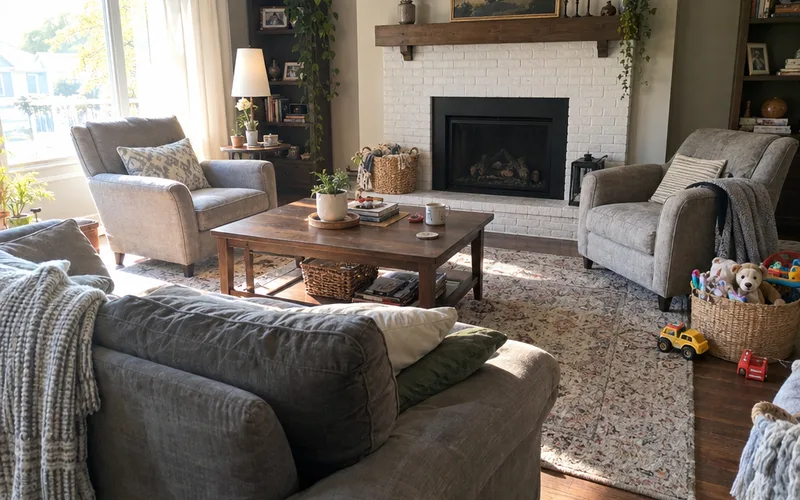
A primary living space works as a TV room instead, with a sectional and media console.
Many homes only have the second kind, and that’s fine.
Name the room’s main job first, and the focal point usually picks itself. Then the rest of the room layout has something to line up with.
2. Pull the Sofa Off the Wall
Move your sofa and chairs away from the walls so they face each other and form one group, even if you only gain a little space behind them. Furniture lined up around the edge leaves a big empty middle, and people end up talking across it.
- Best for: Rooms where every piece touches a wall. Skip it if a very narrow room needs that floor space for walking.
- Cost: Free.
- Time: Same day.
- First step: Get a helper and slide the sofa out from the wall for one evening before you decide.
The big idea here is simple.
Architectural Digest (AD) captions a low-back sectional as making a living room feel larger, especially when floated, which means pulled clear of the walls.
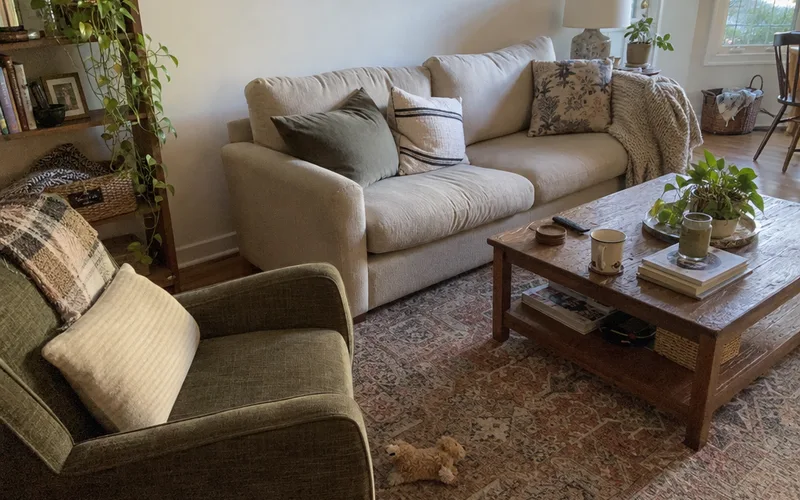
Try it before you buy anything, because moving furniture costs nothing and shows you what the room needs.
If your room is long and thin, a narrow living room layout takes more planning than a square one. Either way, walk the room with a drink in your hand, and keep moving pieces until nothing blocks your path.
3. Style One Surface as a Vignette
Pick one end table or coffee table and treat it like a small display, with a few objects you chose on purpose instead of whatever landed there. A vignette is just a small group of things arranged to be looked at together.
- Best for: Anyone with a cluttered table or a bare one. Skip it if small kids or pets clear every surface daily.
- Cost: Free, using books and objects you own.
- Time: Same day.
- First step: Clear the table completely, then put back only 3 things.
Denver designer Nadia Watts told AD that “the magic is in the layering,” and she stocked one end table with books and personal objects.
That’s a useful model because none of it has to be bought.
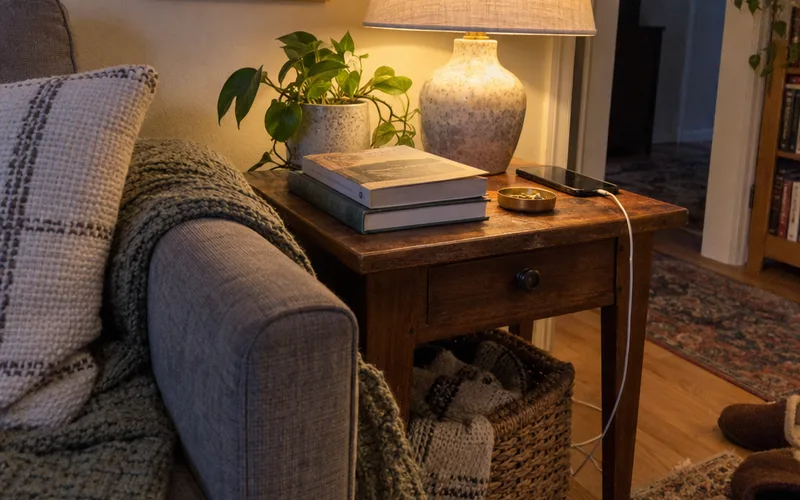
A simple build goes like this:
- Start with something flat, like a stack of books or a tray.
- Add something tall, like a lamp or a vase.
- Add one small object with a story behind it.
If your table is round, a round coffee table looks best with a loose cluster in the middle, while a side table only needs a lamp and one or two small things.
More surface ideas sit in our section on shelf styling, so start with one table and stop when it looks good.
4. Swap Your Throw Pillows
Change your throw pillows when you want a new color in the room, because new color on a sofa takes minutes and it’s easy to undo. A plain sofa can look like a different piece with 2 or 3 new covers.
- Best for: Anyone with a neutral sofa. Skip it if your sofa has a strong pattern, since the pattern already does this job.
- Cost: Low with covers. A high-end pillow runs $65 to $155 at Room & Board, as listed in November 2026.
- Time: Same day.
- First step: Pick one color from a rug or a piece of art you already own.
Why bother matching a color you already own?
The sofa then looks tied to the rest of the room instead of sitting apart from it.
The Houzz guide backs up this way of working: use neutrals for big items like sofas and armchairs. Then go a bit bold with accessories you can swap later.
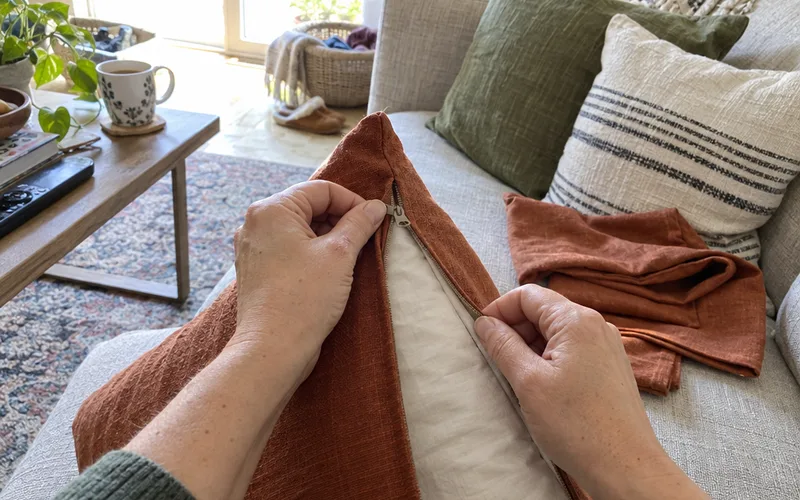
That way, you only pay for pillow covers the next time you get bored.
Our throw pillow ideas go deeper, including how many pillows to use and how to mix and match them.
For now, use one solid, one pattern and one texture, then take away whichever one looks fussy.
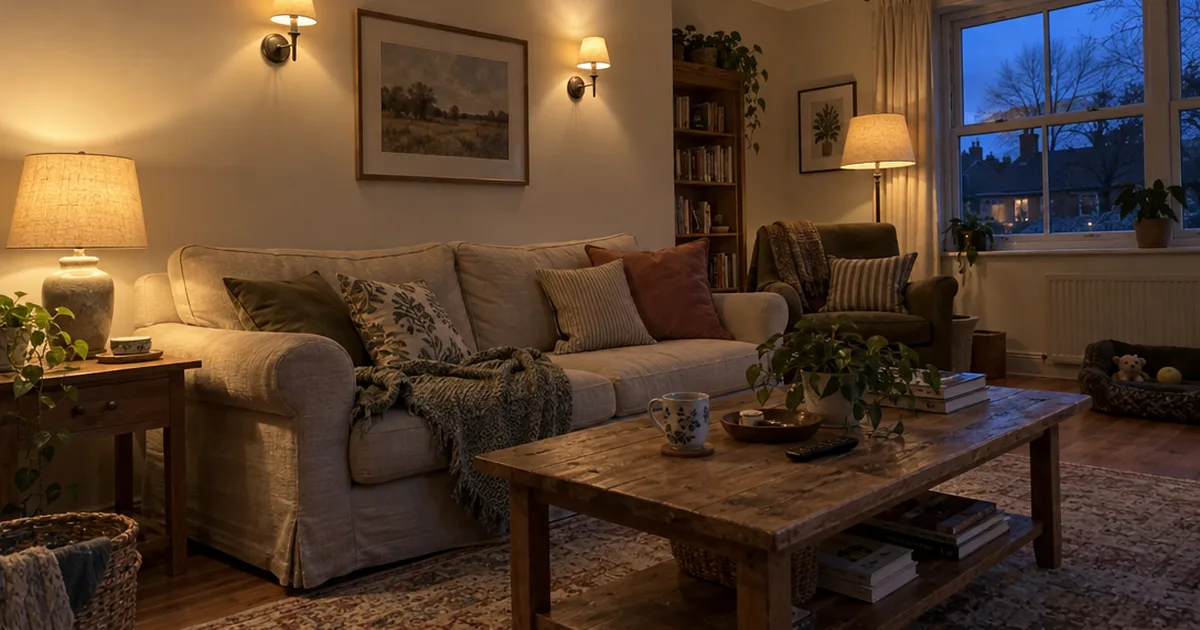
5. Swap Cold Bulbs for Soft, Warm Light
Change any bulb that gives off a cold, blue-white light for one labeled warm, and put your overhead light on the softest setting it has. Light color changes how every paint color and fabric looks after dark, so this small swap touches the whole room.
- Best for: Rooms that look harsh or flat at night. Skip it if your bulbs are already warm and matching.
- Cost: Low. Just new bulbs.
- Time: Same day.
- First step: Turn on every light at dusk and note which bulbs look bluer than the rest.
A designer named Donnelly put the goal plainly in AD: “make sure that your overhead lighting is soft and warm.”
The same advice helps a small room feel cozy instead of cramped.
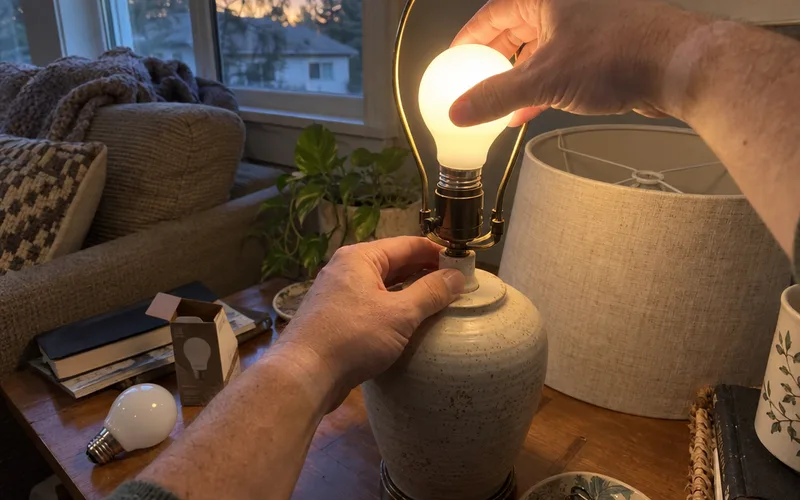
Mixed bulbs are a common problem too, so check the label on each one.
A warm lamp beside a cool ceiling light can make a room look patchy, and matching them fixes that for the price of a few bulbs. Read more about choosing fixtures in our section on living room lighting, then replace the worst bulb tonight.
6. Add a Lamp Where You Actually Sit
Put a table lamp or floor lamp near each seat where someone reads or scrolls, so you stop relying on one light in the middle of the ceiling. Designers call this layered lighting, which just means light coming from several places and heights.
- Best for: Rooms with one ceiling fixture. Skip it if every seat already has its own lamp.
- Cost: Low with a thrifted lamp. The Chronicle floor lamp is $639 at Room & Board, as listed in November 2026.
- Time: Same day.
- First step: Sit in your favorite seat at night and check if you could read a book there.
So where should the lamp go first?
The Houzz guide says to position lighting for any art you want to show off and to keep a well lit spot for reading.
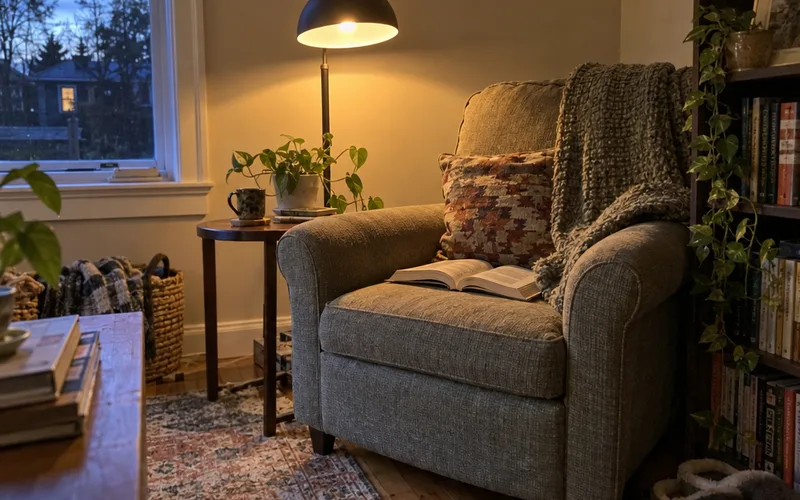
That gives you two clear jobs to fill before you think about anything decorative.
No wiring in the room you want to light? Plug-in and battery options get around that, and small room lighting needs even less.
Borrow a lamp from another room for a night, because that shows you what’s missing before you spend anything.
7. Bring In a Tall Plant
Add one tall plant to an empty corner, because height fills the space between your furniture and the ceiling without using much floor. A plant also adds something living to a room full of fabric and wood.
- Best for: Rooms with an empty corner and some daylight. Skip it if the room has no natural light, and use a good faux plant instead.
- Cost: Low.
- Time: Same day.
- First step: Look at the corner at noon with the lights off, then shop for that level of light.
Designer Amanda Khouri told AD that strategically placed tall plants help add height and dimension to a smaller living room.
The word that matters there is strategically.
A plant in the far corner draws your eye across the whole room, while one hidden behind a chair just looks forgotten.
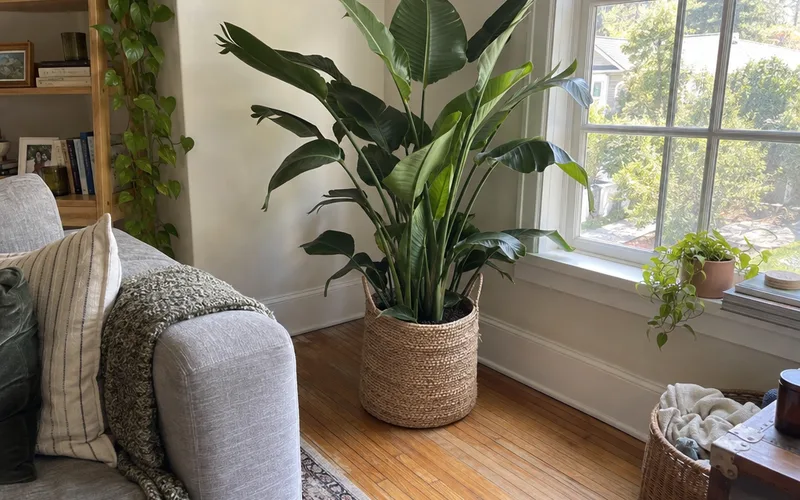
Do you have pets or small children? Check any plant on the ASPCA toxic plant list before it comes home, since that list shows which common houseplants are toxic to cats and dogs.
Our list of indoor plants for living rooms can help you pick from there, but choose by your light first.
8. Edit Your Shelves
Take half of what’s on your shelves off, then put back only what you’d miss, because empty space is what makes the remaining objects look chosen. Crowded shelves read as storage, and edited shelves read as decor.
- Best for: Bookcases that have filled up over the years. Skip it if your shelves are working storage you use daily.
- Cost: Free.
- Time: Same day.
- First step: Empty one shelf onto the floor and leave it empty for an hour to see how it looks.
The usual mistake is trying to style every shelf at once.
Start with the shelf at eye level, since that’s the one you see most, and work outward only when that one looks right.
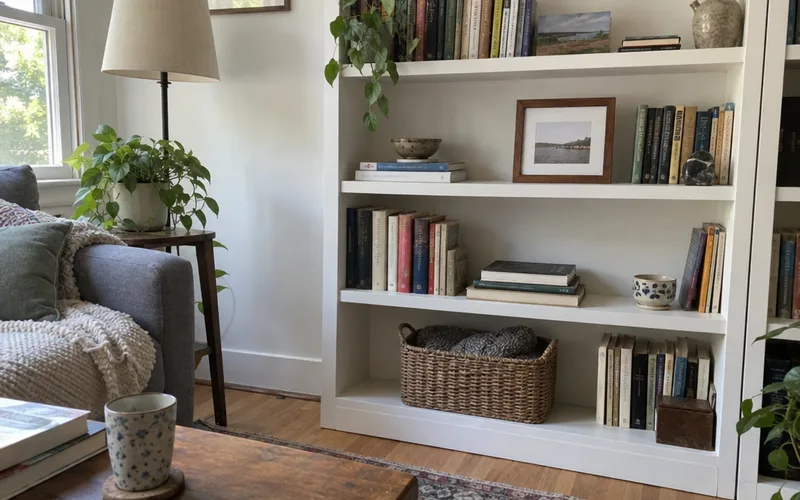
Mix books standing up with books lying flat, and put a small object on top of a flat stack. If you don’t own many books, you can still decorate bookshelves with baskets, frames and pottery.
Leave some air on every shelf, even if that means moving things to a closet. For more on that, see how to avoid a cluttered look and our notes on bookshelf styling.
Open-shelf rooms can look great too, as floating shelves show, but they make clutter even easier to see.
9. Add Something Reflective
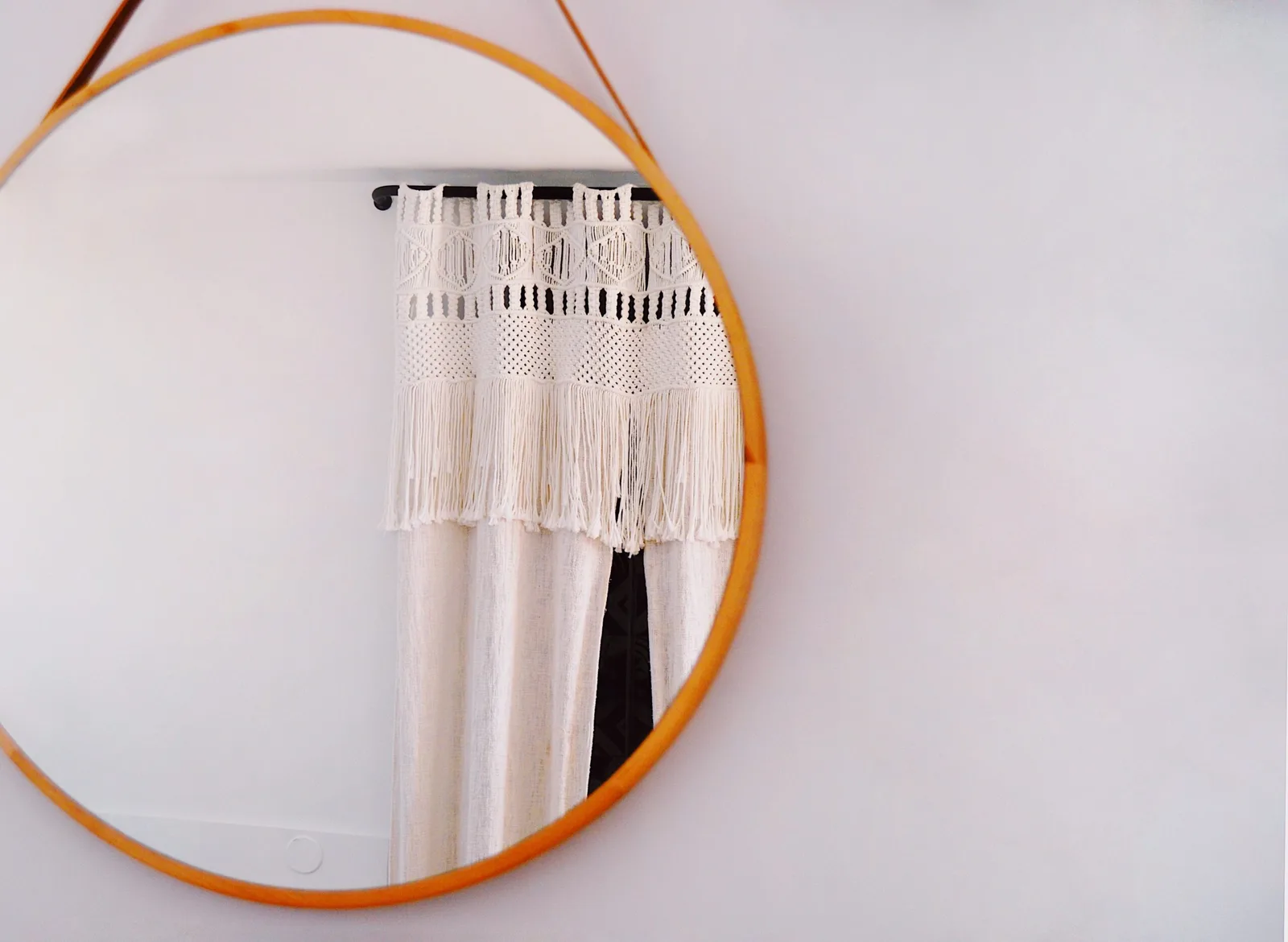
Bring in a mirror, a mirrored table or a metal finish so the room bounces around the light it already has. A dim room feels brighter with reflective surfaces in it, and you don’t need to change a single bulb.
- Best for: Dark rooms and small rooms. Skip it if the only spot for a mirror faces a messy view.
- Cost: Low to moderate, and thrift stores often have framed mirrors.
- Time: Same day.
- First step: Hold a mirror up in a few spots at midday and see where it picks up the window.
Furniture counts here too, not just wall mirrors.
Designer Amy Kalikow told AD that reflective furniture “adds a brightness” and feels lighter and less clunky.
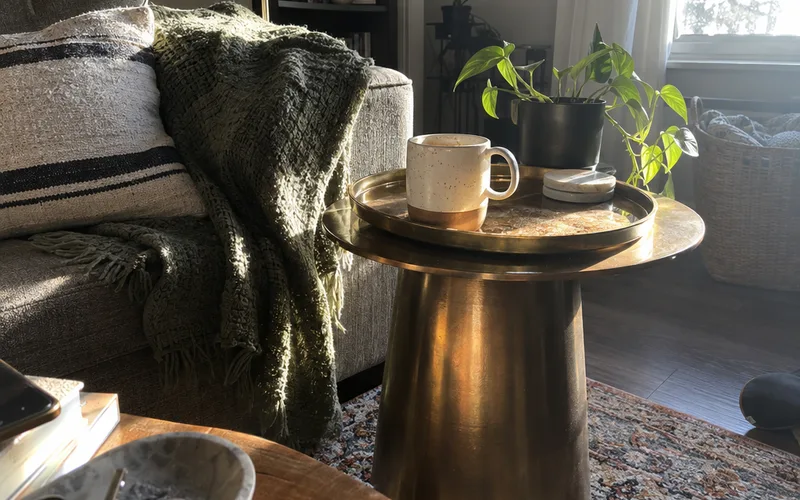
So a mirrored coffee table can do two jobs at once.
Where you hang a wall mirror matters more than its size, so test it first. Our guides on where to place mirrors and mirrors in living rooms cover the spots that work best, and in short, you want it reflecting something you like looking at.
10. Mix More Textures
Add at least one rough, one soft and one smooth material to your seating area, because a room with a single texture can look flat even with good colors. Think linen, wool, leather, wood, metal or stone.
- Best for: Rooms that look fine but feel a bit dull. Skip it if the room already feels busy.
- Cost: Low. A throw and a basket will get you started.
- Time: This week.
- First step: Run your hand over everything near the sofa and count how many materials feel different.
Designer Brooke Mennen-Talsma told AD that small spaces need layers of texture “from both furnishings and hard surfaces, such as stone and cabinetry.”
That second part is the one people miss.
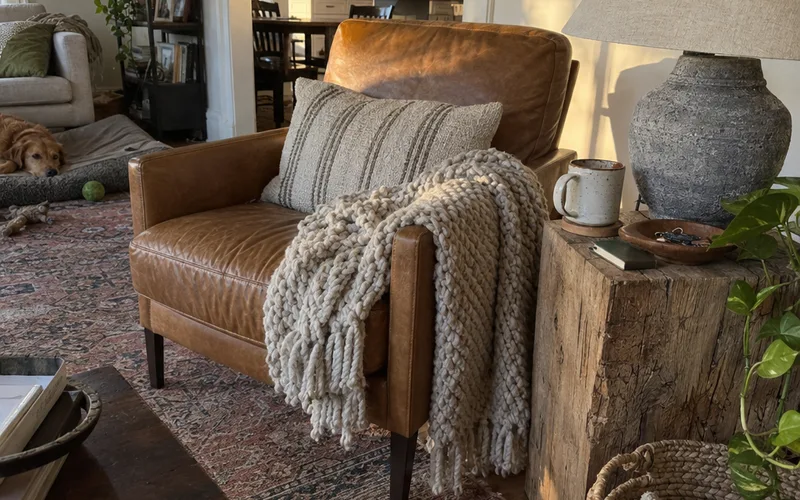
Soft things alone can look like a pile of laundry, so pair them with a hard surface such as a wood tray, a stone lamp base or a metal side table.
In other words, if the sofa is soft, put something solid right next to it.
If you enjoy projects, a few DIY decor ideas can add hand-made texture for very little money.
11. Hang One Oversized Piece of Art
Choose a single large piece of art for your main wall instead of several small ones, because one big piece gives the room a focal point right away. This is also the cleanest fix for the wall behind a sofa.
- Best for: Rooms with a big blank wall. Skip it if you rent and can’t put a heavy piece on the wall.
- Cost: Low with a large print or a thrifted frame.
- Time: This week.
- First step: Tape a sheet of paper the size of your planned piece to the wall, and live with it for a day.
Designer Kate Hartman told AD that a single oversized piece “creates an immediate focal point” without “taking up valuable floor space.”
That last part is the real win in a tight room.
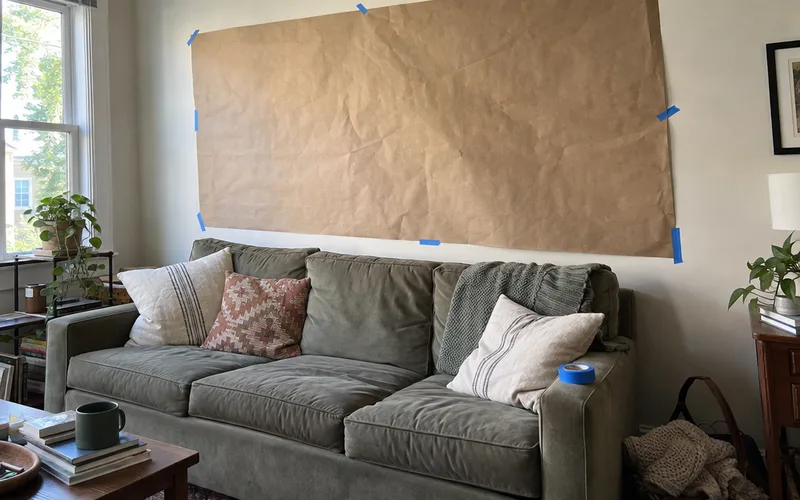
Art doesn’t have to be expensive to work at this size, either.
A big fabric panel, a framed poster or a blown-up family photo all count. Our section on living room walls shows more ways to fill a wall, and art behind a couch gets its own rules.
Check the paper template from both the doorway and the sofa before you put any holes in the wall.
12. Build a Gallery Wall
Group frames, prints and small objects on one wall when you own lots of small pieces you love, since a group reads as one big piece from across the room. A gallery wall also grows over time, so you never have to finish it in one weekend.
- Best for: Collectors and anyone with family photos. Skip it if you want the room to feel very calm.
- Cost: Low if you reuse frames.
- Time: This week.
- First step: Lay everything out on the floor and move it around until it looks balanced.
Here’s what a bold version looks like:
Houston designer Meg Lonergan wrapped one room’s walls with salon-style art, meaning frames hung close together from low to high. She calls the look “dramatic and cozy” in AD.
You don’t have to go that far.
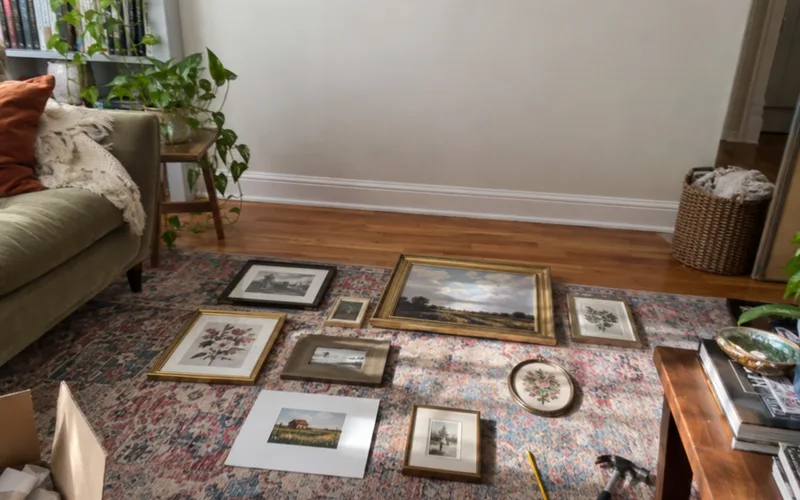
Start with a tight group above one piece of furniture, then let it spread when you find more art you like. Keep one thing the same across the group, like the frame color or the mat, so the mix looks planned.
And if you have an empty wall that just needs something small, a shorter grouping is fine too.
13. Add a Rug That Connects the Seating
Choose a rug big enough for the front legs of your sofa and chairs to sit on, so the seating reads as one group instead of pieces floating around a small mat. A rug that’s too small is one of the easiest mistakes to spot in a living room.
- Best for: Rooms with bare floors or a tiny rug. Skip it if your rug already reaches all the seating.
- Cost: Moderate. Sitara rugs start at $1,699 at Room & Board, as listed in November 2026, and you can find far less expensive rugs elsewhere.
- Time: This week.
- First step: Mark the outline of the rug on your floor with painter’s tape before you order.
A bigger rug can get pricey, and there’s a neat way around that.
Anne McDonald of Anne McDonald Design told AD “I love to layer rugs in a smaller space.” So you can put a small patterned rug on a cheap, larger one in a natural fiber.
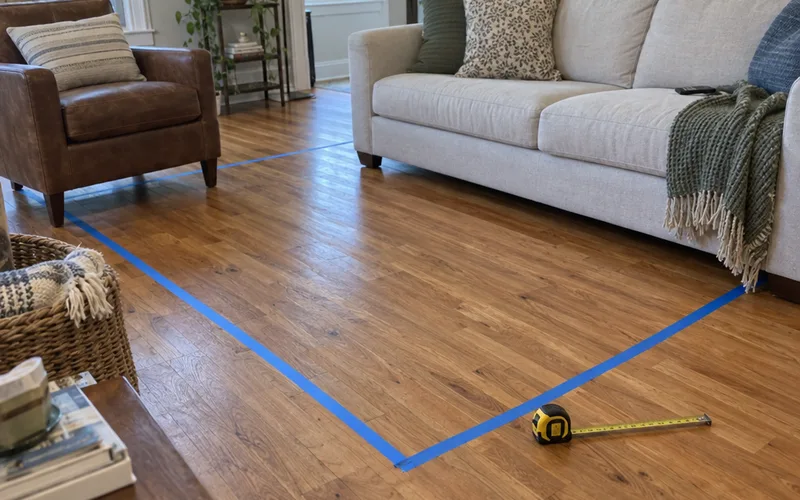
That gives you the size and the pattern without paying for both in one rug.
Exact sizes depend on your room and your seating, so measure first. Our rug size guide walks through the options, and a sectional rug has its own rules.
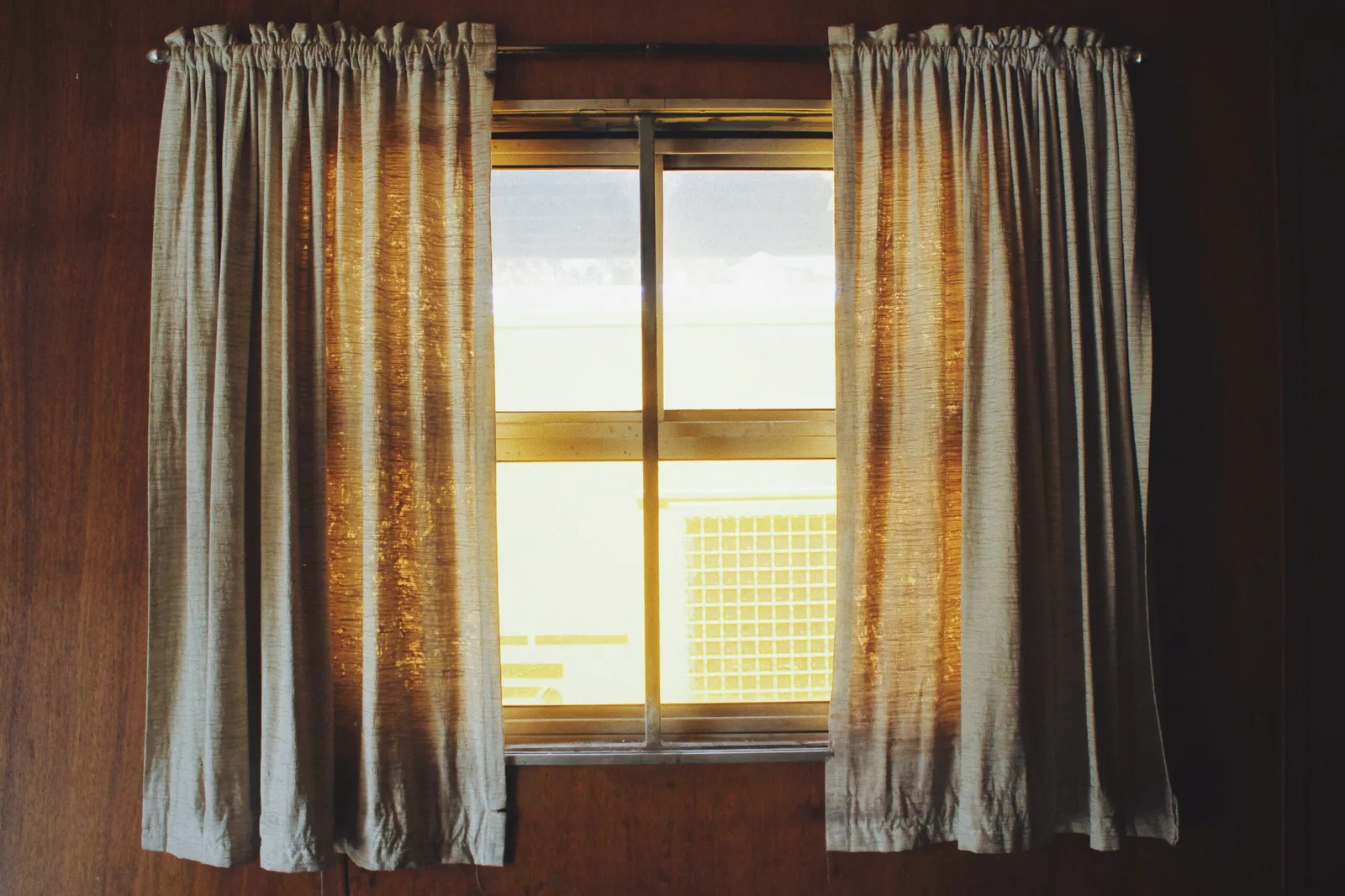
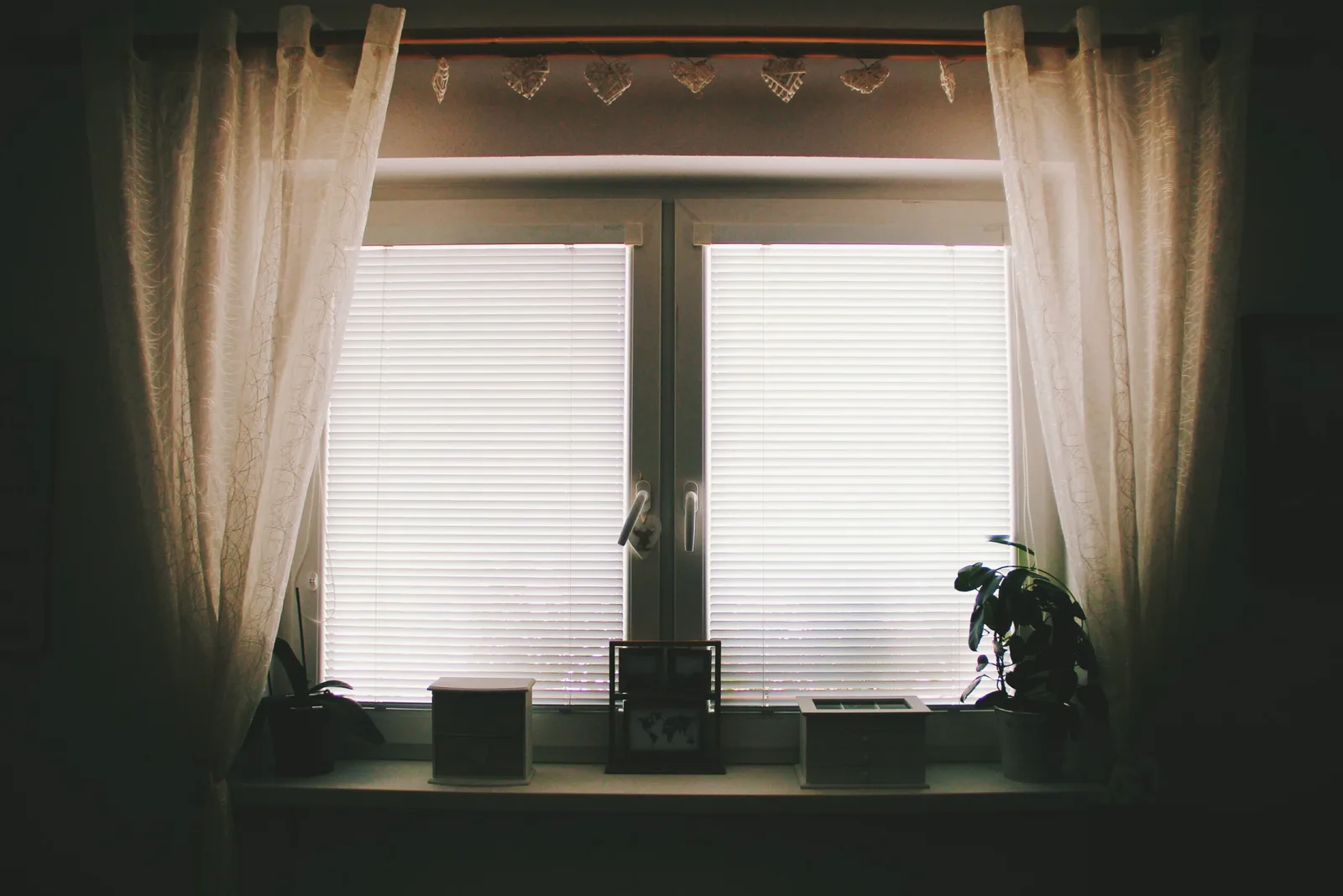
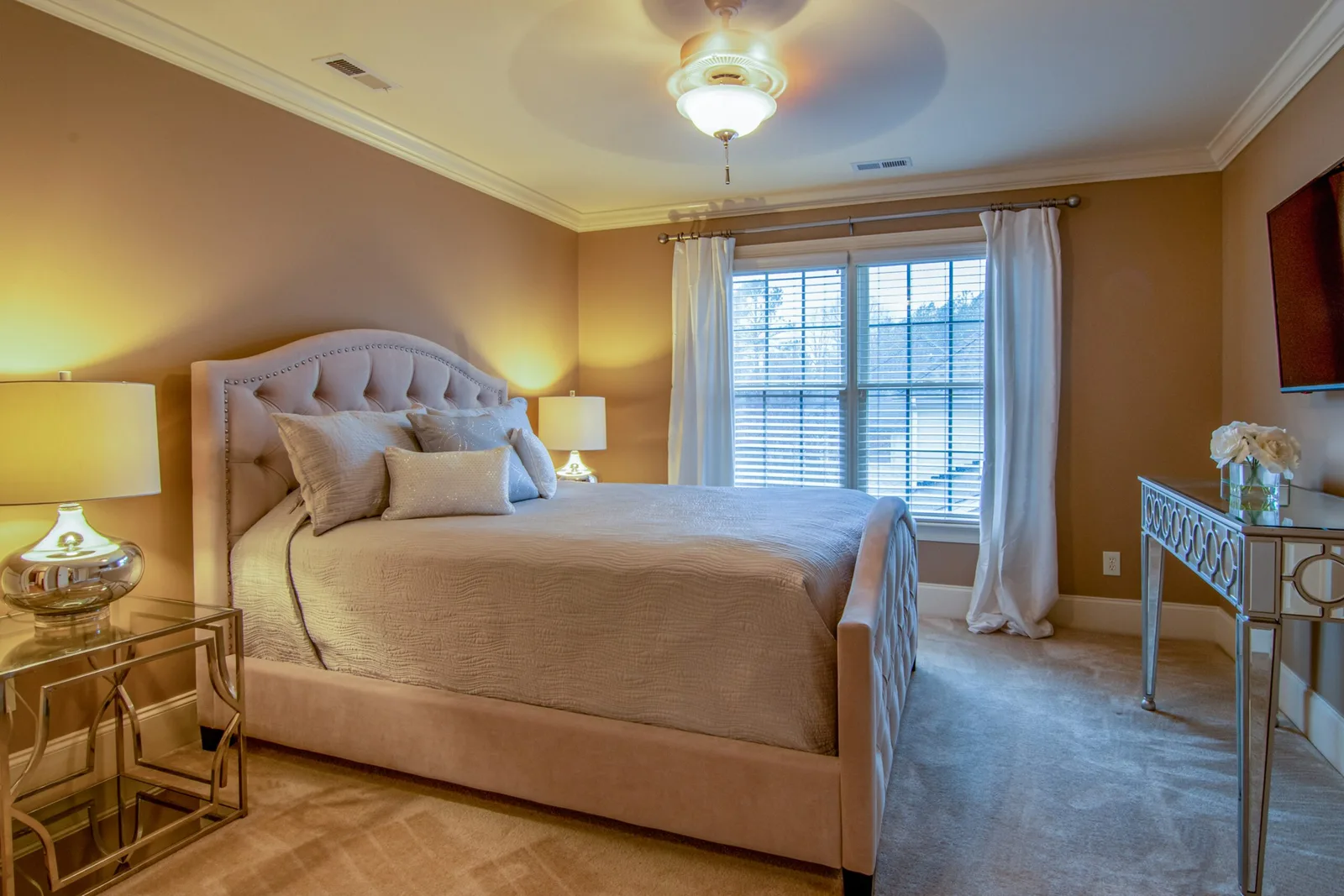
14. Hang Curtains Near the Ceiling
Mount your curtain rod close to the ceiling and let the panels fall to the floor, so your eye travels up and the room looks taller. Curtains that stop at the window frame cut the wall in half, and they make the ceiling look lower than it is.
- Best for: Rooms with low ceilings or small windows. Skip it if you rent and can’t drill, though tension rods help in some window frames.
- Cost: Low to moderate.
- Time: This week.
- First step: Measure from your planned rod height down to the floor before you buy panels.
Khouri, the designer behind the plant advice in #7, also told AD that “curtain panels hung near the ceiling” help add height and dimension.
This is one of the few tricks that changes how tall the room looks without touching the walls.
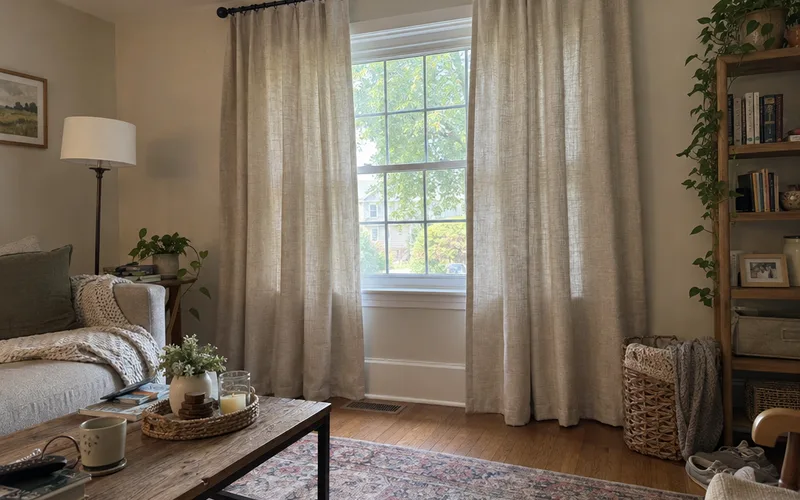
Buy the panels only after you’ve measured from the actual rod position. Curtains that end above the floor are a common and easy mistake to make, and they undo the whole effect.
Our living room curtain ideas cover fabrics and colors, and window treatment ideas go past curtains to shades and blinds.
Do you like a narrow window look? Narrow curtain panels can suit those frames better.
15. Make a Reading Corner
Turn one unused corner into a place to sit and read, with a comfortable chair, a small table and a light you can reach. A corner with a clear job makes the whole room feel more thought through.
- Best for: Rooms with an empty corner or a deep window. Skip it if your room needs every inch for walking.
- Cost: Low if you move a chair from another room.
- Time: This week.
- First step: Sit in the corner on a kitchen chair for a few minutes, and see if the light and view feel good.
Windows are the natural first choice, if you have one that works.
The Houzz guide suggests a window seat as a go-to reading or nap station, and a window reading nook gets you most of that without any building.
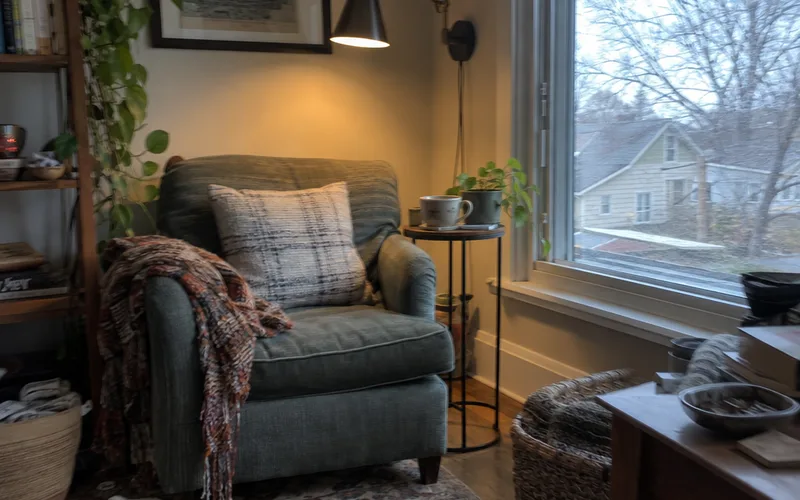
A small room can manage this too.
You just need a slim chair and a wall lamp, and small-space nooks show how little floor it takes. The same idea works in a living room corner with no window, as long as you add a lamp.
Start with the chair you already have, because comfort matters more here than matching.
16. Swap a Bulky Table for a Round or Clear One
Replace a heavy, square coffee table with a round or see-through one, which opens up the walkway and makes the room feel less crowded. Corners catch shins in tight rooms, and solid tables block the view of the rug and floor.
- Best for: Tight rooms and homes with small kids. Skip it if you need the storage inside your current table.
- Cost: Moderate. Tyne round end tables run $389 to $1,039 at Room & Board, and Belmar coffee tables run $1,199 to $1,799, as listed in November 2026.
- Time: This week.
- First step: Check Facebook Marketplace for a round table before you buy new.
Both shapes solve the same problem in different ways.
A room description on that same Room & Board page says warm wood tones and a round coffee table “soften the room and improve flow.”
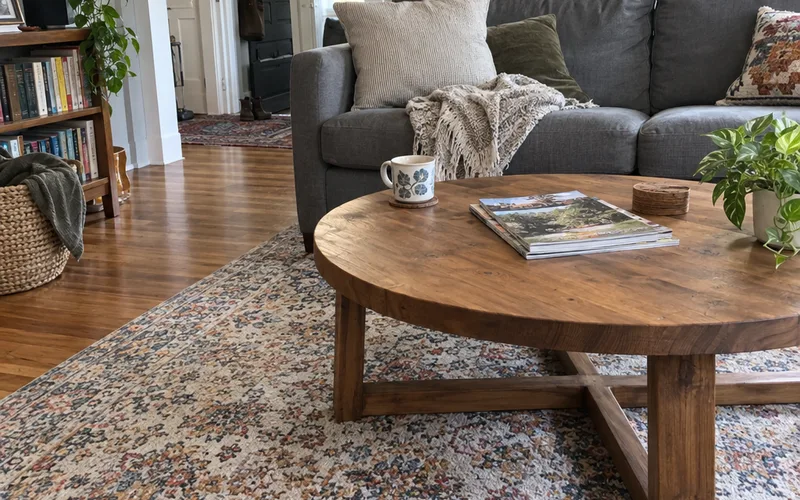
Khouri tells AD to try a Lucite side or coffee table, a clear acrylic, to remove the visual weight.
So round helps your walking path, and clear helps your eyes.
Is your room narrow? The Houzz guide says to skip the ottoman or coffee table there and go for a deeper sofa instead.
I’d try the room without one for a week before buying anything.
17. Style the Mantel or Refresh the Fireplace Surround
Treat your fireplace as the room’s main display if you have one, with a clean mantel and a surround that suits the rest of the room. This feature already pulls every eye, so a small change here does more than the same change anywhere else.
- Best for: Any room with a fireplace. Skip it if your room has none, and use #11 to make a focal point instead.
- Cost: Low for styling, and more for new surround materials.
- Time: This week.
- First step: Clear the mantel completely, then add back one large item and two smaller ones.
Fireplaces are common in photographed rooms, so you have plenty of examples to study.
The Houzz filters count a standard fireplace in 139,335 living room photos as of November 2026.
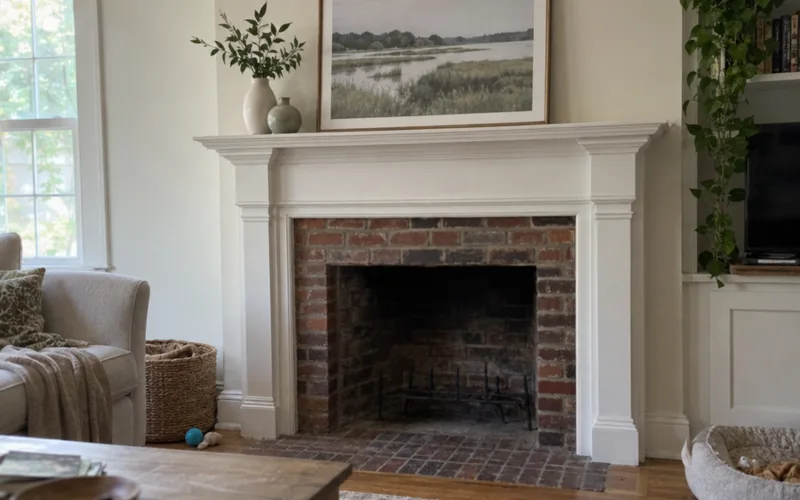
Stone surrounds appear in 75,623 of them, tile in 29,637, brick in 17,905 and wood in 15,196.
That means stone is the most common surround in that library, but common doesn’t mean right for your room.
Follow the maker’s instructions and local fire rules for anything placed near a working firebox. Our section on living room fireplaces goes further, and mantel decor ideas can fill the shelf.
18. Give a Corner a Second Job
Use a table or small desk in a corner as a place for work, crafts or homework, so your living room earns its keep and the mess has somewhere to go. Lots of homes need one room to do several things, and this keeps those jobs from spreading across the sofa.
- Best for: Homes with no spare room. Skip it if the living room is your only quiet place to relax.
- Cost: Low if you reuse a table.
- Time: This week.
- First step: List what currently piles up on your sofa and coffee table.
You’re not stretching the room by doing this.
The Houzz guide points out that plenty of living rooms use a desk or table as a craft station or homework spot.
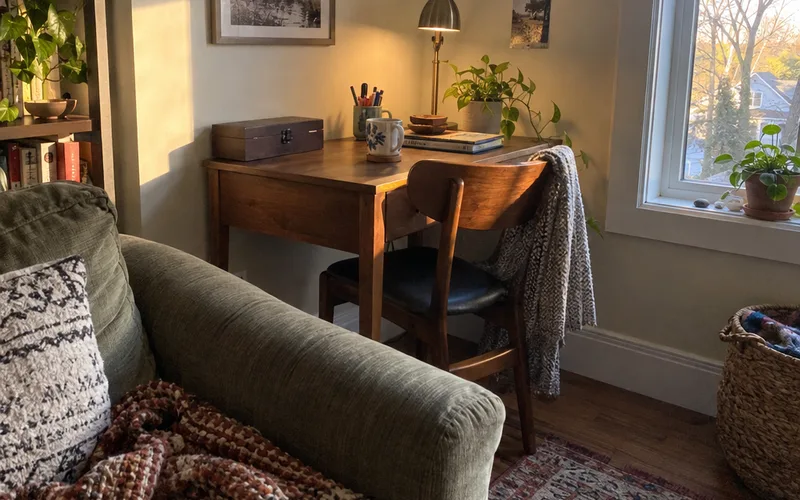
The trick is making that spot look like it belongs.
Match the desk to a wood tone already in the room, and put supplies in a closed box or basket so the corner looks calm by evening. If your setup is for real work, our home office section and these desk essentials can help you pick what to keep out.
19. Rotate a Few Things by Season
Keep your big pieces neutral and change just a few small things each season, like pillow covers, a throw, a vase or the mantel display. That gives you a fresh room a few times a year without a new budget each time.
- Best for: Anyone who gets bored quickly. Skip it if you don’t have storage for the things you swap out.
- Cost: Low. Reuse the same items each year.
- Time: This week.
- First step: Pick one bin for the things you take out of the room, and keep it where you can reach it.
Think of this as the same idea as the pillows in #4, only on a schedule.
Spring might mean lighter fabrics and spring decor ideas, and autumn might bring fall touches like warm colors and dried stems.
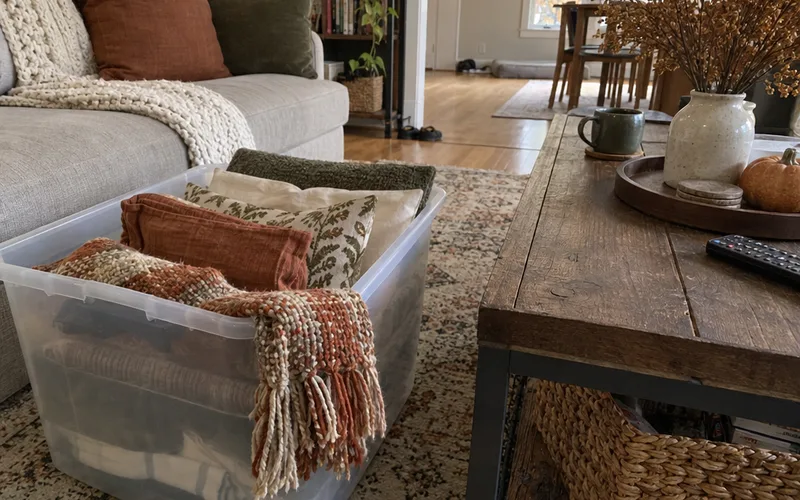
December is when most people go big.
Our holiday decor section follows the whole year, and Christmas living room ideas cover the tree and the mantel. Keep greenery and lights away from heat, and turn decorative lights off before you go to bed.
Start with just the coffee table, and you’ll quickly see how little it takes to change the room.
20. Paint the Walls a Color That Suits Your Light
Choose a wall color by how much daylight your room gets, because that decides how the color will look more than any trend does. Paint also changes a lot of what you see for a low cost.
- Best for: Anyone who owns or can get permission to paint. Skip it if your lease rules it out.
- Cost: Low, for paint and supplies.
- Time: 2-4 weeks, counting samples and evenings.
- First step: Paint large sample squares on 2 walls, then look at them morning and night for a few days.
The rule that matters most comes from the Houzz guide: a room with little natural light benefits from a light and airy color. A sunny room gives you more freedom.
So if your room faces a shady side, start light.
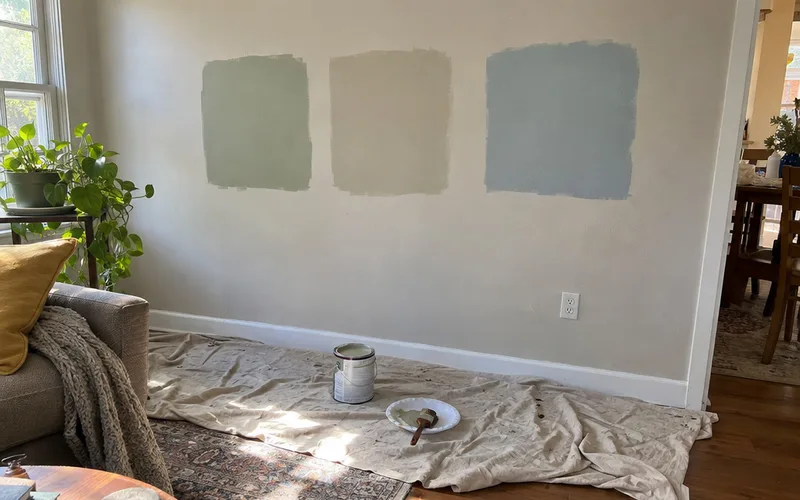
If it gets lots of sun, you can try something deeper.
Our answer to what color to paint walks through it in more detail, and light paint colors help when you’ve landed on that side. Take your time on this, since repainting costs more than one more sample.
21. Color-Drench the Room
Paint the walls, trim and ceiling all in one color, a look called color drenching, so the edges of the room blur and your eye keeps moving up. It sounds risky, yet it can make a small room feel airier because nothing breaks up the walls.
- Best for: Small rooms and rooms with awkward trim. Skip it if you love white trim and want to keep it.
- Cost: Low to moderate, since you’ll need more paint.
- Time: 2-4 weeks.
- First step: Try it first on one wall with its trim to see if you like the effect.
One real project shows how it works.
In AD, Anne McDonald used Benjamin Moore Pristine on the walls, trim and ceiling of a small living room, plus coordinated Roman shades, which helps draw the eye up.
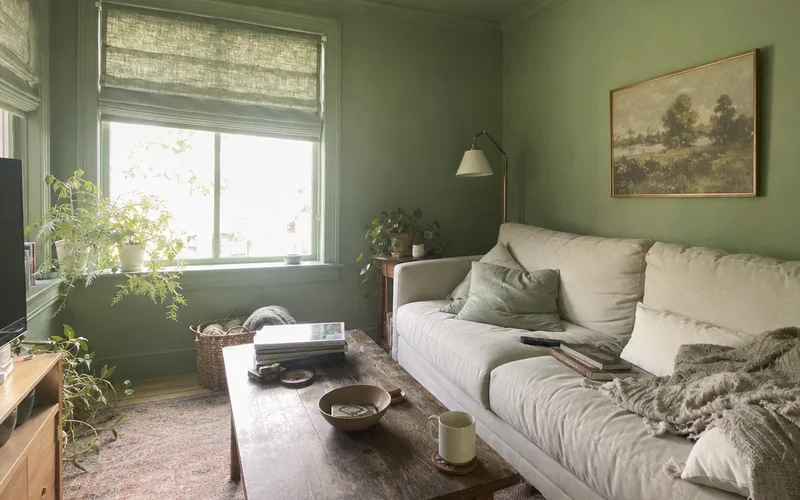
Note how the shades match too, so nothing cuts across the view.
You don’t need a deep color for this to work, either. A soft shade drenched over everything can look quiet and airy, and that makes it a safer first try than a dark one.
Pick a color you already like on one wall, and only then commit to the ceiling.
22. Try Wallpaper or Paneling on One Wall
Pick one wall, usually behind the sofa or TV, and cover it with wallpaper or paneling for a pattern or texture that paint can’t give you. This gives you most of the impact for a fraction of the mess of doing the whole room.
- Best for: Rooms with one obvious feature wall. Skip it if your walls are bumpy or badly damaged.
- Cost: Moderate.
- Time: 2-4 weeks.
- First step: Order samples and tape them up, since patterns look very different at full size.
Few rooms in that photo library do this, which is part of why it stands out.
As of November 2026, the Houzz filters count wallpaper in 3,287 living room photos. Paneling shows up in 2,858, shiplap in 1,795 and wainscoting in 1,453.
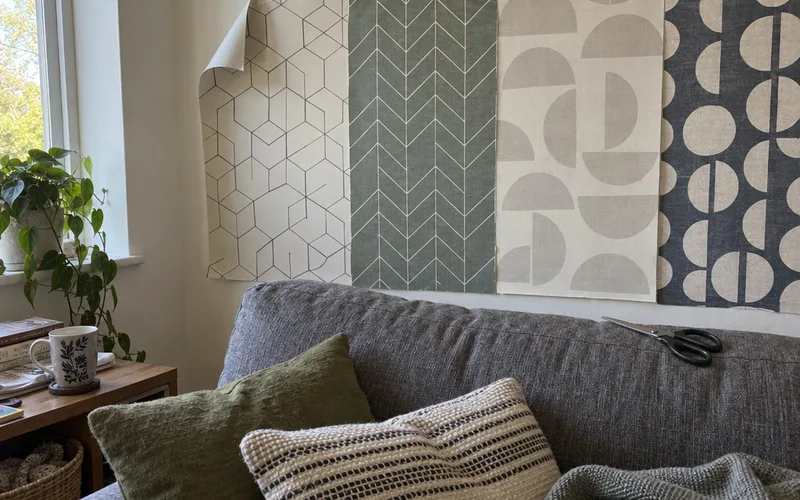
Pattern can even help a small room.
Hilary Gibbs, cofounder of the wallpaper brand LIVDEN, told AD that “geometrics bring structure, rhythm, and a modern edge that expands the perception of space.”
Keep in mind that she sells wallpaper, so test it on your own wall first. Our notes on choosing wallpaper and accent wall ideas can help you narrow it down.
23. Rethink the Sofa
Replace your sofa only when it’s the wrong size or shape for the room, and look for a low back or a single long piece rather than several small ones. A sofa takes up the most floor and the most visual space, so getting it right changes everything around it.
- Best for: Rooms where the sofa blocks a path or a window. Skip it if the size is fine and only the fabric is tired, since a slipcover costs less.
- Cost: High. Metro sofas run $1,599 to $3,799 at Room & Board, as listed in November 2026.
- Time: 2-4 weeks.
- First step: Tape the new sofa’s outline on your floor and walk around it for a day.
Big doesn’t always mean wrong, and that surprises people.
Pierce Jordan of Shane and Pierce told AD about a sectional “at 10 by 10 feet” whose low back “allows the space to feel open and does not interfere with the lines of sight.”
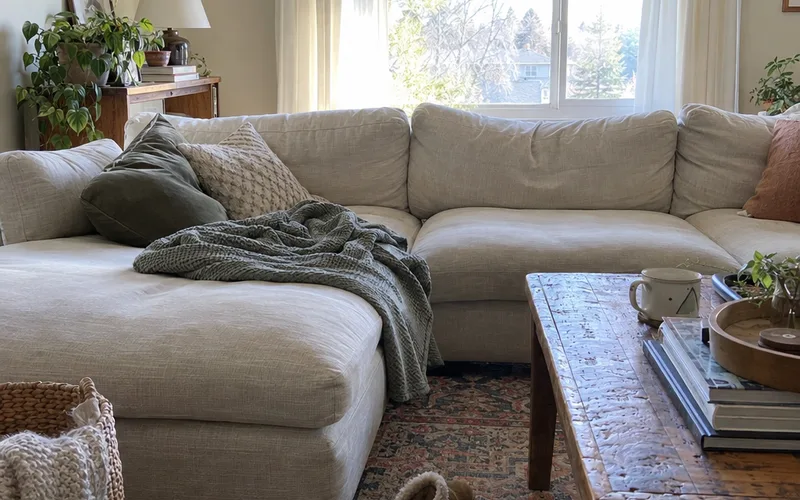
But size still has limits.
The Houzz guide warns against cramming a too-large sofa into a too-small space at the cost of walking paths or storage.
It also says to seat your household plus an extra seat or two for guests.
Our picks for small living room furniture are a good place to compare shapes.
24. Add Built-Ins or Hidden Storage
Add built-in shelves or closed cabinets on one wall when clutter is what’s really wrong with the room, because no styling trick survives a room with nowhere to put things. This is the biggest job on the list, and it’s the last thing to try.
- Best for: Owners with long-term plans and small rooms. Skip it if you rent, and use freestanding cabinets instead.
- Cost: High. Even a freestanding Kenwood storage cabinet runs $2,299 to $5,499 at Room & Board, as listed in November 2026.
- Time: 1-3 months.
- First step: Take a photo of everything that sits out on your surfaces, then group it by what needs a home.
Built-ins have real pros and one obvious con.
The Houzz guide says they take up less space and are often customized to your needs, but they can run on the more expensive side.
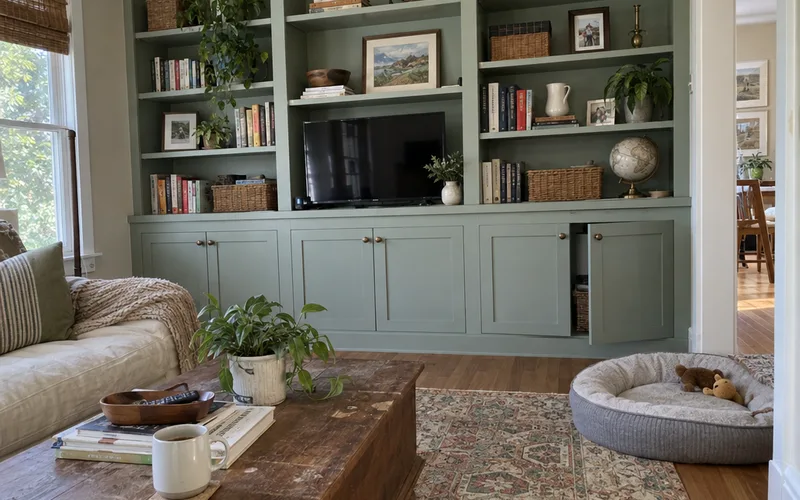
They also pay off in looks, and not just in storage.
AD reports that added storage and built-ins give any room a “finished” component, per Brooke Mennen-Talsma, so they solve two problems at once. If that’s out of reach right now, a wall shelf or two will get you partway there this month.
Long Shots Worth Knowing About
Bigger living room projects can look stunning, but they need a specialist, a real budget or both. Each one has a clear deal-breaker:
- A limewash feature: suits a moody room, like the bold green limewash Austin designer Christina Cruz used in a small space, but this chalky lime-based paint takes a practiced hand.
- A wall-to-wall mural: suits a room you plan to keep, since Amy Kalikow says murals with depth can make a room feel spacious. A painted one is hard to undo, so try peel-and-stick first.
- Beams or a vaulted ceiling: the Houzz filters count 7,270 rooms with exposed beams and 9,701 with vaulted ceilings, but both mean structural work.
Save these for a renovation, and start with the numbered list.
What Is the Best Color for a Living Room?
White is the most common living room wall color in the Houzz photo directory, with 109,138 photos as of November 2026. The best color for your room still depends on how much daylight it gets.
A dark room benefits from a light and airy color, and a sunny room gives you more leeway.
So what do those numbers really tell you?
Beige follows white with 80,550 photos, then gray with 56,956, while blue has 12,192 and green has 6,714.
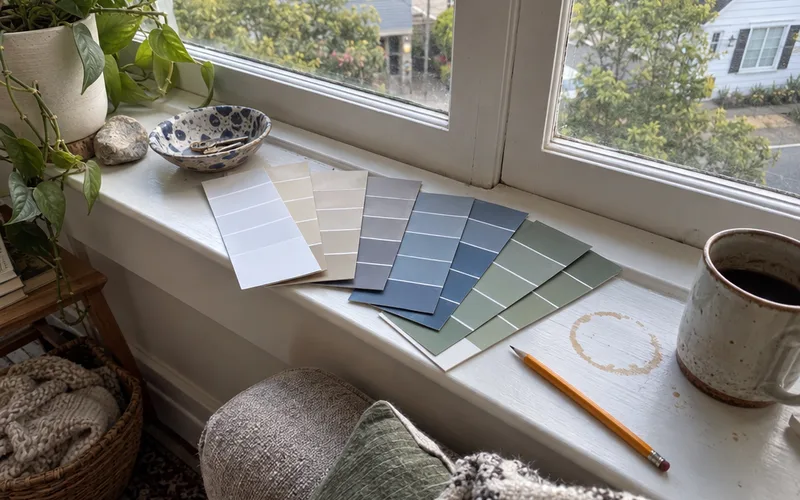
Those counts show what’s common among photos in one directory, not what you should choose. Blue and green are a good pick if you want your room to stand out from the crowd, and white is the safe choice if you want to change your accents often.
Test any color on your own wall before you commit, because daylight changes it through the day. From there, our guide to the best wall colors can help you settle on a shade.
How to Pick a Living Room Style
Pick a living room style by finding what repeats in the rooms you’ve saved. Then match it to the 19 styles the Houzz directory lists, from Contemporary and Farmhouse to Coastal and Eclectic.
A repeated material or color tells you more than a style name does.
Try this before you buy anything.
Save 10 photos you love, then write down what shows up in at least 3 of them, like warm wood, black metal or curved furniture.
Those repeats are your style, whatever name they go by. They’re also your shopping list, and they keep you from buying pieces that fight each other.
Once you know your leaning, our section on living room styles goes deeper. For example, modern farmhouse rooms, Scandinavian rooms and minimalist rooms each use different materials, and warm, cozy rooms work across most of them.
How to Arrange Living Room Furniture
Arrange living room furniture by placing the sofa first, facing your focal point, then adding chairs so people can talk easily and still walk through the room. A Room & Board room description makes the same link, saying an open layout keeps pathways clear while layered lighting adds warmth and depth.
Here’s the order I’d follow:
- Sketch the room on paper, including doors, windows and outlets.
- Tape the sofa’s outline on the floor where you think it should go.
- Add chairs so they angle toward the sofa rather than away from it.
- Add the coffee table, then the side tables and lamps.
- Walk every path you use daily, and move whatever gets in your way.
Tape costs almost nothing, and it can save you from returning a big piece of furniture. When you’re ready to shop, our living room furniture guides help you pick each piece.
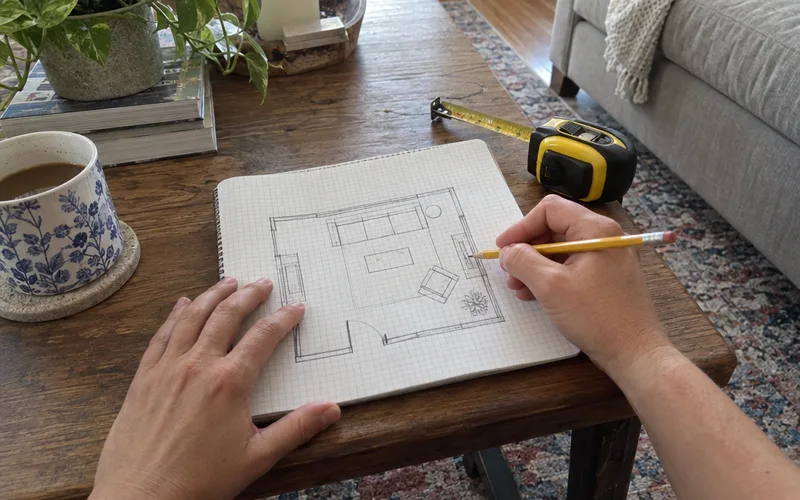
Tricky room shapes need a bit more thought. For a room with a TV and a fireplace or a corner TV, decide which one you use most, then build the seating around that one.
How to Decorate a Living Room Wall
Decorate a living room wall by choosing one main move for it, such as one large piece of art, a gallery wall, a mirror or a shelf. Pick by what the wall needs to do, since Kate Hartman told AD that a single oversized piece works as a focal point, while a mirror is better at bringing light in.
Size is what trips most people up.
Small art on a big wall tends to look like an accident, so go bigger than you think you need, or group small pieces together.
Elegant doesn’t have to mean expensive. Our elegant wall ideas and small wall decor both work with pieces you may already own.
Renters can use picture ledges, leaning frames or removable hooks, as long as the hooks are rated for the weight. Then, once the wall is done, look at the room from the doorway and take down anything that competes with your main piece.
How to Decorate a Small Living Room
Decorate a small living room by making every piece do more than one job. Designer Ellie Christopher told AD that “every piece of furniture should serve a purpose, if not several.”
One larger piece in place of several small ones can also make the room feel bigger.
That last point goes against what most people assume.
Designer Francesca Grace told AD that one sweeping curved sofa did more than several small seats could. She says it “makes the room feel more open and intentional.”
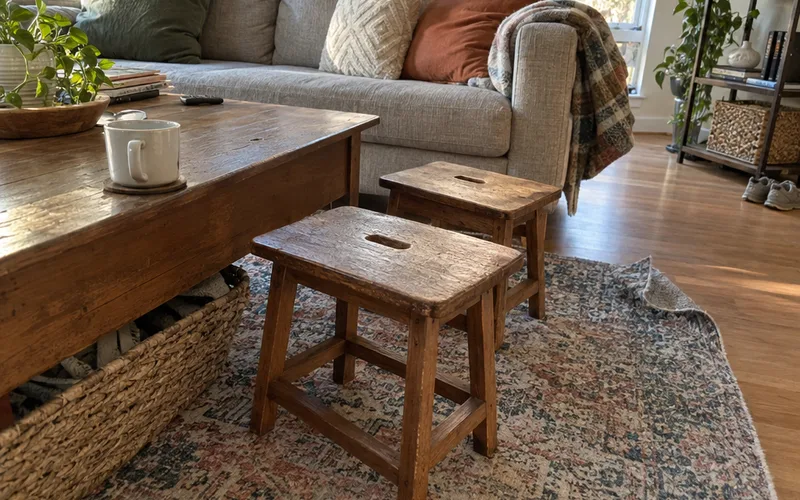
Lots of small pieces mean lots of edges, so the room can look busier.
Extra seats can stay small and movable, like the small pull-up stools Hartman finds an easy, unobtrusive way to add seating. And small rooms are far from unusual, since the Houzz filters count 22,578 compact living rooms as of November 2026.
If money’s tight as well, our ideas for small rooms on a budget put these moves in order, and apartment living rooms add renter-friendly fixes.
How to Decorate a Living Room on a Budget
Decorate a living room on a budget by starting with free moves, then paying for small swaps and paint before you buy any furniture. Room & Board list prices show the gap, with pillows at $65 to $155 and sofas at $1,599 to $3,799 in November 2026.
Here’s a simple spending order for a tight budget:
- Spend nothing, and use #1, #2, #3 and #8.
- Buy bulbs and a thrifted lamp for #5 and #6.
- Buy pillow covers and a throw for #4 and #10.
- Save for paint in #20.
- Replace furniture only after all of that.
Why does the order matter so much?
Each step shows you what the room still needs, so you don’t buy a new sofa to fix a problem that better lighting would have solved.
Our list of cheap decorating ideas has more low-cost picks, so start there once you’ve worked through the free moves.
How to Decorate a Living Room With a TV
Decorate a living room with a TV by making the screen part of a bigger display, such as a gallery wall, a media console or built-ins. Wall-mounted TVs are the most common setup in the Houzz filters, with 73,847 photos as of November 2026, ahead of 18,901 built-in media walls.
The surprise is in the rest of the data:
The same filters count 81,184 living room photos with no TV at all, plus 15,472 with a freestanding set and just 5,750 with a concealed one.
So hiding the screen is rare, and you don’t need to do it for the room to look good.
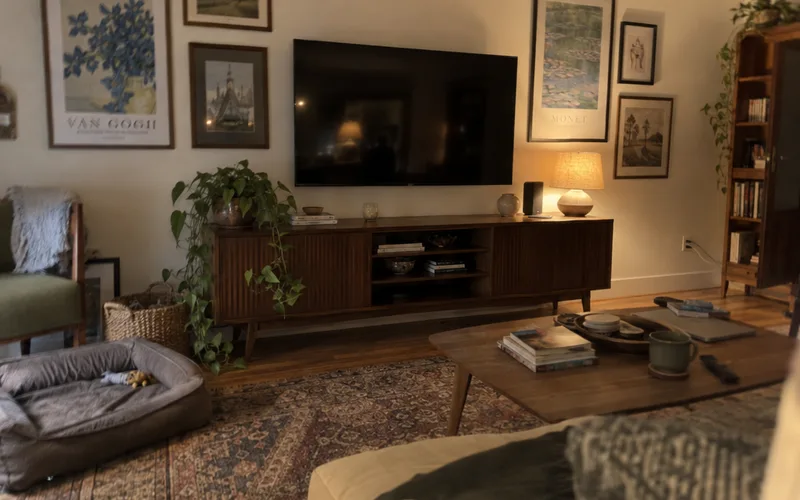
Designer James Yarosh offers a nice model, since AD reports he hung a gallery wall of museum posters around a TV, folding the screen into the display.
Our TV wall decor ideas and TV stand ideas cover the details, and a small room with a TV needs the plan most of all.
How to Make a Living Room Feel Cozy
Make a living room feel cozy by turning down harsh overhead light and adding warm lamps, soft textures and seats that face each other, in that order. AD quotes a designer named Donnelly saying that “good, intentionally designed lighting schemes can make a small space feel cozy and inviting rather than cramped.”
Light is the place to start, since it changes everything else in the room.
Texture comes next, so add a throw, a heavy curtain or a wool rug, and keep at least one hard surface nearby so the softness has some contrast.
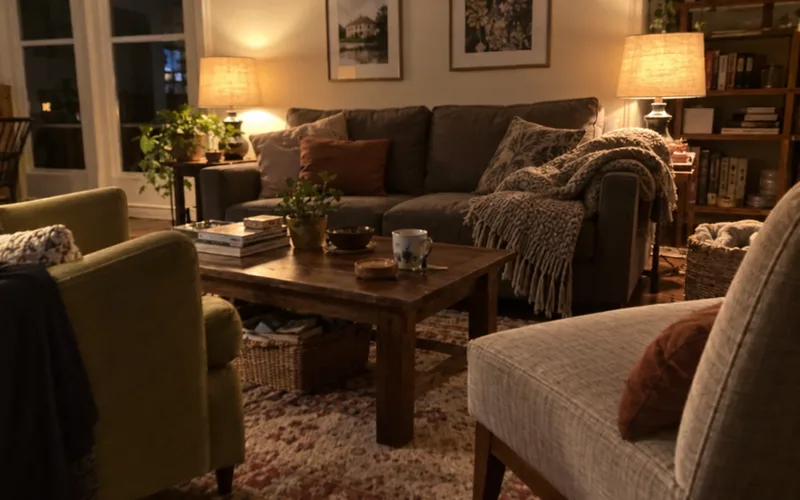
After that, look at how your seats face each other. People linger longer when they can talk comfortably, so pull chairs in closer than feels natural at first.
Cost doesn’t need to be a barrier here, and our guide to a cozy room on a budget shows how little it can take. Try it tonight by turning off the ceiling light and using only your lamps.
What Makes a Living Room Look Expensive?
A living room looks expensive when its scale is right, its lighting is layered and its surfaces are edited, and none of those depends on a big budget. Designer Ellie Christopher told AD that “scale and proportion are essential” to living well in small spaces, and that holds up in a room of any size.
Here’s where to focus first:
- Choose one big rug rather than a small one.
- Hang curtains high and let them reach the floor.
- Use one large piece of art rather than many small ones.
- Keep surfaces mostly clear.
- Match the color of your metal finishes.
Notice that none of these calls for a pricey sofa.
Colors help here too, and repeating one is the cheapest trick there is. A room description from Room & Board notes that a sofa fabric color “plays off the artwork”, and you can copy that idea with a throw that picks up a color from a print.
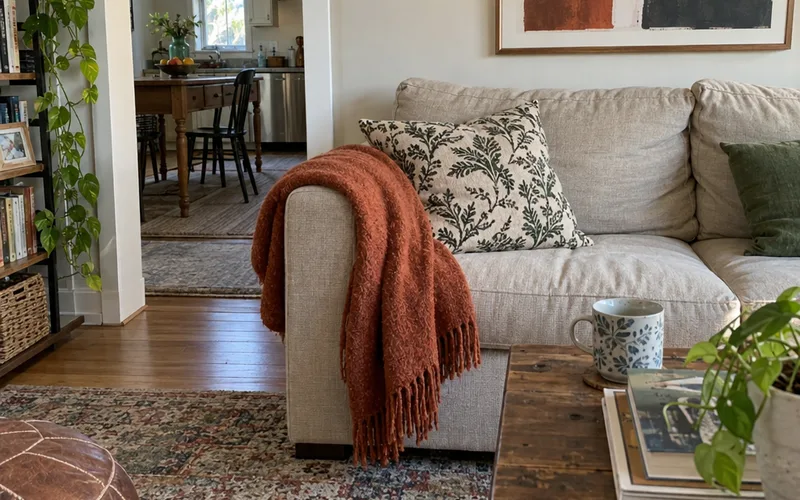
Start with whichever of these bothers you most when you walk into the room.
What Makes a Living Room Feel Complete?
A living room feels complete when it has a focal point, a rug that connects the seating, light at more than one height, something on the walls and at least one personal object. AD notes that storage and built-ins also add a “finished” look, per Brooke Mennen-Talsma, so a room full of clutter rarely feels done.
So what do you do if your room still feels off?
Go through that list one item at a time, and find the one that’s missing. Usually it isn’t a new piece of furniture that’s needed, since a room with no lamp or a too-small rug can look unfinished even with a great sofa.
Personal objects matter more than people think.
Something you brought back from a trip or a book you love gives the room a point of view, and no store can sell you that. Pick one thing that’s been sitting in a closet, and put it out this week.
Your First Step This Week
The biggest change usually comes from rearranging what you already own, not buying more.
Pick your focal point using #1 tonight, then choose one more Same day idea to finish by the weekend.