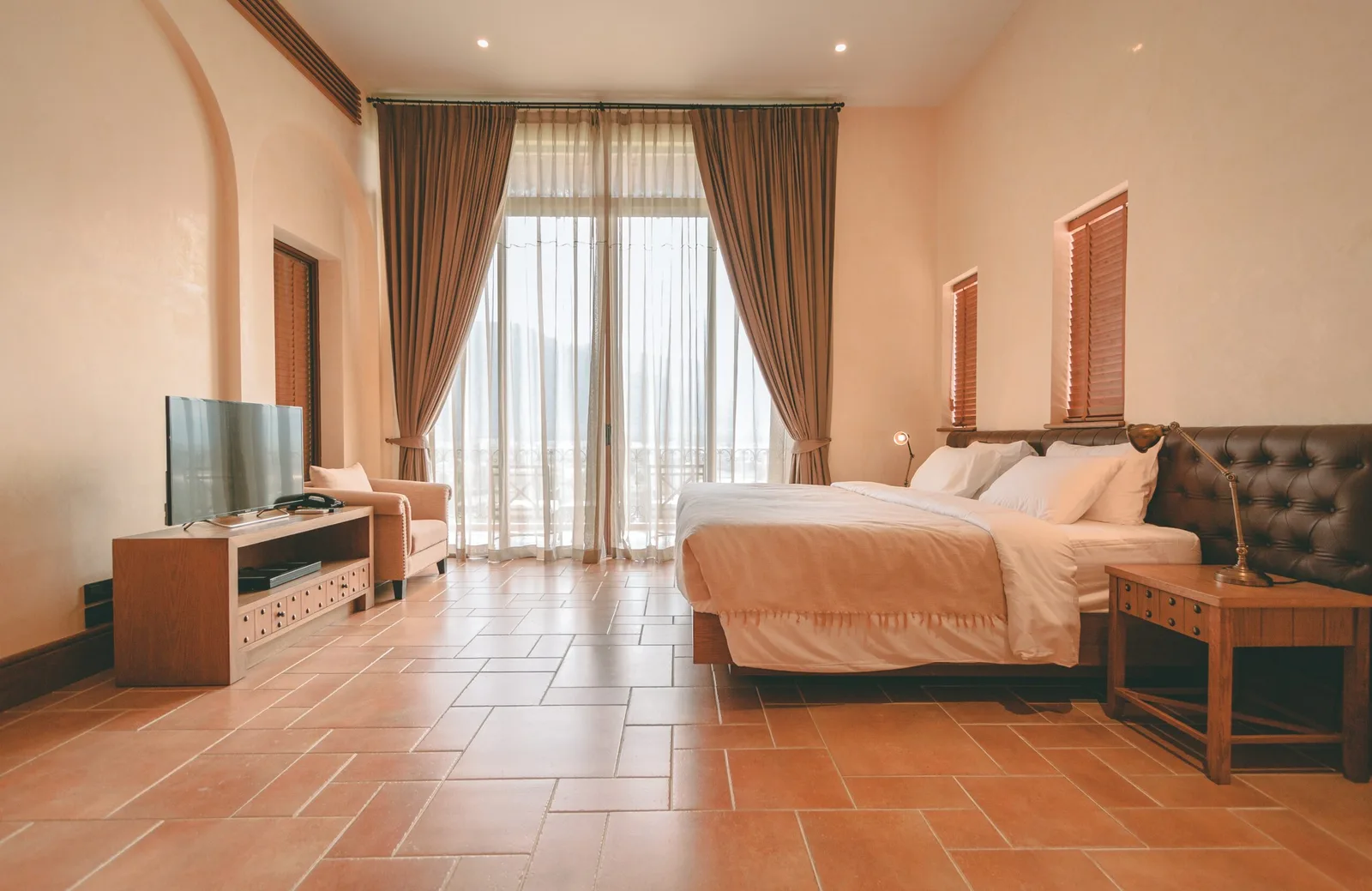

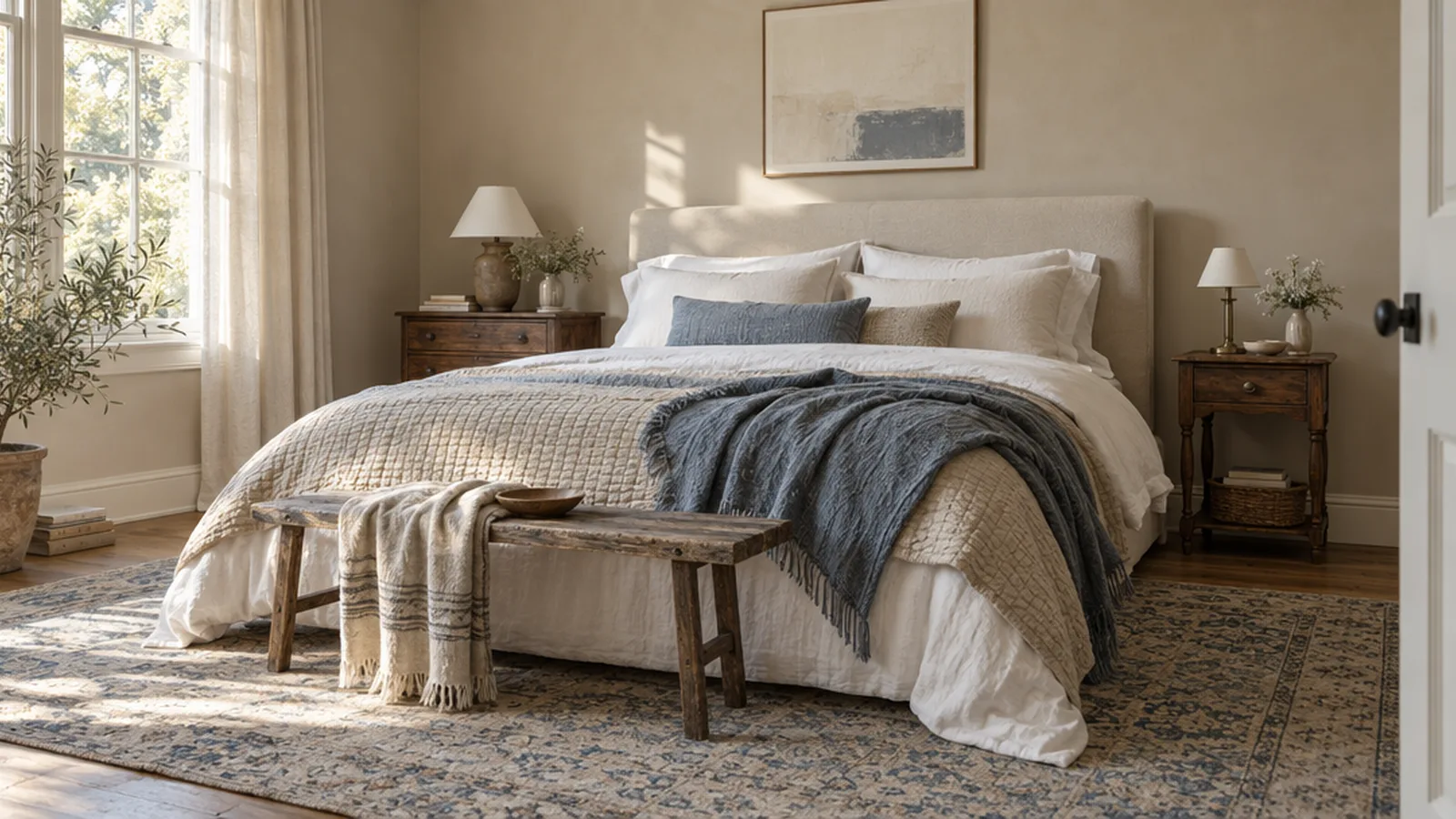
A bedroom is the one room you can decorate mostly for yourself. It doesn’t have to impress anyone, but it does have to help you rest, get dressed and start the day without stress. That makes comfort, soft light and sensible storage just as important as any color scheme.
How to plan a bedroom around the bed
The bed is the largest thing in almost every bedroom, so its placement shapes everything else. Settle that first, and the remaining choices become simpler.
Place the bed and leave room to move
Put the bed where it can sit against a solid wall and, if possible, be approached from both sides. Around 24 inches of clearance on each accessible side is a comfortable target, though smaller rooms may need to compromise. Check that closet doors and dresser drawers can open fully before you settle on an arrangement.
Get the nightstands and lamps right
A nightstand is easiest to use when its top sits within a few inches of the mattress height. Leave a small gap between the nightstand and the bed so that making the bed isn’t a struggle. A pair of matching pieces isn’t necessary, and two different tables can look better if they share a similar height or visual weight. Warm bedside lighting that you can reach from the bed often does more for the mood than a bright overhead fixture.
The main sub-topics in Bedrooms
Seven sub-topics shape this category, moving from the overall look of the room to its smaller decisions.
Bedroom Styles
The Bedroom Styles section explores looks such as minimalist, Scandinavian, Japandi, mid-century modern, industrial, vintage, boho, coastal and modern farmhouse. It also includes aesthetic rooms, preppy rooms, couples’ rooms and master bedrooms that aim for a little more drama. A strong bedroom style usually comes from a limited palette and repeated textures rather than a lot of objects.
Small Bedrooms
The Small Bedrooms section is about making room for sleep, clothes and personality in a tight footprint. Useful moves include under-bed storage, wall-mounted lighting and furniture with visible legs that lets more of the floor show. The aim is to remove the things that crowd the room, so a small space can still have a strong look.
Headboards
The Headboards section looks at DIY builds, wood designs, painted or wall-based alternatives, and versions with built-in shelves or lights. A headboard gives the bed visual weight, which matters even in a simple room. Anything you build should be firmly secured, and any built-in lighting should use components meant for that purpose.
Bed Layering
The Bed Layering section explains how to build a bed that looks inviting and is still easy to make. A reliable order runs from the fitted sheet to the flat sheet, a blanket or quilt, a duvet or comforter, the pillows and finally a throw. The difference between a duvet and a comforter is mostly practical, since a duvet goes inside a removable cover and a comforter is a single finished piece.
Bedroom Walls
The Bedroom Walls section covers paint colors, accent walls, shelves, photo walls and decor above the bed. Art above the bed often looks balanced at about two-thirds the width of the bed. Choose lightweight, securely mounted pieces for that spot, since nobody wants a heavy frame falling near their head.
Bedroom Rugs
The Bedroom Rugs section works out what size you need for your bed and room. A common starting point is an 8-by-10-foot rug for a queen bed and a 9-by-12-foot rug for a king bed. Those sizes generally allow the rug to extend past the sides of the bed so that your feet land on something soft.
Guest Bedrooms
The Guest Bedrooms section is about making a spare room comfortable, even when it also serves as an office. A place to set a bag, a nearby outlet, a bedside light and extra blankets matter more to most guests than decorative touches.
Kids’, teen and dorm rooms
Rooms for younger people need to adapt as their interests change, so it’s smart to keep the big pieces neutral and let the bedding and wall decor carry the personality. Anchor dressers and bookcases to the wall in children’s rooms, and keep cords away from cribs and beds. For nurseries, keep the crib itself clear of pillows, quilts and decorative items in line with safe sleep guidance. Dorm rooms come with their own rules, so check your housing policy on adhesives, candles and wall hangings before you shop.
Seasonal changes and budget updates
Bedrooms are easy to refresh with the seasons because bedding does so much of the visual work. A heavier throw and darker pillow covers can warm up a room in fall and winter, and lighter linens can reset it in spring. If money is tight, start with lighting and bedding, since you’ll notice those changes every single day.