

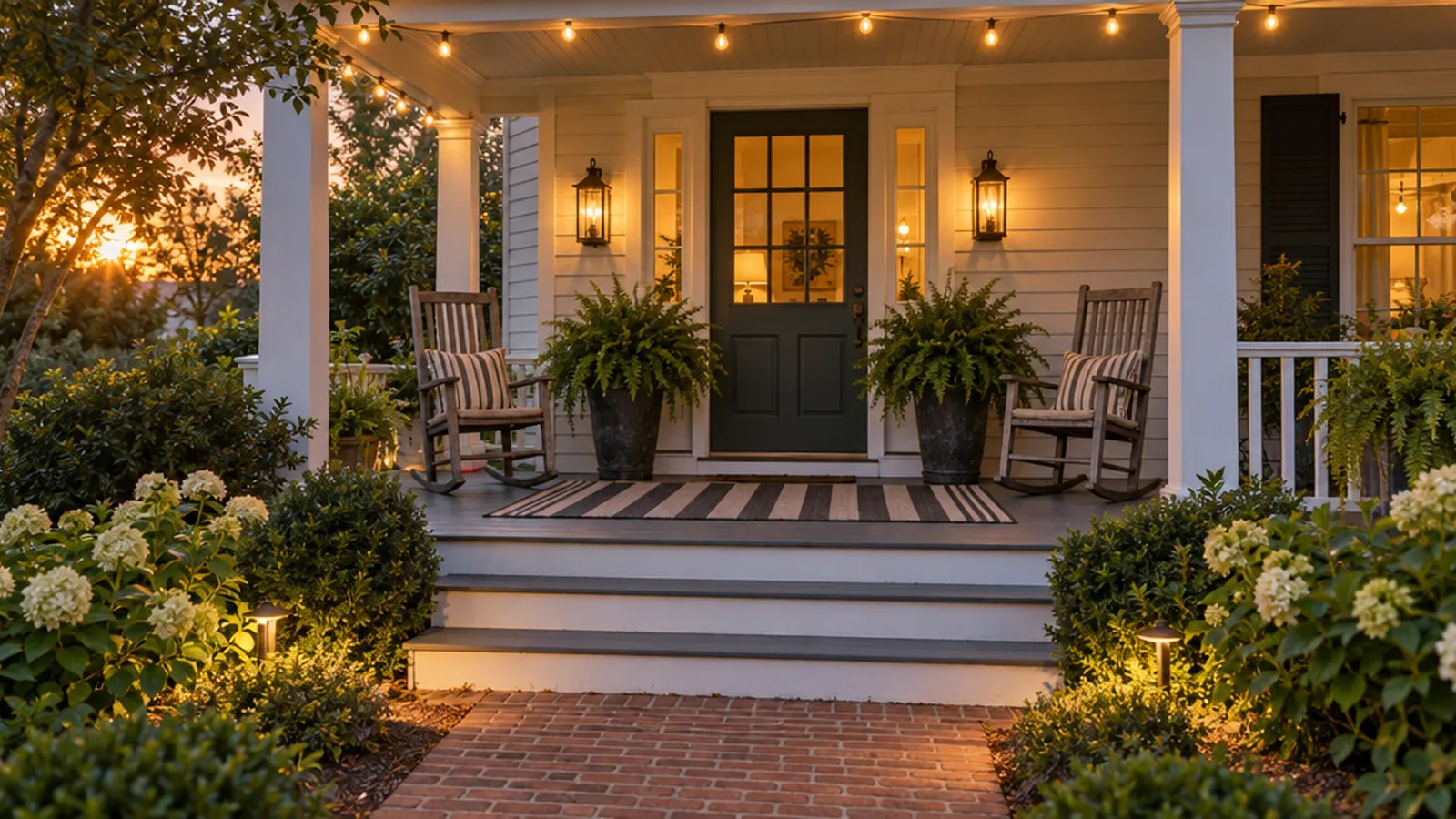
Amazon shows over 70,000 results for outdoor decor.
That count comes from the Amazon Outdoor Decor department, read in November 2026, and its range runs from flags and doormats to yard signs.
So finding something to buy is the easy part.
Knowing what to do first is harder.
These 24 outdoor decor ideas run from free moves to the biggest jobs, and each one says who it suits, what it costs and where to start.
Your space points to a good first move:
- Renters with strict rules have plenty to work with in #1, #2, #6 and #9.
- A $0 budget still covers #1 and #2, and #15 gets close.
- A plain front door gets the most from #3, #13 and #19.
- Patios that go dark at sunset need #4 and #9 before anything else.
24 Outdoor Decor Ideas, Ranked From Quickest to Biggest Job
The best outdoor decor ideas fix how a space works first, then add light and plants, and save paint, water features and fire for last. Ideas 1 to 10 fit in a day, 11 to 18 take about a week, and 19 to 24 take a few weeks of weekends.
1. Clear and Clean Before You Buy Anything
Start by taking everything off your porch, patio or balcony and washing what’s underneath. A clean floor and a clear railing do more than one more accessory, and you’ll see what you actually have to work with.
- Best for: Any space that has been sitting since last season. Skip it if you cleaned up in the last month.
- Cost: Free, or Low if you need a new scrub brush.
- Time: Same day.
- First step: Carry everything onto the lawn or into the living room, so the whole floor is empty.
Here’s the order that works:
- Sweep the floor, the corners and under the rail, because dirt falls down as you clean.
- Scrub or hose the floor, then wipe the furniture and the door.
- Throw out cracked pots, faded signs and anything you’d never buy again.
- Put back only what you use or love, and leave the rest off for a week.
That last step does the most work.
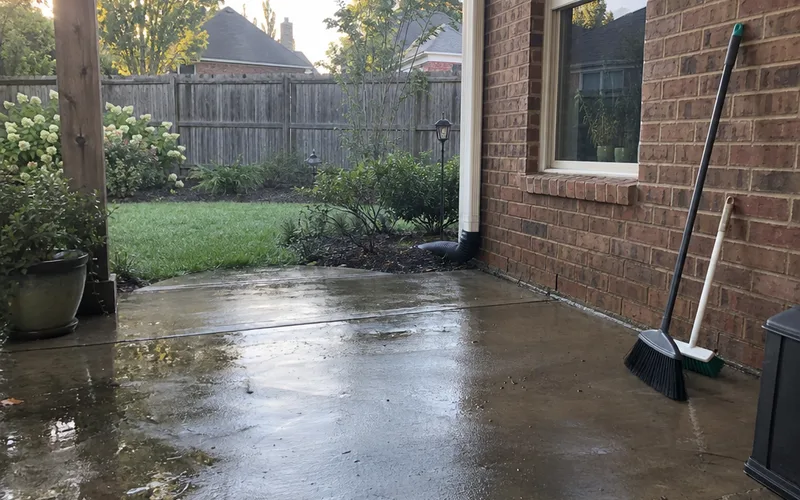
An empty week shows you which pieces you actually miss. It also gives you a clean start for other simple outdoor decorating ideas.
2. Turn Your Seating to Face Each Other
Pull your chairs away from the wall and angle them toward one another, as if they were in a living room. Furniture lined up against the house looks like storage, and a small circle looks like a place to sit down.
- Best for: Patios and porches with 2 or more seats. Skip it if your only seat is a single bench.
- Cost: Free.
- Time: Same day.
- First step: Move your 2 favorite chairs until they nearly face each other, then sit in one.
So how close should they be?
Close enough to talk without raising your voice and to reach a shared table with a drink.
That’s the real test, and it’s easier to feel than to measure, so sit in each seat before you call it done.
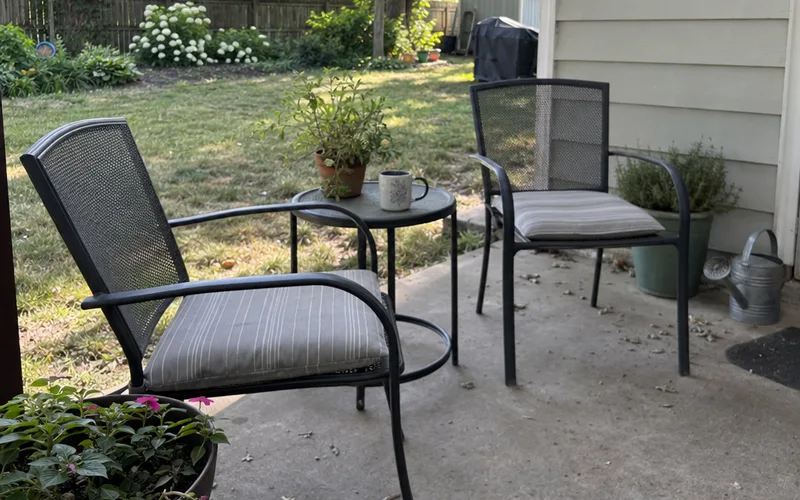
Keep a clear walking path to the door, too, because a layout you have to squeeze past won’t last a week.
If you’re starting from a bare slab, build your patio ideas around one anchor piece, such as a sofa or a table.
Tight spaces need a different mix, so look at small patio furniture before you buy anything larger than a bistro set.
Face your seats toward each other, and the space starts reading as a room.
3. Layer a Bigger Mat at the Door
Put a wide patterned rug under your regular doormat, so the entry looks finished without a single tool. A lone mat often looks small next to a full door, and a second layer fixes that fast.
- Best for: Front doors that look plain from the street. Skip it if your landing is too shallow for 2 layers.
- Cost: Low.
- Time: Same day.
- First step: Measure the width of your door and landing, and write both numbers in your phone.
Here’s what to check before you buy:
- The bottom rug is rated for outdoor use.
- The top mat is coarse enough to scrape shoes.
- Both lie flat, with no curled edges to trip on.
- The door swings over them without catching.
That last point catches a lot of people, so test it before you tear off the tags.
Doormats are their own category on Amazon, which tells you how many sizes and patterns you’ll have to sort through.
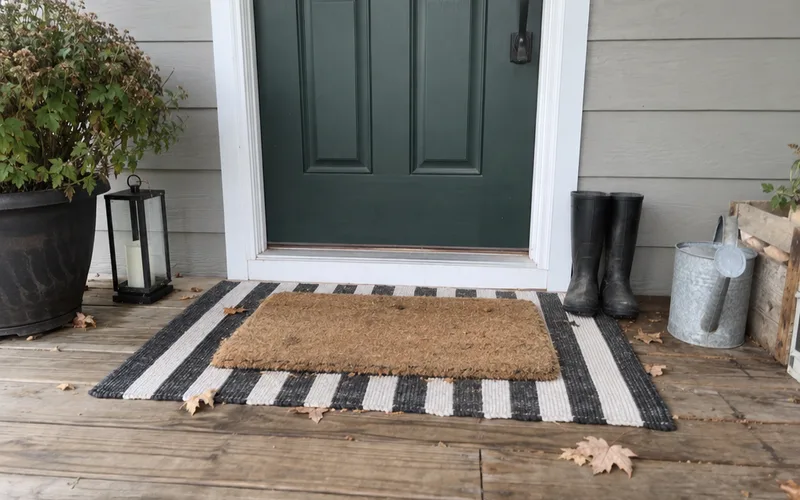
So start with the door you have: a bold door takes a quiet mat, and a neutral door can handle a loud one.
Your mat is only the start of your front porch ideas, and unique front door touches can sit right above it.
Pick the mat for the door’s width first, and the pattern second.
4. Hang String Lights Over the Seating
String lights can change how a space feels after dark in a single evening. A Target outdoor decor page calls them a quick and easy way to get a warm, welcoming look, so long as you plan the hanging points.
- Best for: Patios, porches and fences that you use after sunset. Skip it if your lease bans anything attached to the building.
- Cost: Low.
- Time: Same day.
- First step: Walk the space at dusk and mark the 2 points you’d hang the strand between.
But what if you have nothing to hang them from?
Say your yard has no trees and your patio has no roof.
In that case, set 2 or 4 sturdy poles in heavy planters and run the strand between them.
You have other ways of hanging lights without trees, but I’d try DIY string light poles first.
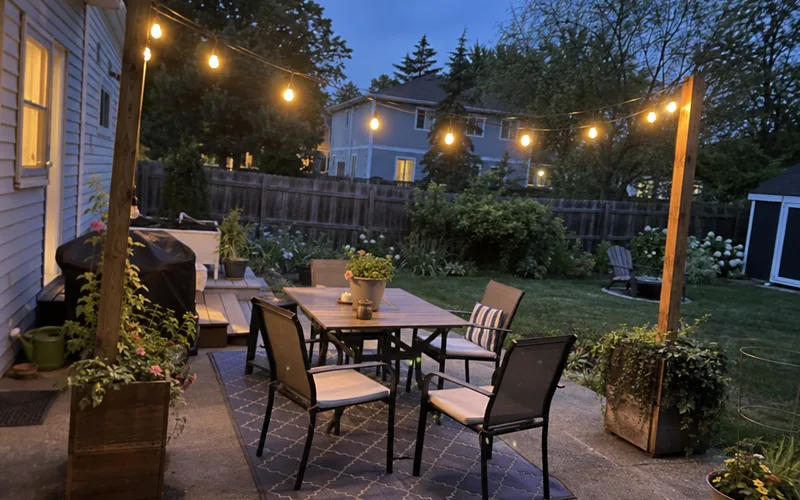
A covered patio is simpler, because you can hang the strand from the ceiling with a row of hooks.
Plug any strand into an outdoor-rated, ground-fault protected outlet, and keep the connection off the ground and out of standing water.
You can compare patio string lights once you know the length, and other outdoor lighting can come later.
Hang the lights before you add anything else you plan to use at night.
5. Set 2 Planters at the Door
Place a matching pair of planters on either side of your front door or patio steps. Repeating one shape is a simple way to make an entry look planned, and it works on any house style.
- Best for: Homeowners and renters with a little floor space at the entry. Skip it if the planters would narrow your steps or path.
- Cost: Low with plastic pots, and Moderate with heavy stone ones.
- Time: Same day.
- First step: Stand across the street and hold your phone up to see how much empty wall sits beside the door.
Go bigger than feels natural.
Small pots disappear from the street, so pick the largest pair that still leaves the door and steps clear.
For example, a shady porch could take ferns in tall black pots, while a sunny stoop could take a small clipped evergreen in each.
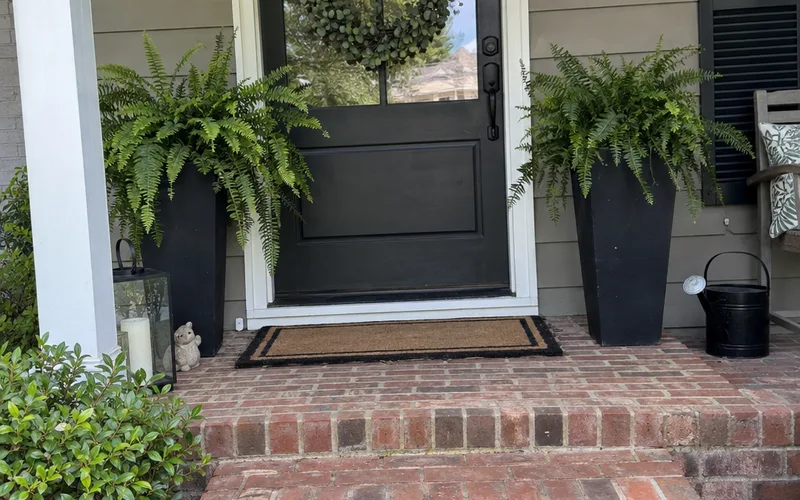
Match the plant to the light first, because a plant in the wrong spot will look worse every week, however good the pot is.
Want more than a pair? Try patio ideas with plants, grouping your pots by height.
Buy the pots to fit the door, not to fit the plants you already own.
6. Roll Out an Outdoor Rug
Lay an outdoor rug under your seating so the area has clear edges. A rug tells your eye where the room starts and stops, which matters most on an open slab or deck.
- Best for: Bare concrete, tired decks and renters who can’t change the floor. Skip it if your space stays wet for days at a time.
- Cost: Low to Moderate.
- Time: Same day.
- First step: Mark your seating area with painter’s tape to find the rug size you need.
Size is where most people go wrong, so get it right first.
The front legs of your chairs should sit on the rug, and a tiny rug floating under a table makes everything look smaller.
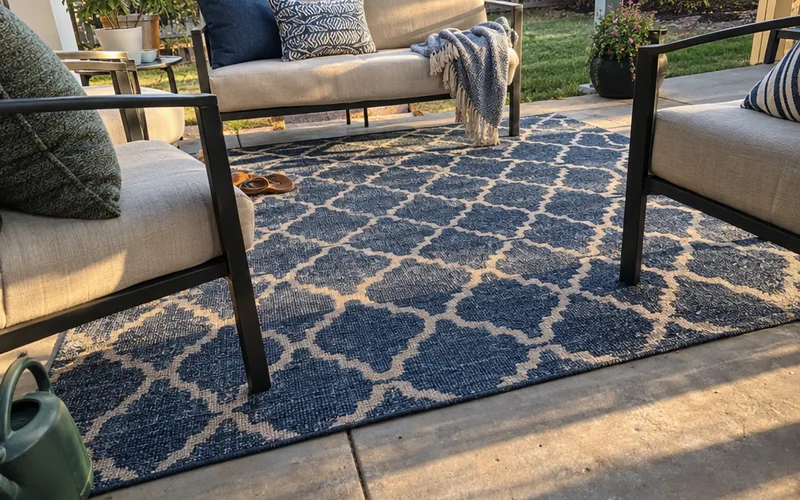
Color and pattern are your call after that, so pick what suits your space and hides dirt.
A Target outdoor decor page says many manufacturers now use recycled materials like plastic bottles and fishing nets, so read the label if that matters to you.
A rug also sets the colors for your other patio decorating ideas, and it’s an easy fit for apartment patio ideas.
Lift the rug after heavy rain so the floor can dry, because trapped water can leave marks on a deck.
Size the rug to your seating, then let the pattern be as loud as you like.
7. Swap In Pillows Made for Outdoors
Add 2 or 3 outdoor pillows to your existing chairs, instead of replacing the chairs. That’s a small change you’ll notice right away, and it’s a cheap way to bring in color.
- Best for: Seats that are sound but dull. Skip it if you have no dry place to store pillows in bad weather.
- Cost: Low.
- Time: Same day.
- First step: Count your seats, then pull 1 color from your rug, planters or front door.
Fabric matters more than pattern here.
The Target outdoor pillow advice says to look for water-resistant or waterproof fabrics like polyester or acrylic.
It also suggests removable covers you can wash if the pillows will get long use, and that’s the feature I’d pay extra for.
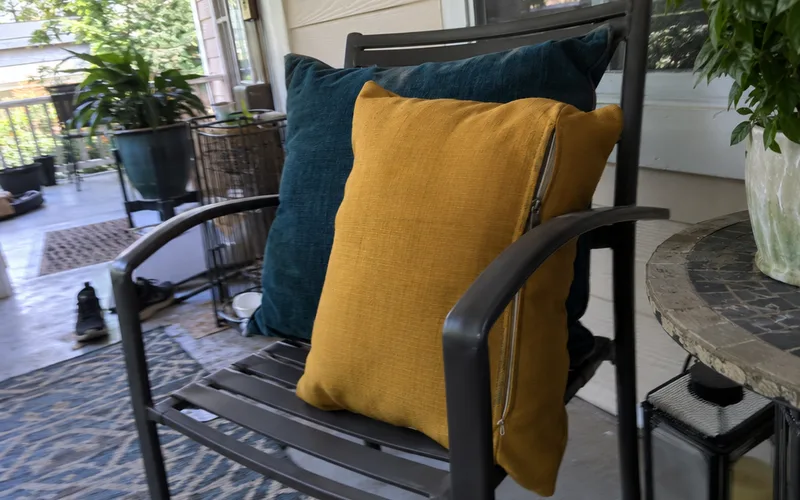
Indoor pillows are the common mistake, because they soak up rain and take days to dry.
Even outdoor fabric lasts longer when you bring it in, so keep a lidded bin or storage bench nearby.
Buy fabric made for the weather, and pick the pattern after that.
8. Line Your Path With Solar Lights
Push solar path lights into the ground along your front walk or garden edge. They need no wiring, no outlet and no electrician, so they’re simple to add.
- Best for: Homeowners with a walkway or garden bed that gets daytime sun. Skip it if the path sits in full shade.
- Cost: Low.
- Time: Same day.
- First step: Check your path at noon, because solar stakes only charge where the sun reaches.
Spacing is the part to get right.
A tight, perfectly straight row can look like a runway, so stagger the lights from side to side and let a few patches stay dark.
Try one evening of testing before you push the stakes in deep, then move any light that glares into a window.
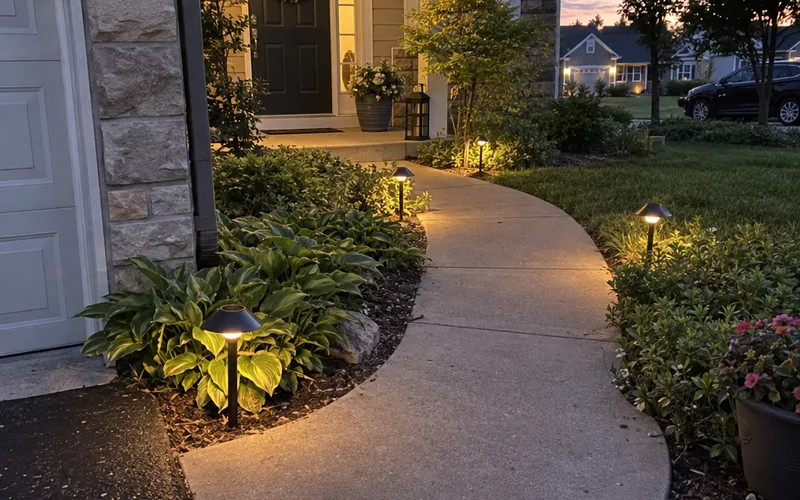
Here’s what that looks like on a hypothetical walkway: put 2 lights near the street, 2 near the steps and 1 where the path turns.
When you’re ready to compare outdoor solar lights, look at both stake and wall types.
The catch?
Cheap solar lights can fade by late evening in winter, when the sun is low.
So if you need light for safety on steps, use a wired fixture there and keep solar for decoration.
Use solar lights to mark a path, and use wired lights where someone could trip.
9. Group Lanterns With Flameless Candles
Set a cluster of lanterns on a step, table or corner of the floor, and fill them with battery candles. Lanterns look good in daylight too, so they keep working when the candles are off.
- Best for: Renters and anyone who can’t hang anything. Skip it if wind regularly knocks things over on your balcony.
- Cost: Low.
- Time: Same day.
- First step: Find 1 spot you see from your favorite seat, and start your group there.
Why flameless?
Real flames near cushions, dry leaves and curtains are a risk, and battery candles with a timer come on by themselves.
Use 3 lanterns at different heights rather than 1, since a group looks deliberate and a single small one looks forgotten.
A hypothetical patio corner might have a tall floor lantern, a medium one on a stool and a small one in front.
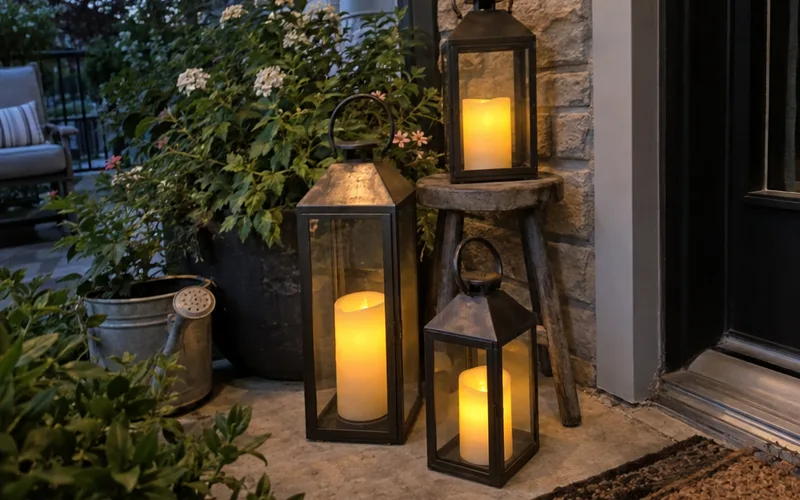
Metal and heavy glass lanterns stay put better than thin plastic, so put your weight in the base if the spot gets windy.
Then check the battery cover: it should be tight, because lanterns often sit in the open through rain.
A group of 3 at different heights does more than 3 scattered around the yard.
10. Swap One Thing Each Season
Pick one spot, such as your front door or a planter, and change only that spot with the seasons. You’ll get a fresh look 4 times a year without storing a garage full of decor.
- Best for: People who enjoy holidays but hate big setups. Skip it if you’d rather set a look and leave it.
- Cost: Low.
- Time: Same day.
- First step: Choose your spot today, then buy or make 1 piece for the coming season.
Here’s a simple rotation for one front door:
- In spring, hang a green wreath and fill your pots using ideas for a spring front porch.
- In summer, go bright, with flowers from these summer porch ideas.
- In fall, add mums and pumpkins, and borrow from these outdoor fall decor ideas.
- In winter, switch to greenery and lights, with help from the outdoor Christmas decorations list.
Halloween is its own world if your street gets a lot of trick-or-treaters.
You can go far with outdoor Halloween decoration ideas or large outdoor Halloween pieces.
Keep the path clear and the cords taped down whichever one you pick.
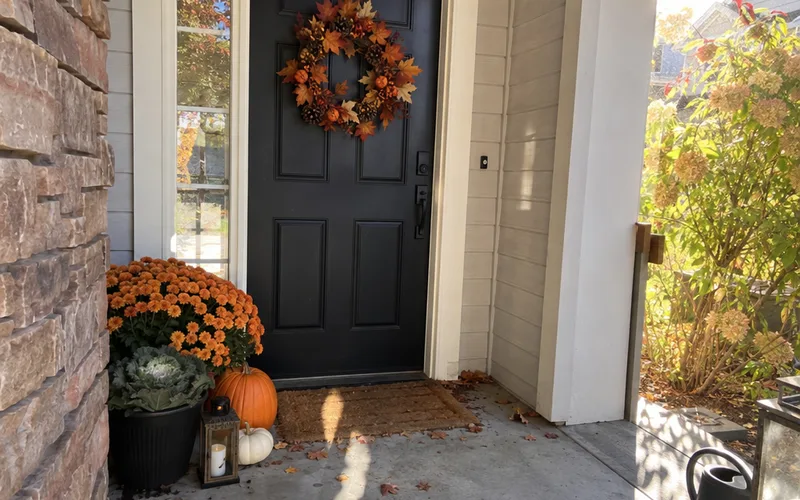
You can always go bigger with outdoor holidays, including DIY Christmas lights outside.
Rotate one spot well, and the whole house looks up to date.
11. Add a Bird Bath or Feeder
Put a bird bath or feeder where you can see it from a window or your favorite chair. It gives you something that moves and changes, which most decor can’t do.
- Best for: Yards and larger patios with a clear view. Skip it if you can’t keep up with refilling and cleaning.
- Cost: Low to Moderate.
- Time: This week.
- First step: Sit in your usual seat and pick a spot you can see without standing up.
Placement decides whether you enjoy it.
Set the bath or feeder near a shrub or small tree if you can, since birds tend to like a nearby perch.
Keep it away from a big window if birds could fly into the glass, and clean it often so the water stays fresh.
On a small patio, a hanging feeder takes no floor space at all, so you don’t need a yard to try this.
Expect a slow start, too, because birds may take a while to find a new feeder.
Choose the spot you can see from your chair, because you won’t walk outside to look.
12. Hang Art or a Mirror on a Bare Wall
Hang one large piece on the blank wall or fence you look at most. One big piece is easier to place than a row of tiny ones, and it reads clearly from across the yard.
- Best for: A covered porch wall or a plain fence. Skip it if your landlord or HOA bans holes in the siding.
- Cost: Low to Moderate.
- Time: This week.
- First step: Take a phone photo of the wall from your seat, and sketch the piece onto it.
Ask first if you rent or live under an HOA.
Here’s what to send:
“I’d like to hang one piece of outdoor art on my patio wall using 2 small screws. I’ll fill the holes when I move out. Is that okay with you, or is there a mounting method you prefer?”
That gets you a written answer, which helps if the question comes up again at move-out.
Then pick a material made for outdoor use, such as metal or resin, and check the maker’s notes on rain.
A mirror suits a small patio since it bounces light around, but don’t aim it where it throws strong sun onto plants, siding or a neighbor.
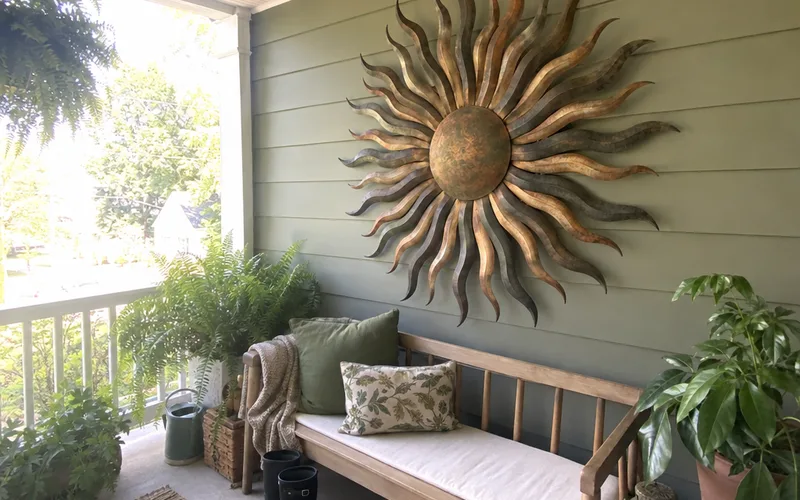
One large piece on one wall beats a scatter of small ones.
13. Update Your House Numbers and Mailbox
Replace your house numbers and clean up or dress up your mailbox. Both sit right where people look for your home, so they get noticed more than their size suggests.
- Best for: Homeowners whose front is tired but sound. Skip it if your HOA sets a required style for these.
- Cost: Low.
- Time: This week.
- First step: Read your house numbers from the street at night, and see if you can.
Readability comes first, because visitors and delivery drivers need to find you.
Choose large numbers in a color that contrasts with the wall behind them, and put a light near them if you can.
Next, look at the mailbox.
Mailbox covers are sold as their own product, so you may not need to replace a box that still works.
Check any rules your local post office has before you move or replace the box itself.
These 2 changes are cheap curb appeal, and a budget front yard plan can stretch the same money further.
Fix what people read first: the numbers, then the box, then everything around them.
14. Plant a Railing or Wall Instead of the Floor
Move your plants up onto a railing, wall or hanging basket, so you keep your floor free. This is the best answer for a balcony, where every square foot counts.
- Best for: Balconies, small patios and narrow side yards. Skip it if your building bans anything on the outside of the railing.
- Cost: Low.
- Time: This week.
- First step: Read your lease or HOA rules on railings before you buy a single planter.
So which plants go up there?
Trailing plants hang well from a rail, and herbs do fine if they get enough sun near your kitchen door.
Wind and weight are the risks here, because a pot falling from a balcony can seriously hurt someone below.
Use planters built to lock onto a rail, keep them on the inside when you can, and bring them in before a storm.
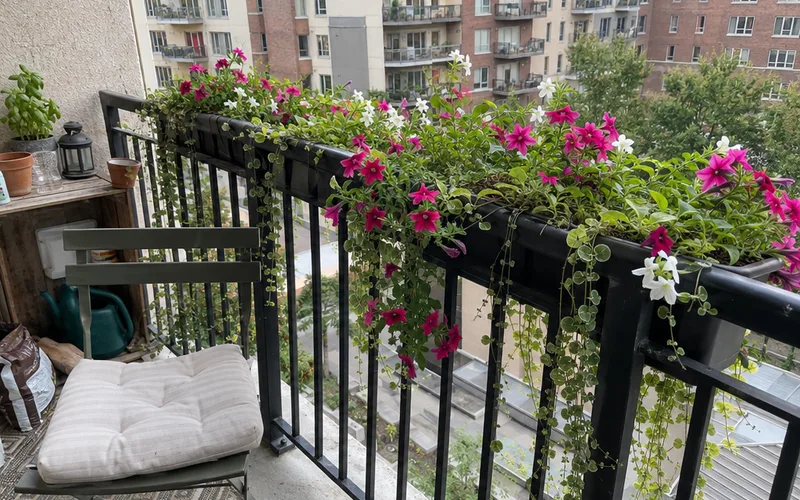
Water runs down too, so check that drips won’t land on the neighbors below.
Choose balcony decor that fits your building’s rules, and a balcony garden can grow in very little space.
If your outdoor space is barely wider than a chair, stick to very small balcony ideas, like one rail planter and a stool.
Check the rules and the weight first, then fill the rail.
15. Turn a Thrift Find Into a Planter
Fill something old with soil and flowers instead of buying another pot. A dented bucket, a chipped watering can or an old crate has a character you won’t get from a new pot.
- Best for: DIY fans and anyone on a tight budget. Skip it if you want a clean, modern look.
- Cost: Free to Low.
- Time: This week.
- First step: Check your garage or shed, then visit a thrift store or yard sale for anything that holds dirt.
Drainage is the one thing to get right.
Drill or punch a few holes in the bottom, or the roots will sit in water and rot.
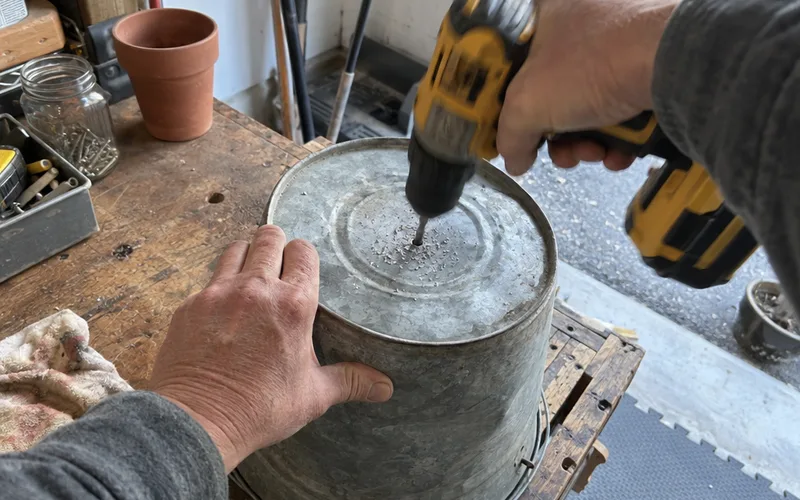
Then add a coco liner if your find has big gaps, such as a metal basket or an old crate.
Here’s an easy checklist for picking a winner:
- It’s sturdy enough to hold wet soil.
- It can take a few holes without falling apart.
- It doesn’t hold anything you’d want to protect, like an heirloom finish.
- It’s free of old chemicals, especially if you plan to grow herbs.
Keep any food plants out of old containers you can’t identify, because you don’t know what they held.
Holes first, soil second, and you can turn almost anything into a planter.
16. Give Old Furniture a Coat of Paint
Paint a tired chair, bench or small table instead of replacing it. A strong color gives a plain patio a focal point, and it costs far less than a new set.
- Best for: Sturdy metal or wood pieces that only look bad. Skip it if the frame wobbles or the wood is rotten.
- Cost: Low.
- Time: This week.
- First step: Shake the piece hard and press on the joints, since paint can’t fix a loose frame.
Here’s how it works:
Clean the piece well, sand off loose paint or rust and let it dry fully before you open a can.
Next, use a primer and a paint labeled for outdoor use on that material, and pick a dry, calm day.
Spray paint goes on smoothly on metal and wicker, and it’s easiest outside, with a mask, on a drop cloth well away from the house.
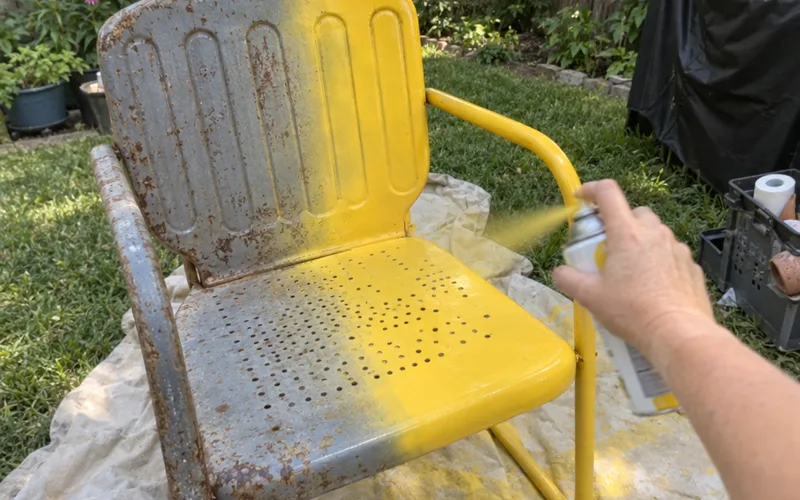
Thin coats are better than one heavy coat, because heavy paint drips and takes longer to dry.
Sunny yellow and deep blue both stand out against green plants, but pick a shade that repeats something you already own, like your door or pots.
Check older furniture for lead paint before you sand it, because the dust can be dangerous.
Test the frame first, because good paint on a broken chair is still a broken chair.
17. Hang Outdoor Curtains or Open an Umbrella
Add shade over your main seating, because a hot patio goes unused however nice it looks. An umbrella is the simplest start, and outdoor curtains add privacy along with the shade.
- Best for: South- or west-facing patios and covered porches. Skip it if your space is already shady by mid-afternoon.
- Cost: Low to Moderate.
- Time: This week.
- First step: Check your seating at the hottest part of the day, and note where the sun hits.
Which one should you pick?
An umbrella suits an open patio with a table, and it moves as the sun moves.
Curtains suit a porch or pergola with something overhead to hang a rod from.
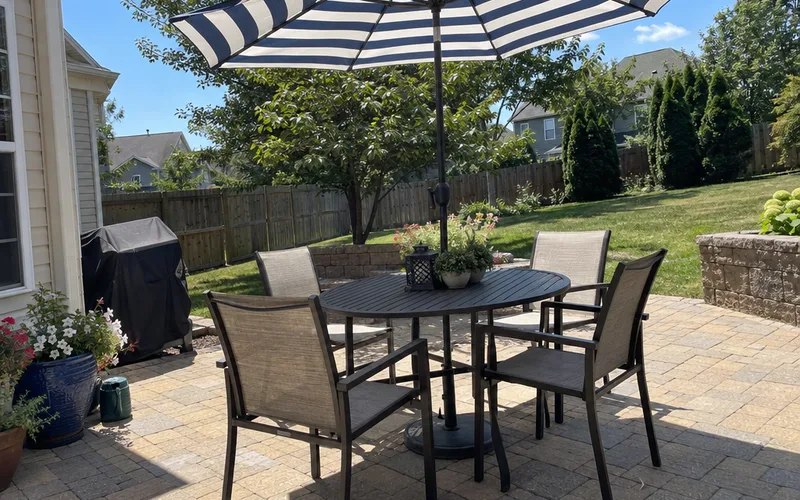
Fabric matters again, so buy curtains rated for outdoor use and tie them back when the wind picks up.
Take the umbrella down in strong wind too, since it can tip even with a heavy base.
Windows get hot as well, so try exterior window shades you can make yourself or other exterior window coverings.
Solve the heat first, because no one sits on a hot patio to admire the decor.
18. Add One Statement Piece
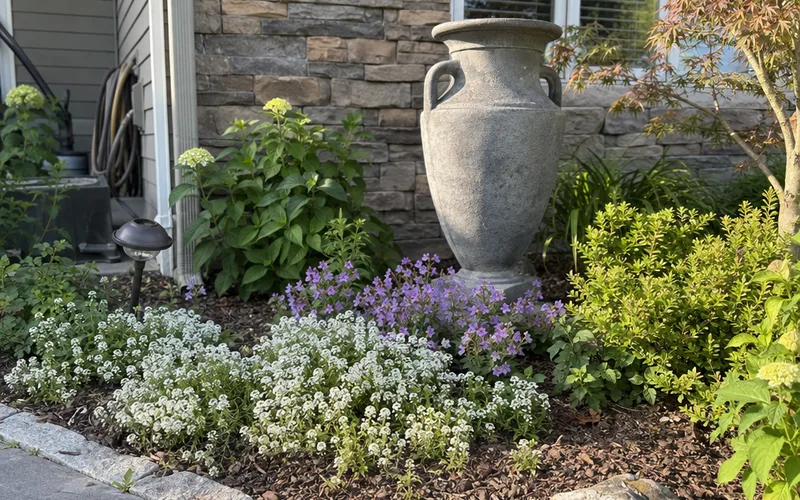
Pick one large item to be the star of your yard, like a statue, a tall urn or a gazing ball, a shiny sphere on a stand. A single bold piece gives the eye somewhere to land, and it stops a yard from looking like a collection of small things.
- Best for: Yards with an empty corner or a bed that feels flat. Skip it if you have a tiny patio, where it would crowd your seats.
- Cost: Moderate to High, or Low if you make it from a found object.
- Time: This week.
- First step: Stand at your window and find the empty spot your eye keeps landing on.
Scale is the question to ask.
A Target outdoor decor page reserves large classical statues for a big backyard, and small yards should take that hint.
So a small yard should go with something narrower or lower, like a slim obelisk or a single large pot.
For a hypothetical front bed, set a tall urn near the back and plant low flowers around its base.
Humor is fine, too.
A garden gnome or a dressed-up porch goose will make the neighbors smile, as long as you keep it to 1 or 2.
Set anything heavy on a flat, firm base, and place it where it can’t fall on kids or pets.
Choose 1 big piece, then stop.
19. Paint the Front Door
Paint your front door a color that stands out from the house. It’s a small surface, but it’s the first place people look, and it can change the whole front of your home.
- Best for: Homeowners, and renters with written permission. Skip it if your door is a material that needs a special finish you can’t get.
- Cost: Low.
- Time: 2-4 weeks, counting sample tests and dry days.
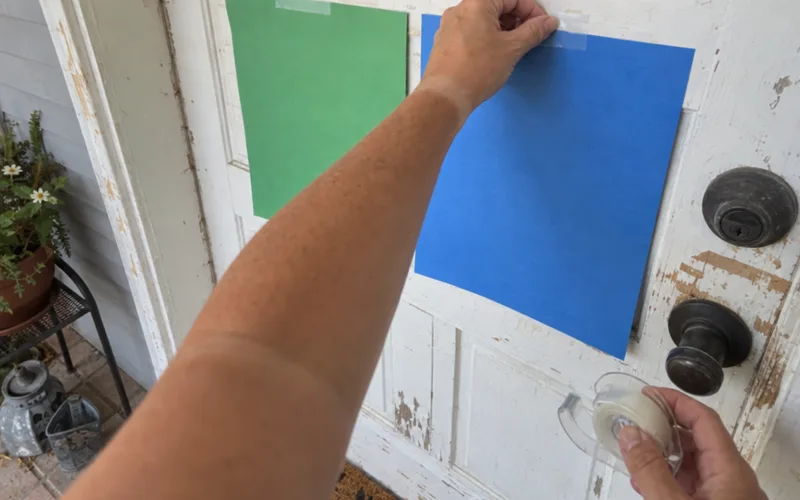
- First step: Buy 2 sample colors, and paint each on a large card to tape to the door.
Why take 2 weeks for one door?
Colors shift in sun and shade, so you need to look at those samples at different times of day.
Then wait for a dry stretch with mild temperatures.
Follow these steps once you’ve picked a color:
- Remove the hardware or tape it well, since drips on brass are hard to clean.
- Clean and lightly sand the door, then wipe off the dust.
- Apply a primer if the paint label calls for one.
- Paint 2 thin coats, leaving the door open until it’s dry to the touch.
A tiny stoop needs a little more thought, so look at small front entrance ideas before you pick a bold shade.
New hardware finishes the job, and a modern exterior entryway can give you ideas.
Test the color on the door, because a paint chip in a store tells you very little.
20. Put Up a Trellis With a Climbing Plant
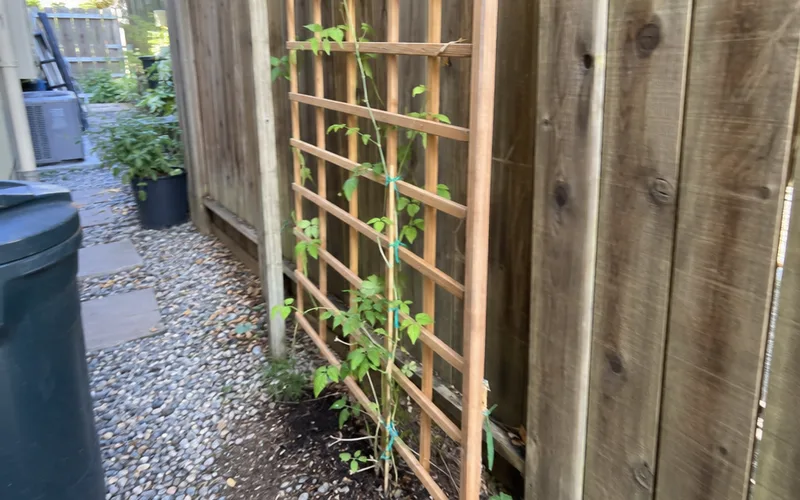
Set a trellis, which is a frame that supports climbing plants, against a blank wall or fence. It works as wall art right away, and it fills in with green over time.
- Best for: Bare fences, side yards and patios that need privacy. Skip it if you won’t prune or tie in a plant.
- Cost: Low to Moderate.
- Time: 2-4 weeks to set up, then one or more seasons to fill in.
- First step: Note how many hours of sun the wall gets, because that decides which climbers will grow there.
Climbers are heavier than they look.
So fix the trellis to a post or stand it in a heavy planter, and leave a small gap behind it so air can reach the wall.
Vigorous climbers can damage siding if you let them grab it directly, so I’d keep them on the frame and off the house.
A narrow balcony can do this too, using a planter with a built-in frame to give you a green screen.
That setup is a good match for balcony privacy ideas, since plants soften the view without blocking the breeze.
Keep your expectations honest, because the first season usually looks thin.
Install the frame now, and give the plant a full season before you judge it.
21. Add a Small Fountain or Water Feature
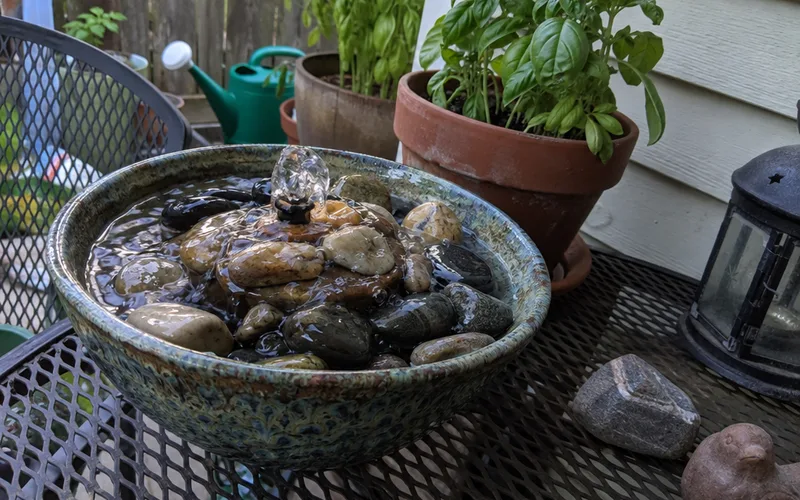
Add a compact fountain for the sound of moving water. It’s one of the few pieces of decor you can enjoy with your eyes closed, and it can soften nearby road noise.
- Best for: Patios and yards near a seating area and an outlet. Skip it if you can’t keep up with refilling and cleaning.
- Cost: Moderate.
- Time: 2-4 weeks, including choosing and setting it level.
- First step: Find the outdoor outlet you’d use, or pick a solar pump if you don’t have one.
Sizes run from tabletop bowls to large tiered pieces, so start small if you’ve never had one.
A tabletop fountain lets you find out if you like the sound, and you can move it if you don’t.
Level matters more than you’d expect, because water will sit unevenly on a tilted base and the pump may run dry.
Here’s the upkeep to plan for:
- Top up the water often in hot weather.
- Scrub off algae when the bowl turns green.
- Drain it and bring the pump in before a freeze, where winters are cold.
- Cover or empty it if kids or pets could get to it unsupervised.
Try a small fountain first, because the sound is what you’re really buying.
22. Add a Rain Chain
Replace a plain downspout with a rain chain, a line of metal cups or links that guides water down from the gutter. You turn a dull pipe into something you’ll want to watch during a storm.
- Best for: Homeowners with a downspout near a porch or patio. Skip it if you rent or have heavy rain, where a chain can splash against the wall.
- Cost: Low to Moderate.
- Time: 2-4 weeks, counting one rainy day to test it.
- First step: Look at the downspout you see most, and check that the ground slopes away from the house there.
Rain chains have their own category in the Amazon Outdoor Decor department, so you have plenty of styles to pick from.
The water still has to go somewhere, though.
Set a basin of gravel or a large pot at the bottom, and make sure that water flows away from your foundation.
Then test it during a real rain, because the first storm will show you any splashing.
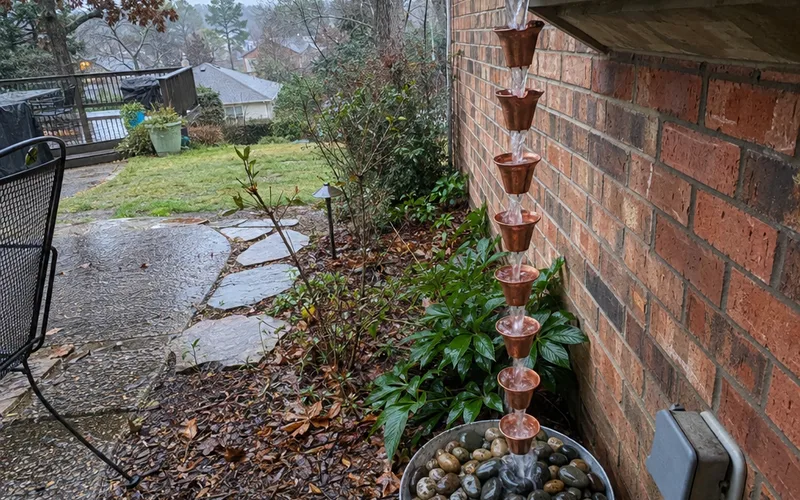
A rain chain is a good choice in a spot you can see from indoors, and freezing can make it heavy with ice in cold climates.
Plan where the water lands before you take the downspout off.
23. Set Up an Outdoor Dining Spot
Make a dedicated place to eat outside, even if it’s only a bistro table for 2. A meal is the easiest reason to use a space, and a set table looks good even when no one’s sitting at it.
- Best for: Anyone with enough floor for a table and pulled-out chairs. Skip it if your balcony is too narrow to walk around seats.
- Cost: Moderate.
- Time: 2-4 weeks, counting delivery and setup.
- First step: Tape out a table on the floor, then add the chair space around it and walk through it.
Here’s the example I’d start with.
Say you have a long, narrow patio.
Try a slim rectangular table along one side, with a bench against the wall, so you keep a clear path down the other side.
Small touches make a table look finished, such as an outdoor runner, a small pot of herbs and a lantern from #9.
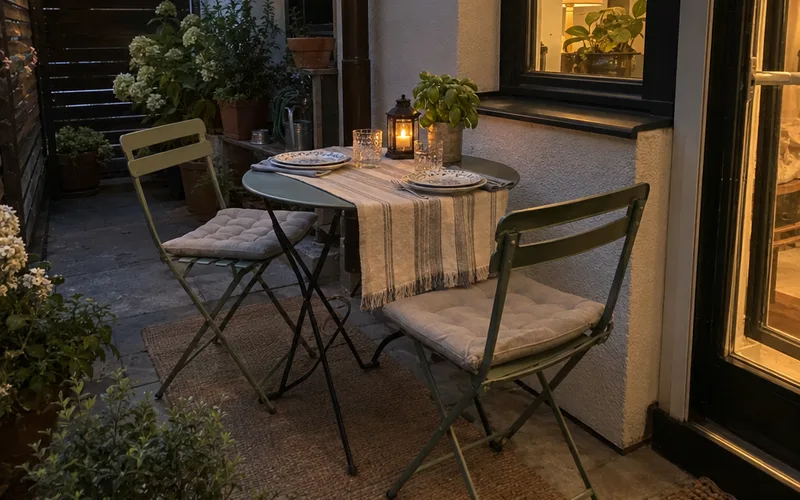
Rattan, metal and teak all suit outdoor dining, and you can pick by how much care you’re willing to give.
A full dining set may not fit this year, and backyard decorating ideas on a budget can fill the gap.
Got a roof over your table? A back porch design gallery shows covered versions.
Measure the chairs pulled out, not just the table, before you buy.
24. Build a Spot Around a Fire Pit
Make a fire pit the center of a seating area, if your local rules allow one. It keeps you warm on chilly nights, and it also gives everyone a reason to gather.
- Best for: Homeowners with open space away from the house. Skip it if you have a covered porch, a wood deck or a balcony, unless the product and your local rules specifically allow it.
- Cost: High.
- Time: 2-4 weeks, counting a call to your city.
- First step: Call your local fire department and ask what’s allowed at your address.
Safety decides this one, so start with the rules.
Here’s what to say:
“I’d like to use a fire pit in my backyard. What fuel types are allowed, how far must it be from my house and fence, and do I need a permit?”
Then follow those answers and the maker’s clearance rules, and write them down.
Next, set the pit on a level, non-burning surface, away from overhanging branches, fabric and anything else that can catch.
Keep water or an extinguisher nearby, and never leave a fire alone.
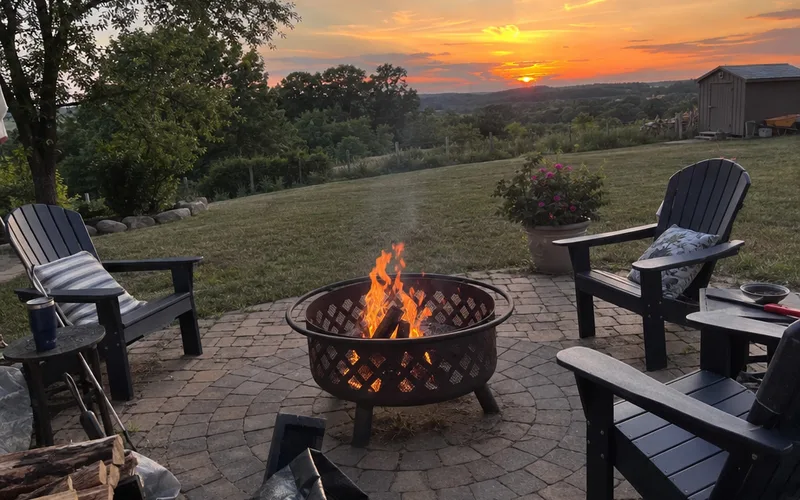
A gas fire pit needs no wood or ash, while a wood one gives you real crackle and more smoke, so pick based on your neighbors and your patience.
A tight yard needs extra care with clearances, so read up on small patio fire pit ideas before you buy.
Make the call first, because the answer may rule this idea out at your address.
Long Shots Worth Knowing About
Some outdoor projects look great but need a contractor, a real budget or a long wait. Each of these has a clear deal-breaker:
- A pergola: suits a patio that needs shade and a place to hang lights, but it may need a permit and solid footings.
- Permanent roofline lights: suit people who decorate often, such as with Govee permanent lights, but installing them can mean slow ladder work.
- Repainting the house: suits a faded exterior, and tips on choosing exterior paint colors help, but it usually needs a pro.
- Uplights and wired landscape lighting: suit a home with strong architecture, and house uplights are one way in, but wired work may need an electrician.
Save these for a bigger budget, and start with the numbered list above.
Outdoor Decor Ideas for Each Part of Your Home
The best outdoor decor for your home depends on the space, since a sunroom, a balcony and a front yard face different weather and rules. Each one needs its own plan, so go straight to the one you have.
Start at the entry, where front porch looks run from a simple porch design to mobile home porches and modern porch decor.
A small landing can still look great with small front porch decor and cheap porch updates.
Out back, patios and backyards can start with small patio decor or cheap backyard ideas for renters.
Balcony spaces come with rules on what you may attach, so balcony lights that clip on or stand alone are a safe first buy.
The whole front of your house falls under curb appeal, with looks from modern farmhouse exteriors to Scandinavian house exteriors.
A tiny lot works too, with small front yard ideas.
Lighting runs through all of these, from outdoor lighting basics to front door entrance lighting and modern outdoor wall lights.
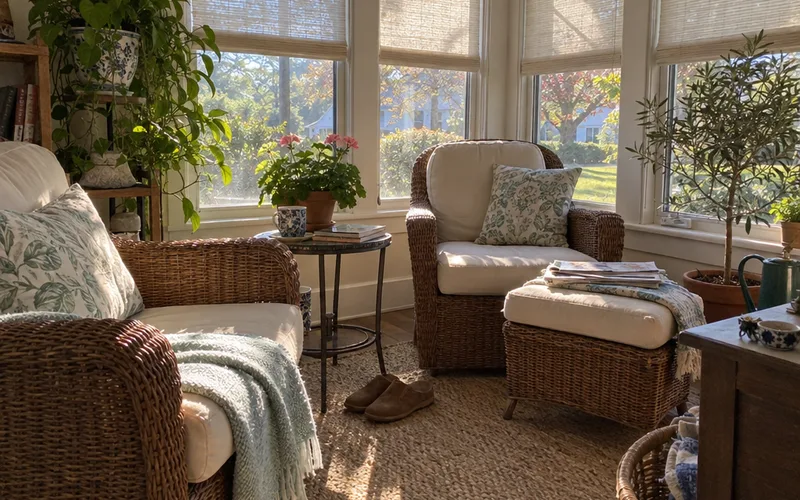
Sunrooms sit between indoors and out, so sunroom decorating has to deal with heat, glare and fading.
That shapes your sunroom furniture ideas, your 4-season sunroom ideas and even a sunroom on a budget.
Holidays round it out, and outdoor holiday decorations run from DIY Halloween decorations to outdoor Christmas ideas.
Pick the one space you use most, and finish it before you start another.
What Are the Top Outdoor Trends for 2026?
Bold colors, intricate patterns and sustainable materials are the outdoor rug trends named on a Target outdoor decor page, which gives no year. That page covers rugs only, and I don’t have a source I trust for a wider 2026 list.
So what should you do with that?
Use a trend only where it fits a job you already need done, such as a bold rug for a dull slab (see #6).
Trends change quickly, while shade, light and comfortable seats stay useful every year.
Follow a trend only after the seating, shade and lighting already work.
What Outdoor Decor Can Stay Outside in All Weather?
Outdoor decor that can stay out all year is usually stone, concrete, powder-coated metal, teak or heavy resin built for the outdoors. Even those materials can suffer in a hard climate, so check the maker’s care notes.
Powder coating is a baked-on finish that protects metal, and it’s what you want on a chair or a stake that lives outside.
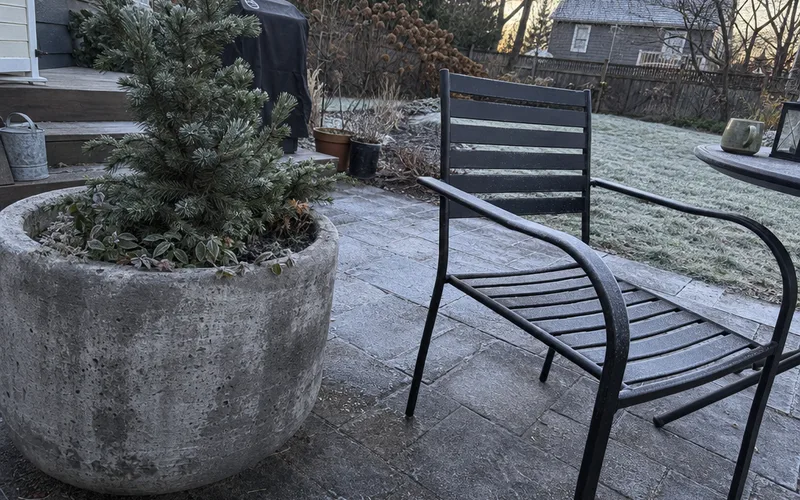
Chips let water reach the metal, so touch them up when you see them.
Here’s how I’d split your things:
- Leave out: stone and concrete planters, powder-coated metal, teak, and heavy resin statues.
- Bring in before storms: pillows, rugs you can roll, umbrellas, and lightweight lanterns.
- Store for winter: terracotta and ceramic pots where it freezes, fountain pumps and thin plastic.
Terracotta is the one that surprises people, because wet clay can crack as it freezes and thaws.
So empty those pots in the fall or move them somewhere dry.
Teak turns silver-gray if you leave it outside, and that’s normal rather than a sign of damage.
Now check your covered porch too, since it protects decor from rain but not from wind or damp.
Buy for your worst weather of the year, not for the day you bought it.
How to Decorate Outside on a Budget
The cheapest way to decorate outside is to clean and rearrange what you own, then spend your first money on lighting and plants. Buying nothing for the first week is what keeps the budget intact, since it stops you from buying things you won’t need.
Here’s a good order for a tight budget:
- Do #1 and #2, which cost almost nothing.
- Add the lights in #4 or #8, because light changes the space every evening.
- Fill a few found containers using #15, then buy plants for them.
- Paint a piece you already own, as in #16.
- Only then buy a rug or pillows, once you know the colors you want.
Secondhand is your friend here.
Yard sales, thrift stores and online marketplaces often have sturdy metal furniture and big pots that just need a clean or a coat of paint.
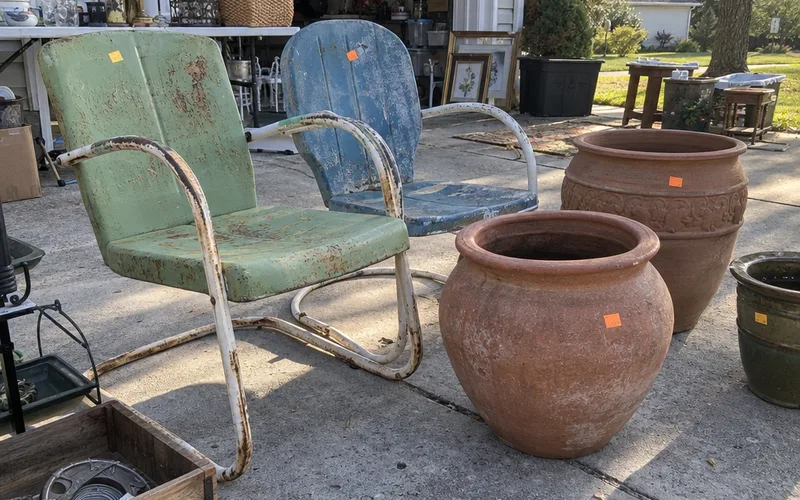
Ask friends for plant divisions too, since many gardeners have extra perennials to share each spring.
Portable pieces are the smart buy for renters, since they move with you, and cheap backyard ideas often fit that rule.
Spend on what you’ll use every evening, and leave the rest for next year.
How to Decorate the Front of Your House
To decorate the front of your house, start at the door and work outward: refresh the door, frame it with planters, light the path, then tidy the yard. That order puts your money where people look first.
Say you have a plain house and one weekend.
Saturday is for the door, so wash it, swap the mat as in #3 and add the planters in #5.
Sunday is for the street view, so edge the beds, pull weeds and put in the path lights from #8.
Then walk across the street and take a photo, because a photo shows you what you stopped noticing long ago.
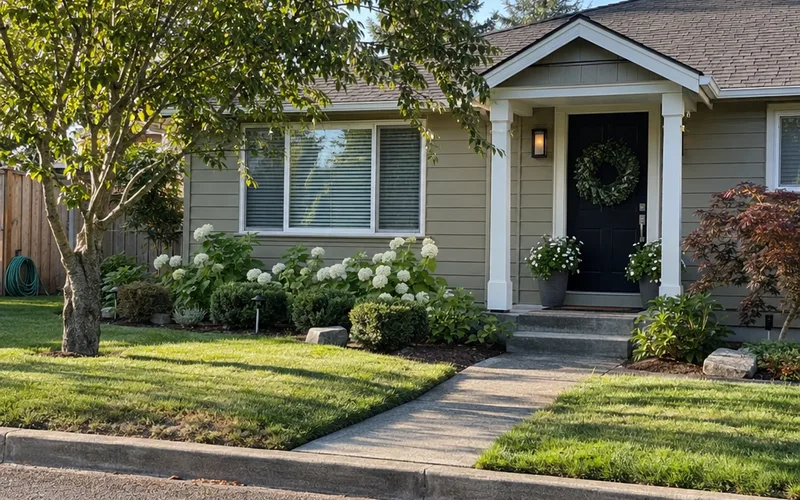
Dead branches, faded signs and old hoses tend to jump out in that picture.
Trim what’s blocking your windows, too, since overgrown shrubs make a house look small and dark.
A bigger change can wait, but exterior paint colors with photos and a modern traditional exterior are good places to look.
Work from the door out, and stop when the money runs out.
How to Decorate a Small Outdoor Space
To decorate a small outdoor space, pick one job for it, such as coffee or dinner, then use the walls and railing to keep the floor open. A small space fails when it tries to do everything, so don’t ask a balcony to hold a dining set and a garden too.
Here’s what helps most:
- Folding or stacking chairs you can move out of the way.
- A small round table, which is easier to walk around.
- Railing planters from #14, if your building allows them.
- A storage bench that holds your cushions and doubles as a seat.
Then pull it together with one rug and one color.
Too many patterns make a small space look busy, so keep the rest of your pieces quiet.
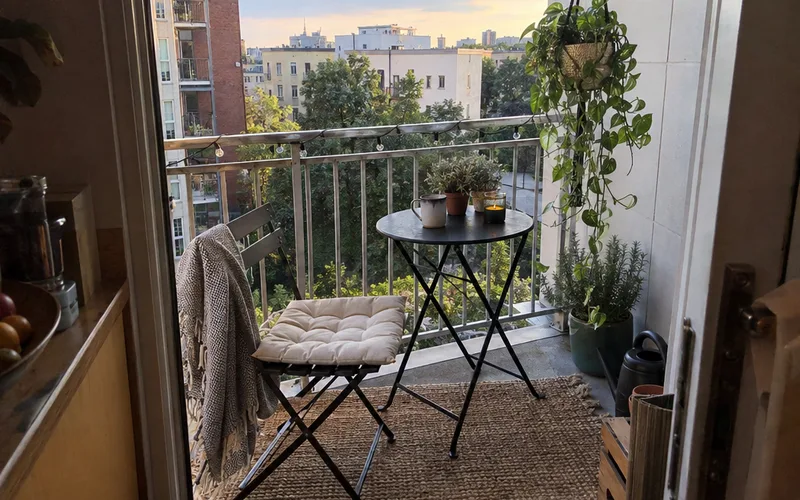
A mirror on a covered wall can also help it feel larger, as in #12.
Keep the door path clear, and never block a fire exit or a shared walkway in an apartment building.
Check how far your balcony can safely hold heavy planters as well, and ask your building manager if you aren’t sure.
Choose one job for the space, and let that decide what stays.
What Can You Hang on an Outdoor Wall?
You can hang metal art, resin plaques, mirrors, clocks, wall planters, lanterns and trellises on an outdoor wall if each is rated for that wall’s weather. Whether the wall is covered makes a big difference, so check that first.
Plaques, wall art and outdoor clocks all have their own categories in the Amazon Outdoor Decor department, so you won’t run short of options.
Fully exposed walls take rain and direct sun, which suits metal, stone and resin.
A covered porch wall is gentler, so it can also handle outdoor-rated canvas and wood signs.
Mounting matters as much as the piece, so use anchors made for your wall, because brick, vinyl siding and fence boards all need different hardware.
Vinyl siding is the tricky one.
Special hooks that clip under the siding seam let you hang light items with no holes, which helps a lot if you rent.
For a wider look at a plain wall, one big piece from #12 usually beats several small ones.
If you’d prefer greenery, try the trellis in #20 or a row of wall planters.
Match each piece to its wall’s exposure, then use the right anchor.
What Is the Best Lighting for an Outdoor Space?
The best outdoor lighting combines 3 types: soft overhead light for mood, low path and step lights for safety, and a small accent light. One bright porch light does the opposite, because it flattens everything and leaves the rest of the yard dark.
Start with the job, then pick the fixture:
- Sitting and eating: string lights (#4), lanterns (#9) or a wall light.
- Walking: path lights (#8) and step lights, wired wherever someone could trip.
- Showing off: a small spotlight on a tree or statue.
- The front door: a fixture on one or both sides, sized to suit the door.
Warm white light looks best near seating, and cool, harsh light tends to feel like a parking lot.
So read the bulb box before you buy, and pick a warm-looking option.
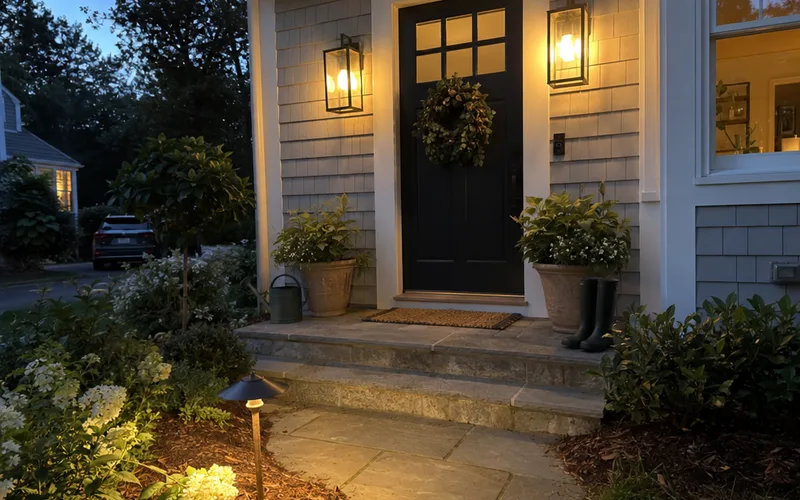
Keep your neighbors in mind too, by aiming lights down and shielding bulbs so that they don’t shine into a bedroom window.
Every fixture also needs a rating for its location, since a covered porch and an exposed wall get very different weather.
Leave any new wiring to a licensed electrician, and these front of house lighting ideas and front of house lights can help you plan it.
Light the path for safety first, then add the light you enjoy.
What Plants and Planters Make the Best Outdoor Decor?
The best outdoor plants and planters are the ones that suit your light and climate, in pots big enough to read from a distance. Start by checking your sun, because no pot can rescue a sun plant in deep shade.
A simple formula for a large pot uses 3 kinds of plants, one tall, one bushy and one that trails over the edge.
So a sunny pot could use an ornamental grass, bright annuals and a trailing vine.
A shady pot could use a fern, some coleus and some ivy.
Now pick the pot.
Terracotta looks classic but dries out fast, and glazed ceramic holds water longer but is heavy and can crack in a hard freeze.
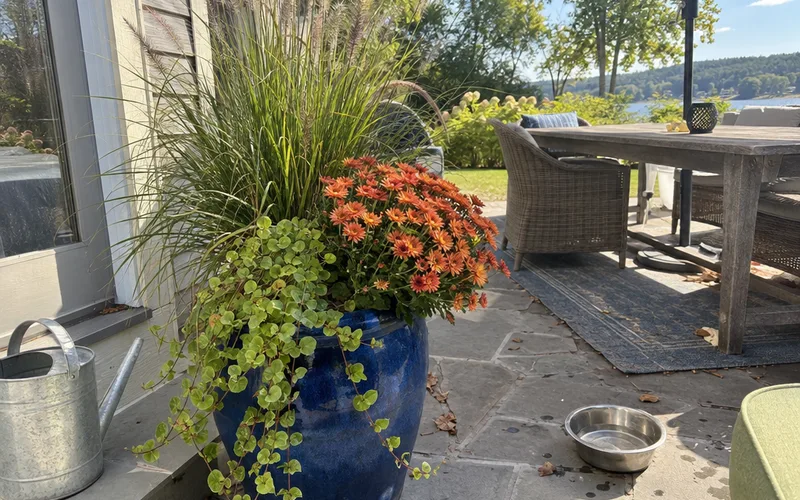
Fiberglass and resin are light and easy to move, which helps on a balcony, but they can blow over in the wind.
Group pots in odd numbers at different heights, and repeat one color so that the group looks planned.
Faux plants are fine for a hard-to-reach or very shady spot, but pick UV-resistant ones so they don’t fade quickly.
Every pot needs a drainage hole, and a saucer protects your deck or floor.
Choose the plant for your light, then choose a pot bigger than you think you need.
How to Keep Outdoor Decor From Blowing Away
To keep outdoor decor from blowing away, add weight low down, tie tall pieces to something solid and bring in light pieces before a storm. Most things fly off because they’re light and tall, so fix those 2 problems first.
Your surface decides your method:
- On grass or soil: use ground stakes or landscape staples for yard pieces.
- On a deck or patio: add weight, such as sandbags or a heavy base, instead of stakes.
- On a railing: use planters and hooks made to lock on, and add a tether if you can.
- Up high: use zip ties or light clips for strands and garlands, so they don’t whip around.
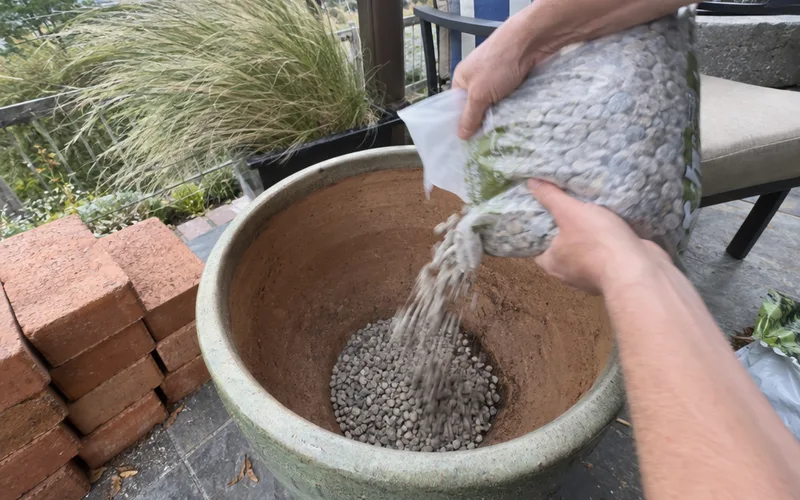
Planters are the simplest fix, since gravel, bricks or stone in the bottom keeps them lower and steadier.
Tall, narrow pots tip first, so swap them for wider pots in a windy spot.
Inflatables need extra care, and it helps to keep them on flat ground with every tether tied down.
Then make a storm habit.
Bring in pillows, close umbrellas and lay light furniture on its side when strong wind is forecast, since balcony items can fall on people.
Weight what stays, and bring in what doesn’t.
Homemade Garden Decoration Ideas
Good homemade garden decorations include painted pots, mosaic stepping stones, jar lanterns and wind chimes made from old silverware. They all use things you may already own, and you can finish most of them in a weekend.
These are the easiest places to start:
- Painted terracotta pots: use outdoor paint and a sealer so that the design lasts.
- Stepping stones: press pebbles or broken tile into wet concrete in an old cake pan.
- Jar lanterns: drop battery fairy lights into mason jars and hang them from a branch.
- Wind chimes: hang old forks, keys or spoons from a stick or an old colander.
- Painted rocks: write herb names on smooth stones to mark your beds.
- A ladder plant stand: rest pots on the rungs of an old ladder that’s no longer safe to climb.
Wear gloves and eye protection when you drill or break anything, and use a dust mask when you mix concrete.
Weather will age your work, so plan on a fresh coat of paint or sealer every so often.
If you want to go bigger, try DIY large Christmas decorations or scary DIY Halloween pieces for the holidays.
Start with something you already have in the garage.
Your First Step This Week
The biggest change usually comes from cleaning and rearranging what you own, not buying more.
Do #1 this weekend, then pick one Same day idea from the list to finish before next Sunday.