
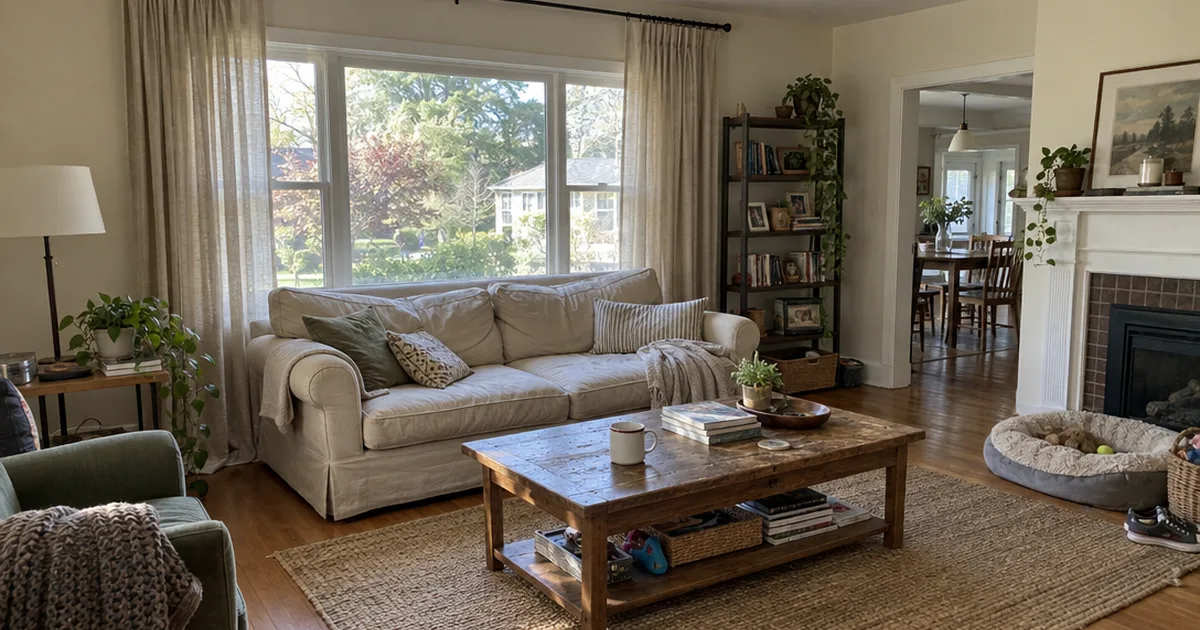
One living room curtain lists at $50.
Another tops out at $331.37.
So if you’re hunting for curtains for living room ideas, start with the price, not the photo.
They’re also the finishing touch in any living room makeover.
Below are 10 ideas, ranked from lowest listed price to highest, each with a real price and a first step.
Find your room here:
- An oddly shaped window points to #1.
- Bright rooms where you still want daylight do well with #2.
- A TV across from the window calls for #10.
- Formal rooms suit #8.
How These Curtain Ideas Are Ranked
Each curtain idea is ranked by the lowest listed price for that look, starting at $50 and ending at $156.23 for 2 layers.
Every price comes from published listings, not hands-on testing.
Each one comes from the 2026 Architectural Digest picks or the Curtarra living room page.
Curtarra prices change with size, and many were Black Friday sale prices of up to 70% off.
So treat each figure as a starting price, and confirm yours at checkout.
Each idea uses the same quick facts, and Time counts hanging, not shipping, because the listings don’t give delivery dates.
The 10 Best Curtains for Living Room Ideas
The 10 best living room curtain ideas run from a custom pojagi panel to layered sheers and blackout panels, cheapest first.
1. Hang a Custom Pojagi Panel
A pojagi is a traditional Korean cloth, and it’s the lowest-priced look on this list.
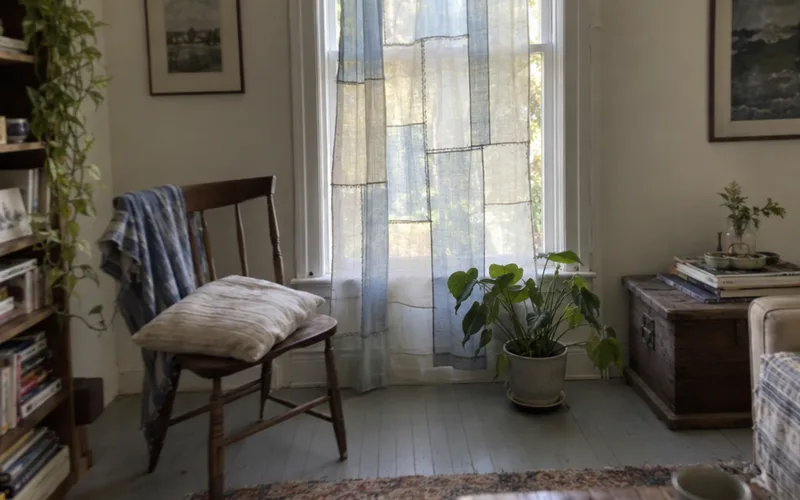
It also solves windows that stock sizes can’t.
At a glance
- Best for
- Odd-shaped windows. Skip it if you want to pick by fabric, since no material is listed.
- Cost
- $50 on Etsy, per Architectural Digest.
- Payoff
- 1 panel made to your window.
- Time
- Same day.
- First step
- Search Etsy for “Itosashiko Custom Pojagi Curtain” and send the seller your window size.
Here’s why it works: the panel is completely custom, so even a bizarre window shape is no problem.
In an open floor plan, Architectural Digest says it also makes a sweet kitchen window covering.
The catch?
You’re trusting a single maker, so ask for a photo of the finished piece before you pay.
2. Go Sheer for Soft Daylight
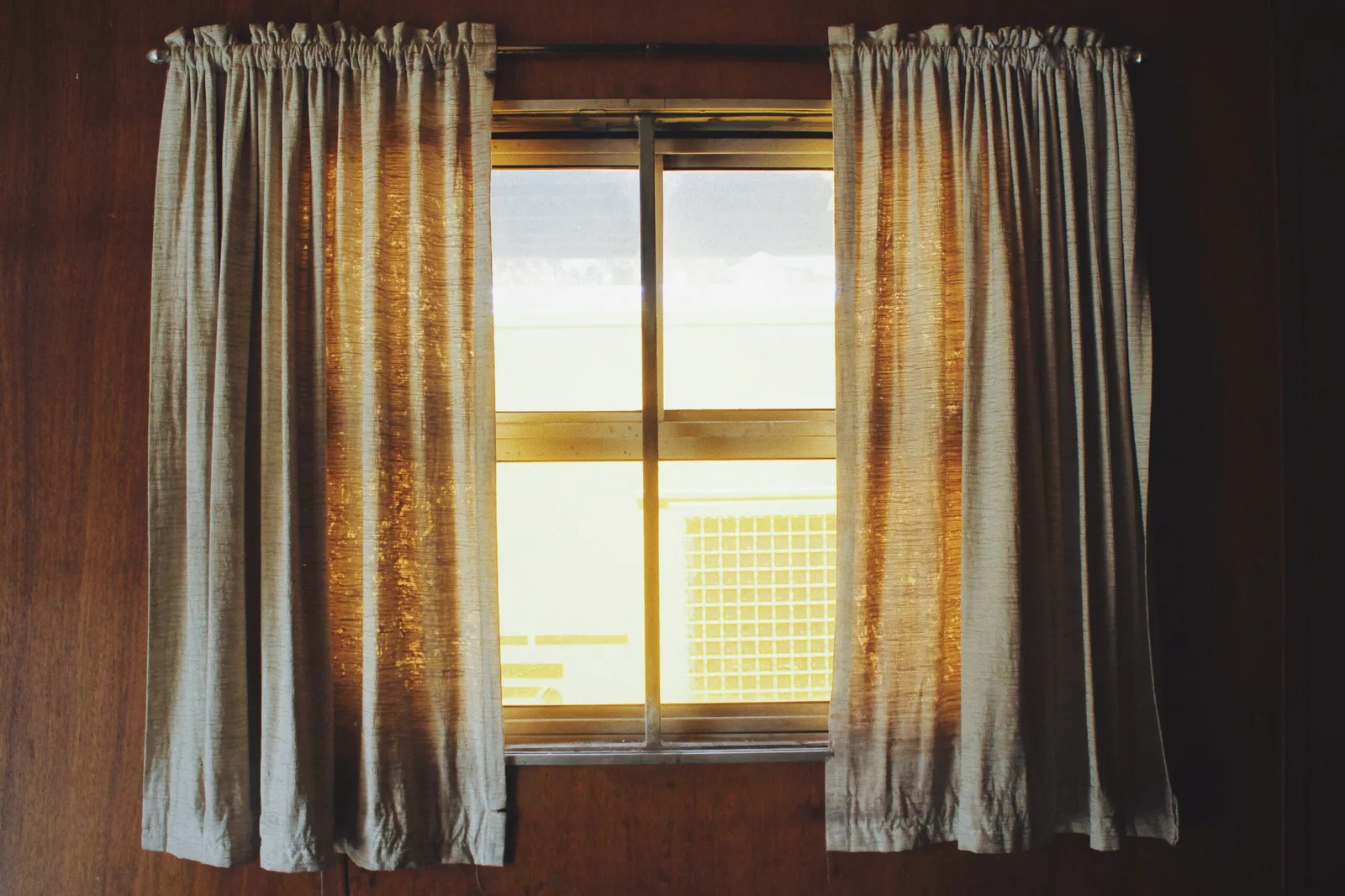
Sheer curtains keep a living room bright while softening the view.
At $53.95, they’re the cheapest fabric here you can pick by its spec.
At a glance
- Best for
- Rooms that feel dark. Skip it if the street can see in at night.
- Cost
- From $53.95 on Curtarra for the Liz Solid Flame Retardant Sheer.
- Payoff
- Daylight all day, with lengths from 40 to 250 inches on the pricier Nordic Knots version.
- Time
- Same day.
- First step
- Order free swatches and hold them up at the brightest window.
Sheers give you some privacy, but how much depends on the weave.
For example, Architectural Digest writer Julia Harrison says her Nordic Knots sheers give “ample sunlight, albeit no privacy.”
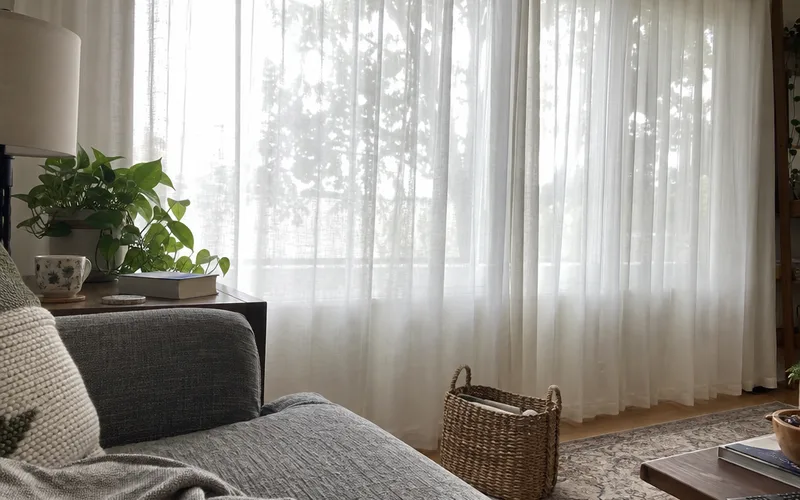
Those Nordic Knots panels cost $168, down from $195.
And here’s a trap: the name says linen, but the spec says 100% polyester.
So read the material line, not just the product name.
This look fits a minimalist living room especially well, since the fabric stays out of the way.
3. Try a Jacquard Pattern
Jacquard is a pattern woven into the fabric instead of printed on top.
That gives plain walls some depth for very little money.
At a glance
- Best for
- Neutral rooms that need one bold move. Skip it if your sofa and rug already carry pattern.
- Cost
- From $58.17 on Curtarra, down from $96.95.
- Payoff
- $38.78 off the regular price for the Stella Jacquard Double-Sided Pattern.
- Time
- Same day.
- First step
- Pick the one color in the pattern that already appears in your room.
Pattern needs a partner, so keep the big pieces plain and let the curtain do the talking.
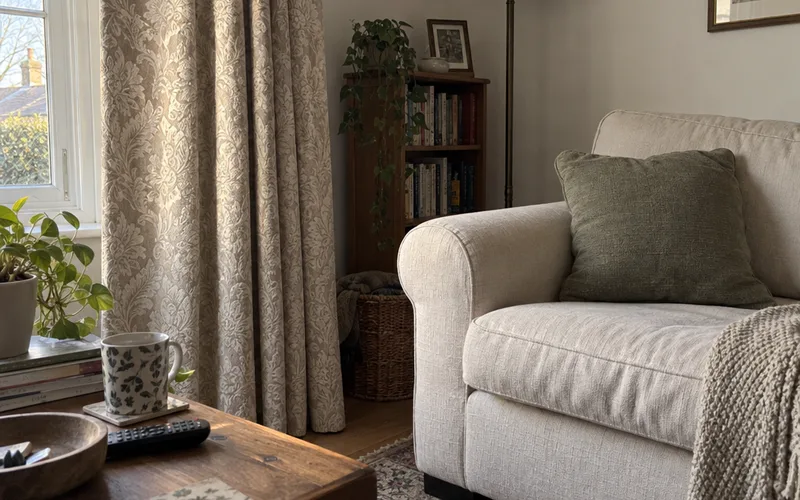
If you’ve got patterned cushions, the same rules for mixing pillows on a sofa apply here: vary the scale and repeat a color.
4. Add Clean Stripes
Stripes give a room structure without the commitment of a loud print.
A thin, minimal stripe also stays calm next to a patterned rug.
At a glance
- Best for
- Modern and casual rooms. Skip it if the room already feels busy.
- Cost
- From $58.47 on Curtarra for the Cora Minimalist Striped Linen.
- Payoff
- $99.53 less than the $158 West Elm stripe.
- Time
- Same day.
- First step
- Tape a swatch beside your sofa and check it at night too.
Want more personality?
The Emma Chamberlain Multi-Stripe Curtain from West Elm is 100% cotton, and Architectural Digest calls it a bit ’70s and a bit midcentury.
In other words, pay more only if the stripe itself is the star of the room.
5. Pick a Linen-Cotton Blend
A linen-cotton blend is the easy all-rounder, because the same curtain comes in 3 light levels.
That’s why it’s my pick for most rooms.
At a glance
- Best for
- Anyone unsure how much light they want. Skip it if you need an unusual width.
- Cost
- $72 from Quince, down from $139, per Architectural Digest.
- Payoff
- 3 light levels and 8 sizes, up to 96 by 120 inches.
- Time
- Same day.
- First step
- Decide between sheer, less sheer and full blackout, then measure for one of the 8 sizes.
The front panel is 55% cotton and 45% linen, with a 100% cotton lining.
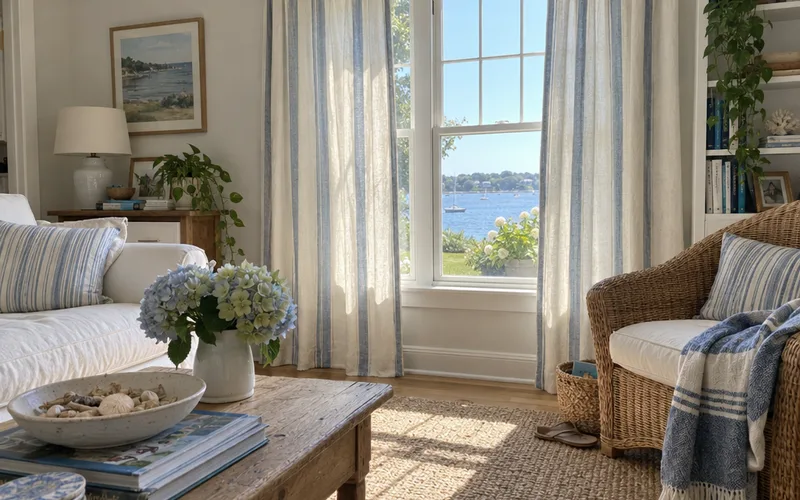
Because the sizes are fixed, hang your rod to suit the panel, not the other way around.
The soft stripe suits coastal living room decorating, and Architectural Digest ties linen to that same coastal feel.
6. Bring In a Silk-Look Sheen
A silk-look panel adds a soft shine that catches lamp light in the evening.
It’s the first idea here that costs about $100, so save it for a room you’ve already settled on.
At a glance
- Best for
- Rooms with a clear style. Skip it if your room is still changing.
- Cost
- From $99.93 on Curtarra for the Giselle Silk Blend.
- Payoff
- $81.07 less than the CB2 panel.
- Time
- Same day.
- First step
- Order swatches, because sheen changes a color more than you’d expect.
The CB2 Seda Dupioni panel lists at $181, down from $259.
Despite the name, its spec lists 100% polyester, and Architectural Digest files it under faux silk.
That’s not a flaw, just a reason to compare on look and price rather than the word “silk.”
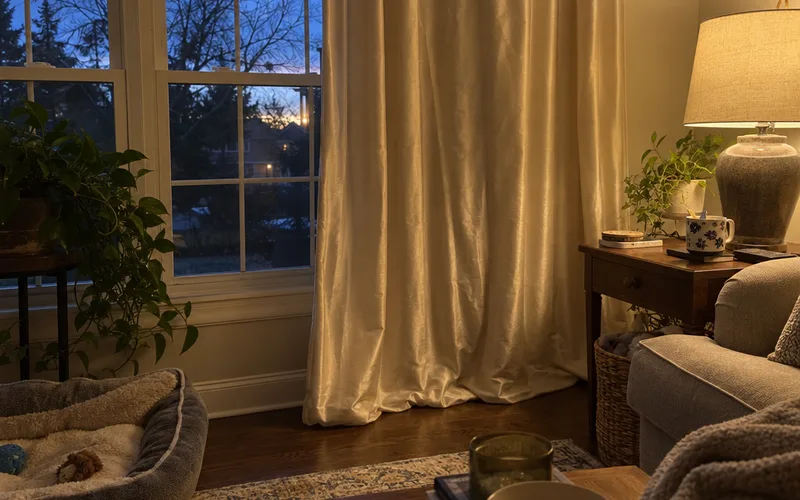
CB2 also sells swatches in all 4 shades, so test before you commit.
7. Use Floral Blackout Panels
Blackout curtains block light with a tightly woven middle lining, so the outer fabric can still look pretty.
You don’t have to choose between a dark room and a nice curtain.
At a glance
- Best for
- Bright rooms and movie nights. Skip it if the room is already dark.
- Cost
- From $102.28 on Curtarra for the Monica Seasonal Floral Blackout.
- Payoff
- $16.72 less than the West Elm Crossweave.
- Time
- Same day.
- First step
- Stand at the window around sunset and note where the glare lands.
Prefer something quieter?
The West Elm Crossweave Blackout Curtain lists at $119 and comes in 84, 96 and 108 inch lengths.
Architectural Digest calls it the best bet for light control in a sleek, simple room.
8. Go Formal With Velvet
Velvet is the go-to for a formal living room, and Architectural Digest says it suits more elegant interiors.
It also adds weight and warmth you can see from across the room.
At a glance
- Best for
- Formal rooms and darker color schemes. Skip it if you want a light, airy room.
- Cost
- From $102.56 on Curtarra for the Victoria Royal Crushed Velvet.
- Payoff
- $45.44 less than the $148 Anthropologie panel.
- Time
- Same day.
- First step
- Check that your rod can hold the weight before you order.
Don’t assume velvet blocks light, though.
The Anthropologie Velvet Embroidered Floral Curtain is 71% cotton and 29% rayon, and it’s described as light filtering rather than blackout.
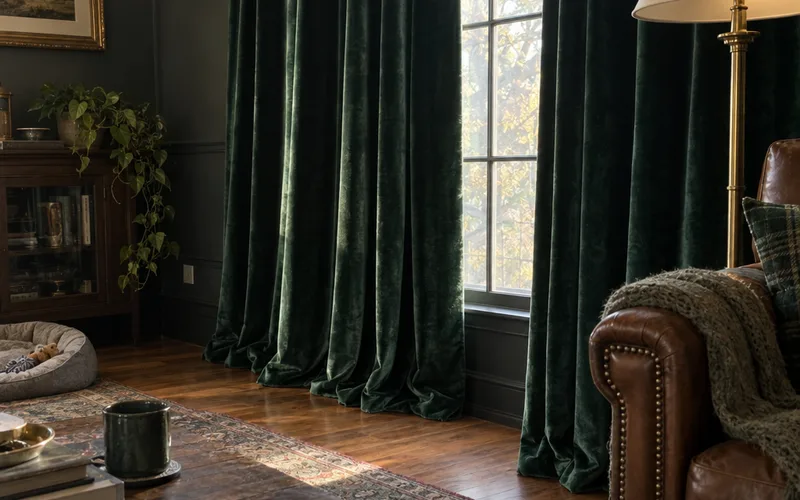
Here’s the takeaway: buy velvet for looks, and pair it with #7 if you need darkness.
It’s a natural fit for a warm and cozy living room, where a deep color does most of the work.
9. Invest in Heavyweight Linen
Heavyweight linen hangs in deeper folds than a light blend, so it looks more tailored.
That’s the upgrade to make if you plan to keep these curtains for years.
At a glance
- Best for
- Long windows and relaxed rooms. Skip it if you want a crisp, shiny finish.
- Cost
- From $109.76 on Curtarra for the Sabrina Heavyweight Linen.
- Payoff
- $69.35 less than the Elliot Heavy 100% Linen from the same store.
- Time
- Same day.
- First step
- Use the Curtarra swatch offer, with up to 10 samples shipped free in 5 days.
The Elliot Heavy version starts at $179.11, and its name promises 100% linen.
So if pure linen matters to you, confirm the fiber content on the Sabrina listing before you buy.
10. Layer Sheers With Blackout Panels
Yes, you can layer sheer curtains with blackout curtains in a living room, and designer Alvin Wayne recommends exactly that “for softness and versatility.”
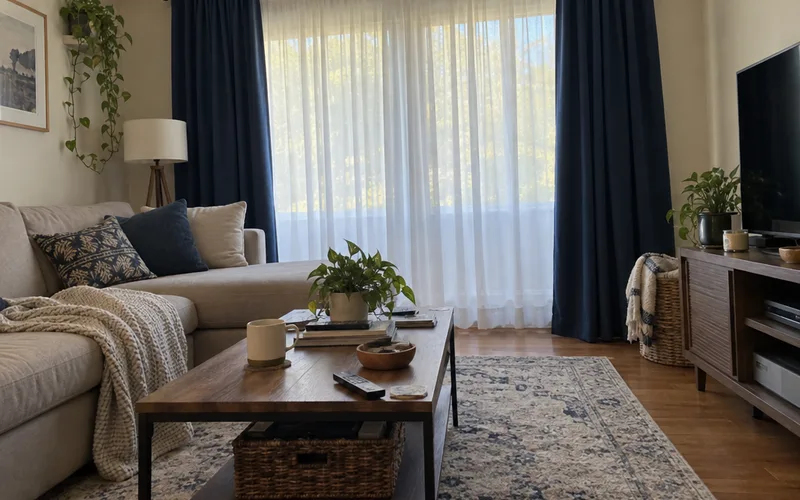
It’s the priciest idea here because you’re buying 2 curtains.
At a glance
- Best for
- Rooms with a TV, or rooms that do double duty. Skip it if you have shallow wall space for a second rod.
- Cost
- About $156.23 on Curtarra, pairing #2 with #7.
- Payoff
- 2 layers: filtered light by day and a dark room at night.
- Time
- Same day, plus a double rod.
- First step
- Measure the wall space above the window to see if a double rod fits.
Here’s how to set it up:
- Hang the sheers on the rod closest to the glass.
- Hang the blackout panels on the room side.
- Keep the sheers closed by day, then pull the blackout panels across for movies.
Luxury hotels often use the same trick, Architectural Digest reports, with linen and blackout curtains on one line.
If your TV sits across from the window, this setup pairs well with other small living room TV ideas.
And if you’d rather skip fabric on one layer, these window treatment ideas cover shades and blinds.
How High and Wide to Hang Living Room Curtains
Hang living room curtains high and wide, which AD PRO Directory designer Alvin Wayne says “will make the room feel taller” and the window feel larger.
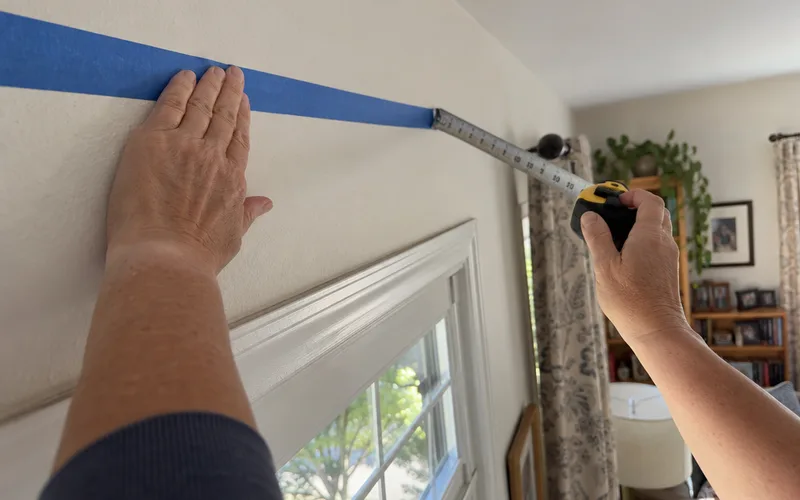
Exact inches depend on your wall and your curtain, so here’s how to find yours in about 5 minutes:
- Hold painter’s tape above the window frame, moving it up until the wall looks taller.
- Mark a spot past each side of the frame, so open curtains can sit on the wall and not on the glass.
- Measure the distance between those 2 marks to get your rod width.
Then check your numbers with the free Curtarra measurement tools, including a stack back calculator.
Stack back is the wall space a curtain takes up when it’s pulled open.
Your hardware can do extra work too.
A curtain rod shelf adds storage above the window, and a swing arm curtain rod lets a curtain swing away from the glass.
How Long Living Room Curtains Should Be
Living room curtains should reach the floor, and Architectural Digest says they should gently “kiss” the floor without pooling at the bottom.
So measure from your rod mark to the floor, not from the window frame.
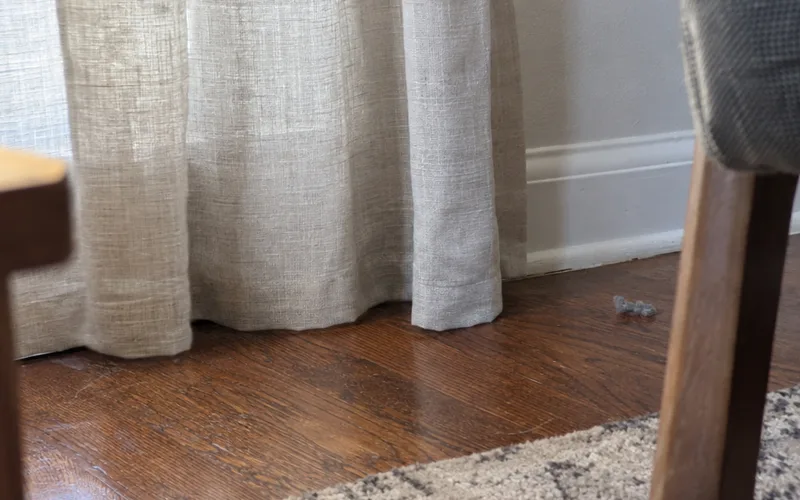
Common lengths in those picks are 84, 96, 108 and 120 inches, and the Anthropologie velvet also comes in 63.
Land between 2 sizes? Buy the next size up and hem it.
How Much Fabric You Need for Full Curtains
Full living room curtains need about 2 to 2.5 times your rod width in total fabric, the rule of thumb in the Curtarra buying FAQ.
That extra fabric is what makes curtains look expensive, because flat panels look thin.
Here’s an example, with a hypothetical 60-inch rod:
At 2.5x, you need 150 inches of fabric.
That’s 3 panels at 50 inches wide, the width of the Anthropologie velvet.
What Color Curtains Work Best in a Living Room
Neutral curtains in white, beige or gray work best in most living rooms, and the Curtarra buying FAQ says they complement various decor styles.
Darker shades add elegance and depth, so save those for rooms with plenty of light.
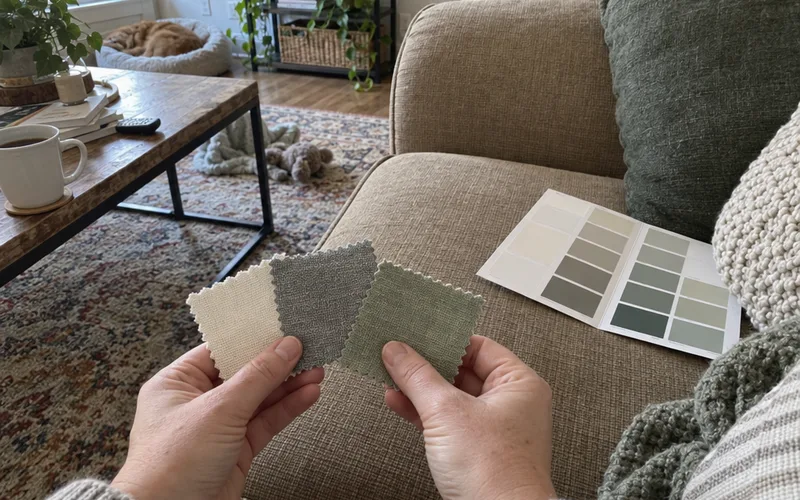
Pick your color with one of these moves:
- Blend: match the walls so the curtain fades back.
- Contrast: go bold against plain walls to make the window the focal point.
- Repeat: pull one color from your rug or art.
If you want a safe start, browse cream curtain panels first, because cream reads warmer than white.
Curtains for Small Living Rooms
Light-colored, floor-length curtains make a small living room look bigger, and sheers like #2 keep the most daylight.
Julia Harrison of Architectural Digest considers those sheers an even better pick for a living room, where you want to maximize light.
Keep the pattern small and the color close to the walls.
On tight walls, narrow curtain panels leave more wall showing, and they stretch a small living room budget further too.
Curtains for Large Living Room Windows
Large living room windows usually need extra panels or custom sizing, since the widest panel in these picks is the 110-inch Nordic Knots sheer.
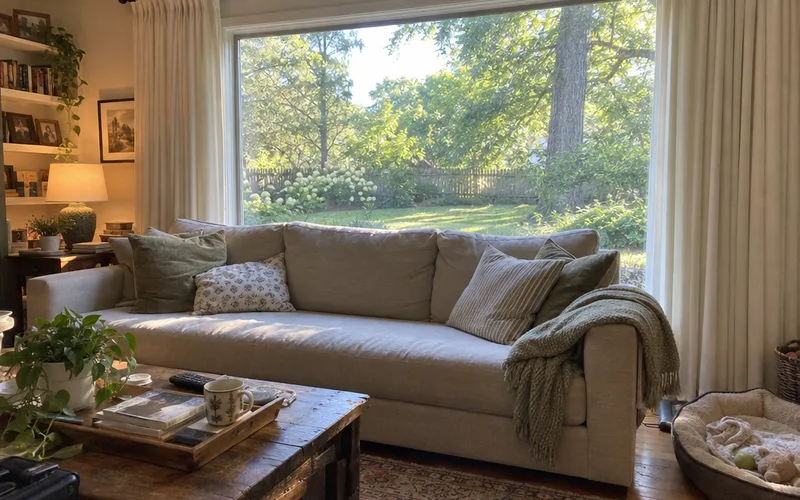
Spiffy Spools sends price estimates within 24 hours for sizes it doesn’t stock.
Here’s what to send:
“Hi, my window is [length] by [width] inches. I’d like curtains in [fabric name] with a blackout lining. What would that cost?”
Repeat that for each window, because the quote form works one window at a time.
How Much Living Room Curtains Cost
Living room curtains in these listings run from $50 on Etsy to $331.37 at the top of the Curtarra custom range, depending on size.
Custom doesn’t have to mean expensive, since those same made-to-order curtains start at $53.95.
The real cost is the whole window, not one panel.
Say you need 3 panels of the $72 Quince curtain, which comes to $216 for one hypothetical window.
Note: Sale prices end, so recheck each listing before you set a budget.
The Most Modern Curtain Styles for a Living Room
The most modern curtain styles for a living room are grommet tops and ripplefold drapes, because both keep the top edge clean.
Grommet panels have metal-ringed openings that slide along the rod, which suits curtains you open and close every day.
Ripplefold drapes fall in even waves and stack tightly, so they suit simple modern curtain designs and wide windows.
Key Takeaway: Pick a clean top edge first, then choose a simple color and quiet hardware.
Frequently Asked Questions
What type of curtain is best for a living room?
The best curtain for a living room depends on the effect you want, and Architectural Digest maps it simply: silk for drama, velvet for coziness, linen for a coastal feel and blackout for practical light control.
If you want one pick for most rooms, start with #5, since it comes in 3 light levels.
What is the current trend for living room curtains?
The 2026 Architectural Digest curtain picks lean on linen, sheers, stripes and velvet, so texture and pattern are both in play.
Layering also keeps showing up, which you can copy with #10.
Should your curtains be lighter or darker than your sofa?
Curtains can go either way, so pick by the contrast you want: lighter curtains stand out against a dark sofa, and darker curtains frame a pale one.
Hold a swatch next to the sofa in daylight before you order.
Should curtains match the walls in a living room?
Curtains don’t have to match the walls in a living room.
Matching makes them fade into the room, while a contrasting color turns the window into a focal point.
Can you use curtains and blinds together in a living room?
Yes, curtains and blinds work together in a living room, with the blind doing the light control and the curtain adding softness.
Mount the blind close to the glass and hang the curtain rod above it.
What are the best type of window curtains for a living room with a TV?
Blackout curtains are the best type for a living room with a TV across from the window, because they cut the glare.
Layer them with sheers, as in #10, so you still get daylight when the TV is off.
Final Thoughts
The biggest upgrade here isn’t the priciest fabric, it’s the fit.
A $50 panel hung high and wide beats a pricey one hung short.
This week, measure from your rod line to the floor and order 3 swatches.