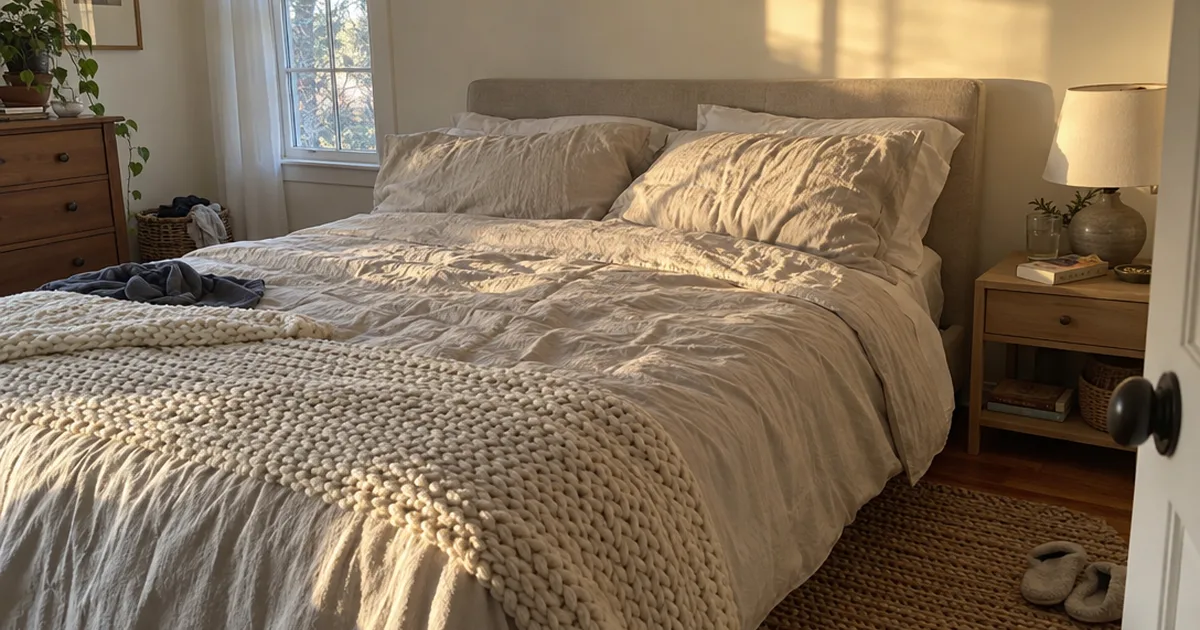

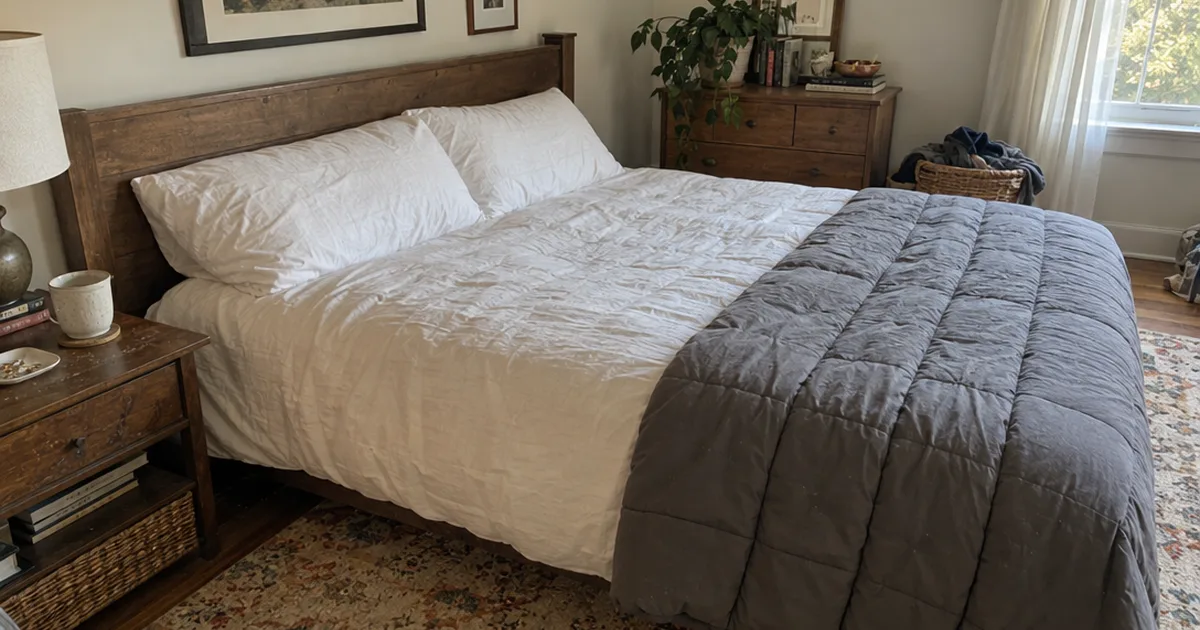
A duvet insert needs just 1 or 2 washes a year if its cover is washed every few weeks, says Monelle Totah of Hudson Grace. A comforter gets no break, as you sleep under its fill.
The duvet vs comforter choice is about laundry, budget and how often you change your bedroom decor. Here’s how they compare on each, with real prices, real sizes and a clear pick.
Duvets suit frequent washers, comforter sets tight budgets or guest rooms. A comforter fits a duvet cover one size up, and hot sleepers need percale, bamboo viscose or eucalyptus.

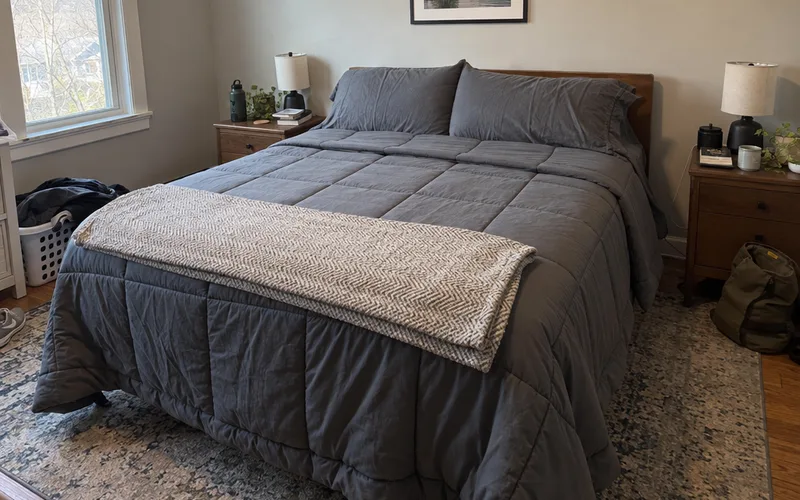
Duvet vs Comforter at a Glance
A duvet beats a comforter on washing, style changes and flexibility, while a comforter beats a duvet on upfront cost and simple setup.
Here’s how they line up across the things you’ll actually notice:
| Category | Duvet | Comforter | Winner |
|---|---|---|---|
| Pieces | Insert + removable cover | One finished piece | Comforter |
| Routine washing | Cover only | The whole comforter | Duvet |
| Insert or fill washing | Once or twice a year | Every wash | Duvet |
| Changing the look | Swap the cover | Replace the comforter | Duvet |
| Top sheet | Optional | Recommended | Duvet |
| Upfront cost | Higher (2 pieces) | Lower (1 piece) | Comforter |
| Setup | Stuff and tie the cover | Spread it on the bed | Comforter |
| Overall | Best for nightly use | Best for budget and guest beds | Duvet |
The pattern is simple: a duvet costs more on day 1 and less effort every week after.
What Is a Duvet?
A duvet is a plain, filled insert that lives inside a removable duvet cover, the same way a pillow lives inside a pillowcase.
Clare Schifano of the bed maker Vispring told Architectural Digest that a duvet is a plain insert used with a cover.
A comforter, she said, “is designed to be used on its own, usually featuring a quilted finish and decorative fabric.”
The insert is usually white and simple, because nobody sees it.
Its job is warmth. It’s filled with natural down, feathers, wool or a down alternative, and most brands sell it in lighter and heavier fills.
The duvet cover does everything else.
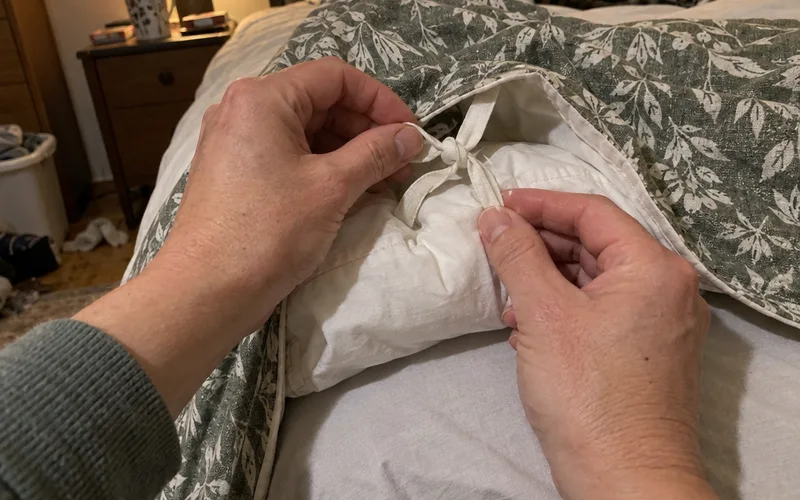
It sets the color and pattern, protects the insert from body oils and goes in the wash with your sheets.
Ties or snaps inside each corner hold the insert in place so it doesn’t bunch up at the foot of the bed.
That two-part design is the whole point. You buy the warm part once and change the visible part whenever you like.
What Is a Comforter?
A comforter is a single finished blanket with its decorative fabric sewn directly around the fill, so it goes straight on the bed with no cover.
The stitching runs in boxes or channels to keep the fill from sliding around.
Comforters are often sold as sets with matching pillow shams, which makes them the fastest way to make a bed look finished.
That simplicity is the draw: a comforter is ready to use with no cover needed, and it’s often more affordable upfront.
The trade-off shows up later.
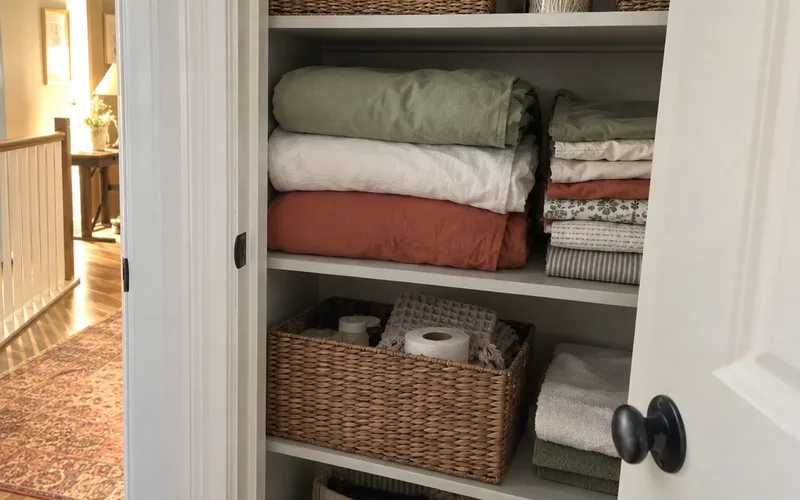
Because the fill and the fabric are one piece, the fill can flatten over time, and a full comforter is bulky to store if you want a second look for summer.
In other words, a comforter is the simple choice today and the less flexible one next year.
Which Is Warmer, a Duvet or a Comforter?
Neither a duvet nor a comforter is warmer by name: warmth comes from the fill material and how much of it there is, and both come in light and heavy fills.
Most duvet brands offer lightweight and heavier fill options, and wool fill adds extra warmth for colder months.
So compare fill, not labels.
A heavily filled down comforter can sleep warmer than a lightweight duvet insert.
What duvets do have is loft.
Christine Carney of Blackberry Farm Design says duvets are “usually softer and fluffier than a standard comforter,” which “makes them feel luxurious without being heavy.”
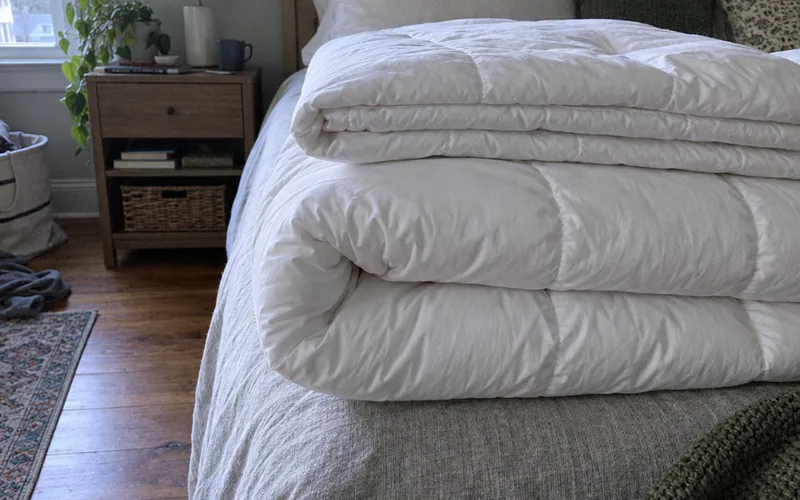
That’s why the duvet tends to win in cold rooms: you can swap a light insert for a heavier one in a winter bedroom without changing the cover you love.
It’s an easy upgrade for any cozy bedroom, too.
With a comforter, more warmth means a second comforter, or a throw on top. If you go that route, add a throw folded across the foot of the bed so it’s easy to pull up at 2 a.m.
Which Is Easier to Wash?
A duvet is easier to wash than a comforter, because you strip off the cover and wash it like a sheet while the bulky insert stays out of the machine most of the year.
A comforter has no cover to remove, so the whole filled piece goes in every time.
That’s a big deal if your washer is small.

Some duvet inserts need dry cleaning or a commercial washer, and thick comforters face the same problem.
The difference is how often you face that trip: 1 or 2 times a year for an insert, or every single wash for a comforter.
So read the care label first, because down, wool and synthetic fills each clean differently.
How Often to Wash a Duvet Cover and Insert
Wash a duvet cover as often as your sheets, or at least every few weeks, and the insert once or twice a year.
The cover takes the body oils, which is why the insert can wait that long.
So if you wash sheets every Sunday, the cover goes in the same load.
The insert gets a wash in spring and maybe again in fall.
Pro Tip: If your insert is machine washable, use a gentle detergent and toss wool dryer balls in the dryer. Both help keep bedding fluffy.
Is a Duvet More Expensive Than a Comforter?
A duvet usually costs more upfront than a comforter, because you buy two pieces instead of one.
As of November 2026, the Casper store page lists its Lightweight Down Alt Duvet insert from $159 and its Percale Duvet Cover from $99 at regular price.
Here’s how that setup adds up:
| Item | Listed price | Pieces |
|---|---|---|
| Casper Lightweight Down Alt Duvet (insert) | From $159 | 1 |
| Casper Percale Duvet Cover | From $99 | 1 |
| Casper duvet setup, total | From $258 | 2 |
A comforter set is one purchase instead of two, and many come in microfiber.
That’s why a duvet cover and insert combo usually costs more than a single comforter.
The math flips over time, though. When you want a new look, a duvet needs only a new cover, while a comforter needs a whole new comforter.
What Size Duvet or Comforter Do You Need?
A queen duvet insert or comforter is about 90 x 90 inches and a king is about 106 x 96 inches.
Exact measurements vary by brand, so check the listing before you buy.
Here’s the full chart:
| Bed size | Duvet insert or comforter |
|---|---|
| Twin | 64 x 90 inches |
| Twin XL | 70 x 96 inches |
| Full | 84 x 90 inches |
| Queen | 90 x 90 inches |
| King | 106 x 96 inches |
| California king | 108 x 96 inches |
Match the insert to the cover first.
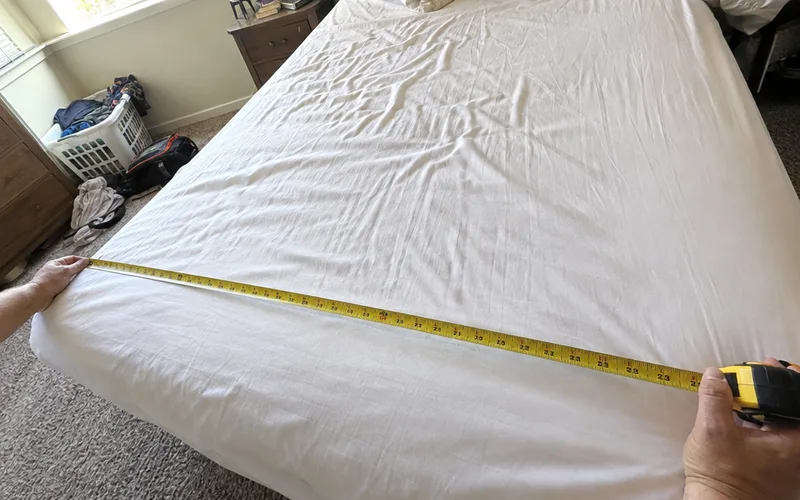
Designers have one trick: go up a size on the insert, and the cover will look a bit fluffier.
If your mattress is extra deep, look at the longer end of the chart for a comforter too, so the sides hang low enough.
Do You Need a Top Sheet With a Duvet?
You don’t need a top sheet with a duvet, because the duvet cover is usually made from the same fabric as sheets and gets washed like one.
So with a duvet cover, you can skip the flat sheet.
A comforter is different.
It needs a top sheet to cut down on washes, since there’s no cover to pull off and wash.
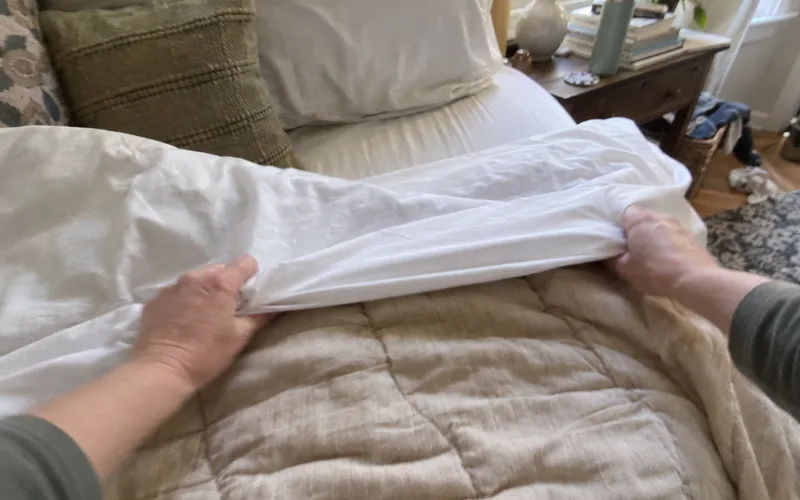
So with a comforter, keep the top sheet. With a duvet, it’s your call: skipping it means one less layer to make, and the cover simply goes in the wash more often.
Not sure what order the layers go in?
A simple bed layering guide shows where the fitted sheet, top sheet and duvet sit, and the basics of layering a bed cover the throws and pillows on top.
Can You Put a Comforter in a Duvet Cover?
Yes, you can put a comforter inside a duvet cover, but it will likely move around unless it has corner loops.
For a snugger fit, buy the comforter one size larger than the cover.
That turns the comforter you own into a duvet insert with a washable shell.
That’s a GREAT move if you love your comforter but hate washing it.
Monelle Totah of Hudson Grace has a 6-step method for a lump-free cover, and it works for a comforter too:
- Turn the duvet cover inside out.
- Lay the comforter on top of the cover, lining up the corners.
- Attach the ties or snaps, if there are any.
- Roll the two up together.
- Flip the cover right side out over the roll.
- Unroll it on the bed and fluff.
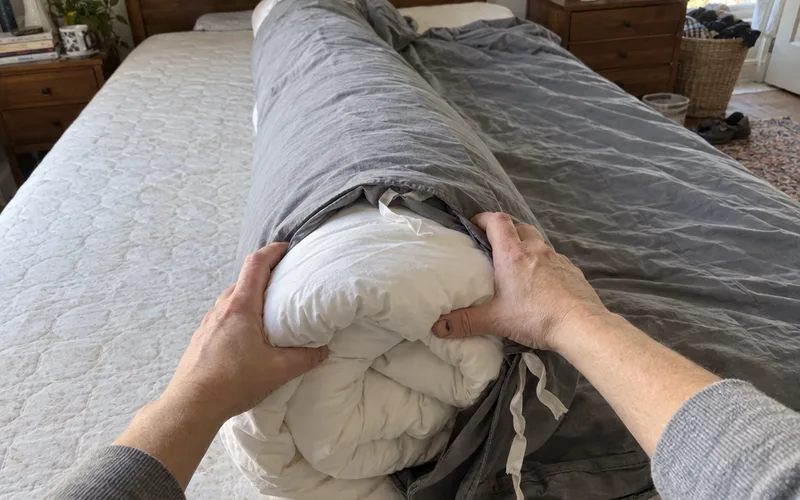
The catch? A dedicated insert still fits better.
For example, the Casper store page says its duvet inserts come with 8 loops, 4 on twins, which is exactly what a plain comforter is missing.
Duvet or Comforter for Hot Sleepers
For hot sleepers, the fabric next to your skin matters more than whether it’s a duvet or a comforter.
Architectural Digest found bamboo viscose, eucalyptus and percale cotton the coolest bedding in its tests.
A lightweight duvet insert in one of those covers is the most adjustable setup.
Why does the duvet edge ahead here?
Because you can change the insert without changing the bed’s look. Insert batting varies by season, and a light one can suit hot sleepers.

So in July you can sleep under a light insert in a percale cover, then switch to a heavier insert in November.
With a comforter, look for a lightweight one with a percale or eucalyptus shell, and skip thick down if you already wake up sweaty.
Who Should Choose a Duvet
Choose a duvet if you sleep in the bed every night, wash bedding often or like to change your bedroom’s look with the seasons.
It’s also the better pick if you skip the top sheet, since the cover is the layer you wash.
- Best for: Everyday beds, frequent washers and anyone who redecorates. Skip it if putting on a cover sounds like torture.
- Cost: From $258 at regular price for a Casper insert and cover (Nov 2026).
- Payoff: The insert needs a wash only once or twice a year.
- Time: Same day.
- First step: Measure your mattress, then pick an insert and cover in the same size.
Once the duvet is on, finish the look with your pillows. A few rules for styling pillows on a bed go a long way with a plain white cover.
Who Should Choose a Comforter
Choose a comforter if you want the lowest upfront cost, a bed that looks finished in one step or bedding for a room that rarely gets used.
A comforter set is the classic pick for small guest bedrooms, kids’ rooms and first apartments.
- Best for: Guest beds, tight budgets and anyone who wants zero setup. Skip it if your washer can’t fit it and you hate the laundromat.
- Cost: Lower upfront, since it’s one piece instead of two.
- Payoff: No cover to buy, stuff or tie.
- Time: Same day.
- First step: Check the care label for “machine washable” before you buy.
A comforter set with matching shams also pairs nicely with a few throw pillow ideas for color.
And since there’s no cover to fuss with, making the bed each morning takes about as long as pulling it straight.
A duvet is two pieces, an insert and a washable cover, and a comforter is one. Pick a duvet for nightly use and easy laundry, and a comforter for the lowest upfront cost. Either way, warmth comes from the fill, so compare fill and fabric before the label.
Frequently Asked Questions
Is it better to have a comforter or a duvet?
A duvet is better for most beds you sleep in every night, because you wash only its cover and can change the look without replacing the warm part.
A comforter is better for a guest room or a tight budget, since it costs less upfront and needs no cover.
Can a comforter replace a duvet?
Yes, a comforter can replace a duvet insert if you slip it inside a duvet cover.
It will likely shift without corner loops, so buy the comforter one size larger than the cover for a snug fit.
What are the pros and cons of using a duvet?
The pros of a duvet are a washable cover, a look you can change in minutes and inserts in different weights for different seasons.
The cons are a higher upfront cost, a cover that takes effort to put on and an insert that can shift if it isn’t tied in place.
Why are comforters so expensive?
Comforters get expensive because of their shell fabric, their fill and how well they’re sewn and quilted.
Down fill costs more than down alternative, so a down alternative comforter is the easiest way to spend less.
Is a duvet worth the extra cost?
A duvet is worth the extra cost if you’ll keep it for years, because you replace only the cover when you want a new look.
Designer Christine Carney says a good duvet will last for years with proper care.
Final Thoughts
For a bed you sleep in every night, I’d pick a duvet: the cover does the dirty work, and the insert can go months between washes.
For a guest room or a tight budget, a machine-washable comforter is the smarter buy. Measure your mattress tonight, then shop the size that gives you the drape you want.